

My first draft/not draft of my memoir, The Fifth Chamber, was pretty much me typing up my journals. Not every word, because my stack of yellow legal pads was taller than my stretched- out hand, and buckets of pages said the same thing: “I miss you. I don’t know how I’m going to go on without you. Why’d you die and leave me?” Tear-stained pages with smeared ink from me writing as fast as I could, wanting the words out of me and onto the page. Pages smudged with cigarette ash too because, yup, I turned back to smoking in my brokenness. You can judge me for that. It didn’t last.
When someone finds out I’m a writer, I often hear, “Oh, I want to write a book!” Writers hear this on the regular. For me, it never grows thin. It’s a seed of possibilities. Everyone has a story and if someone asks for a place to start, I have thoughts.
Beyond saying the only way to write is to write. Beyond encouraging new writers to write for fifteen minutes a day without lifting their pen. Beyond suggesting finding out where your favorite writers give workshops and taking one or several. Beyond all that, I think about this question endlessly: How do we turn our stories into art? How do we take the bones and guts and make it into something others will read and respond to?
How did I make the story of being 28, six months pregnant with my first child, and widowed — BOOM — when my husband died in a car accident, both gut wrenching and palatable? How did I make the worst thing that ever happened to me, the thing that shattered me, into art?
First, I stopped thinking of my journals as a book. No one wants to read my journals. Instead, I thought of them as research, as raw material, but not the hard work of writing. I’d read a few entries, put it aside, and write a scene. I thought of my early drafts as a stringing together of scenes rather than chapters. Chapters felt overwhelming. I’d never written a book before and chapters scared me. But scenes? I could do that. I charged myself with including certain elements in every scene: place, dialogue, sensory details, nature, colors. If I felt lost (and, I felt lost plenty) I’d ask myself, Where am I? What’s in front of me? What’s behind me? Above me? Below me? Those questions oriented me, helped me create a map, and I’d find my way back in.
My memoir opens with me on the bottom of the ocean because that’s what grief feels like — you’re underwater. Everything comes at you slow as slow, as it does in water. People’s words are garbled. Your senses are off.
Nestled on the bottom of the ocean. Lightless. Black past zero — the blackest black. Me in a half lotus. Half because my lunar baby belly disappeared my lap and shrank my legs. Half lotus me with fisheyes that stared sideways. Fish gills I was sure would fail if I dared to swim to the surface. A hole in my heart where love leaked into the sea.
I used my journals as place markers, timestamps — a record of my unbearable feelings. I’d read from my scribblings, close my eyes, connect with the feelings, and let myself experience where I held those feelings in my body. Then I’d write from that body part. I carried a lot of shame in my left scapula. It’s still my shame spot, but it doesn’t ping and light up as much as it used to. Thank you, therapy.
Body beats bring readers into our world. When I say my throat was straw-sized instead of tight, you can feel the body feel. When I write that my scapula was wrapped in thorns, that it buzzed with shame, you might feel a little twitch in yours or a body blip where you carry shame. In Christie Tate’s essay “Buried in My Wrong Body,” she writes about wearing pointe shoes for ballet rehearsals, and we can feel her toes: “The sting of it, the joy of it, the secret lingering on the tips of my feet. My toes like busted piano keys. Like a leper’s fate. Like memory, like wings.”
Along with being true to my widow story, my what happened story, I asked myself questions that helped me turn my story into art. How do you bear the unbearable? was my guiding question, the one I didn’t have an answer to, the one I wrote into. I’ve long leaned into E.M. Forster’s quote: “How do I know what I think until I see what I say?” Ask an unanswerable question. Write your way into it.
Another north star question is from Ann Hood, Why now? That one guided me because it’d been decades since I’d been widowed, since I’d become a mom, remarried, had a daughter. It’d been decades since I worried I’d stay widowed like the women I saw in Greece, forever draped in black, their spines curved like commas, life on pause. Why now? had to be more than because the story still talked to me, still wanted to be written. Why now? led me to do my best to write both accurately about my grief, but also have the long view, not in some tidy and-here’s-what-I-learned-way, but how grief has shaped me, changed me. How I’m a different me than I would have been had I not been widowed at 28. Why now? helped me write from the scar, not the wound.
Early readers of my memoir told me gently, kindly that my sad story was just too sad. No one could stay with me on the bottom of the ocean for a whole book. So, I asked myself, What held me? I knew what hurt me, but what held me? Where did I find joy? True joy. That’s where the backstory of me in the Wyoming mountains on a 30-day wilderness course with a 60-pound pack came in. That’s where childhood stories on our family ranch came in. That’s where my family circling me when all my stitches unstitched came in. And backpacking and skiing with my first husband whom I loved bigger than the ocean. A favorite thread: traveling and falling in love with my second husband whom I love bigger than the sky.
In “Reading the Waves,” Lidia Yuknavitch writes: “What do we owe our past versions of ourselves? At what point do we tell the truth about how it really felt, without worrying about how it looks or sounds?” This is art-making too. Peeling back layers to find your true voice. Writing as close to the bone as you can.
While I’m still trying to figure out how to write, I remind myself on repeat of something else Yuknavitch says: “Everything is writing.” When I first heard her say this, I had doubts. Big ones. But as my writing life has evolved, I’ve come to hold this one close, as truth, as mantra.
When I’m not writing, I’m writing. I’m wondering. Being curious. I’m finding beauty, finding joy, right next to heartache and sorrow. I’m being in nature. Dancing. Singing (badly). Gardening. Traveling. Making meatballs. Rearranging the collections of pictures and quotes and rocks and skulls and tiny talismans on my writing desk. Talking, laughing, being with my beloveds. Being in awe of my toddler grandson. Flooded in gratitude. Alive. It’s all part of my writing life. It’s all part of me.
Your story matters. Go make some art.
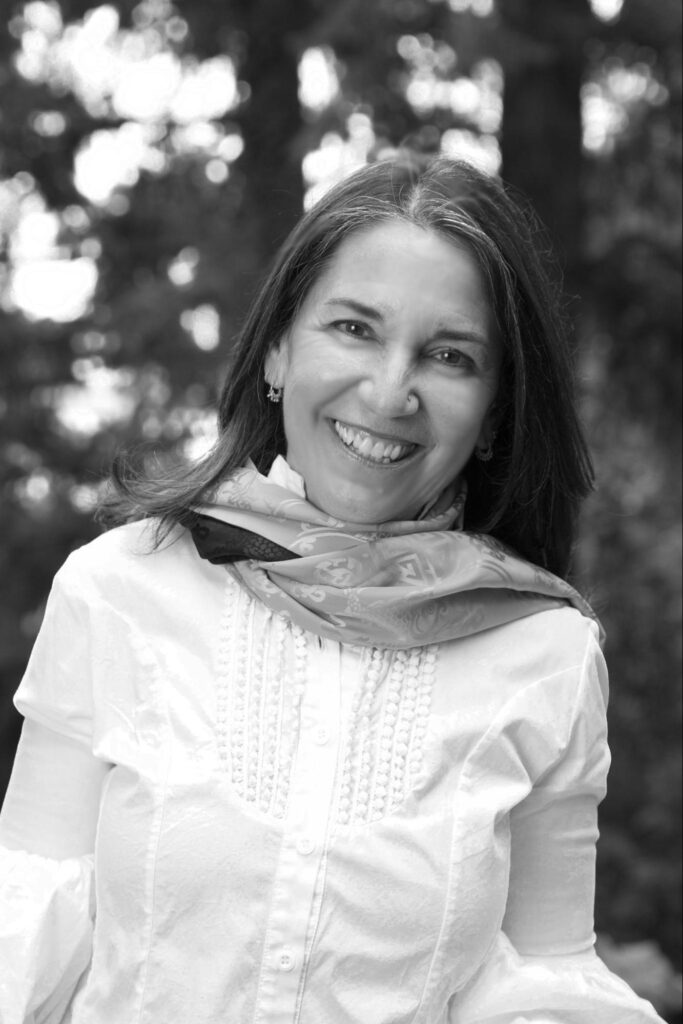 Anne Gudger is the author of The Fifth Chamber, published with Jaded Ibis Press, which won a silver medal with Foreword Review. Kirkus Review called it “An emotionally riveting memoir, raw and inspiring.” She’s been published in Newsweek, The Rumpus, Hippocampus Magazine, Real Simple Magazine, Atticus Review, Cutthroat, CutBank, Columbia Journal, The Normal School, KHORA, The Los Angeles Review and elsewhere. She has been a Best of the Net Nominee twice and has won a handful of essay contests. She lives in Banks, Oregon, with her beloved husband.
I loved reading all the versions! All filled with art and heart.
Love you!
Always love your writing. Helpful to see it put this way and hear your reminders. Thank you, Anne.
Your writing is beautiful. This was so helpful for me today.