Reviewed by Elizabeth Austin

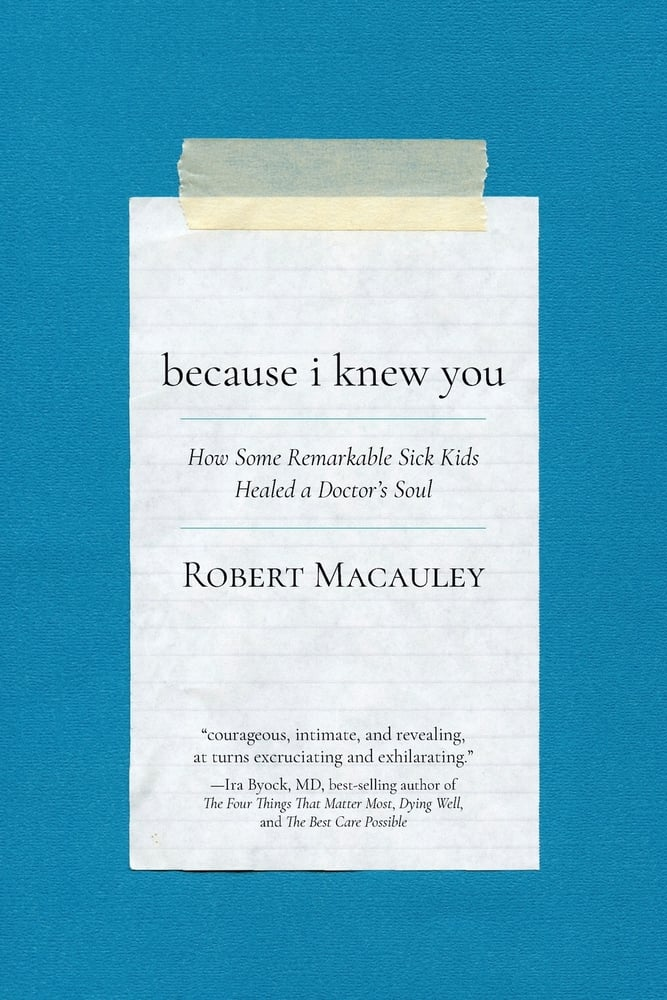 Writing about dying children is a near-impossible task. The subject signals, immediately, that this will not be an easy read, and that the terrain ahead is steeped in grief and fear and helplessness.
And yet, in Because I Knew You: How Some Remarkable Sick Kids Healed a Doctor’s Soul (Chehalem Press, 2025), Dr. Robert Macauley does something reassuring: he neither flinches from that reality nor burdens the reader with unrelenting sorrow. Instead, he reveals the quiet, radical truths of pediatric palliative care: its heartbreak, yes, but also its fierce love, its beauty, and its grace. This is a book that insists we look closely at what most people would rather not see. In doing so, it upends every assumption about what it means to witness a child and their family navigate an experience that, for most people, feels unimaginable.
In Because I Knew You, Dr. Macauley offers a tender, clear-eyed, and ultimately redemptive look at the world of pediatric palliative care. Macauley’s own journey through medical school, seminary, and years at patients’ bedsides mirrors the path walked by the families he serves: marked by uncertainty, courage, and deep presence. His lived experience– including a childhood marked by abuse– coupled with profound empathy makes him not only a skilled physician but an extraordinary guide through one of life’s most difficult landscapes.
The book’s title comes from a line in the song “For Good” from the musical Wicked: “But because I knew you, I have been changed for good.” And indeed, the central thesis of the book might be this: that the act of bearing witness to another’s suffering is not passive. It changes you. It demands something of you. Dr. Macauley rises to that demand again and again, and in doing so, challenges the rest of us— healthcare providers, parents, readers— to do the same.
What’s remarkable is the gentle, almost meditative pacing of the book. Macauley resists the temptation to offer linear solutions or tidy endings. Instead, he allows uncertainty and grief to be what they are: often unresolvable. The book moves between clinical experience and spiritual reflection with grace.
Dr. Macauley’s prose is lucid and spare, occasionally poetic but never indulgent. He draws from literature, philosophy, and even pop culture, but always in service of the story at hand. There is a profound respect for the children themselves throughout the book, not just as patients, but as whole people. They are never used as lessons or metaphors. They are seen.
One of the book’s core strengths is its ethical humility. Dr. Macauley doesn’t pretend to have the right answers in every case— just better questions. How do you explain to parents of a dying child that the treatments that will prolong their child’s life will also prolong their suffering? When, if ever, is it okay to stop trying to save your child’s life? How does a doctor balance empathy for their patients while also maintaining professional decorum and preserving their ability to continue to show up in the long-term? And perhaps most poignantly: why do terrible things like terminal childhood illnesses and genetic diseases happen under the eye of an all-knowing and loving God?
These are not abstract philosophical puzzles for him— they’re daily practice. He shares the story of a teenager who wanted to die “at home, comfortable,” and how that wish steered decisions around his end-of-life care. Another section recounts the story of a family that pursued a risky heart surgery for their daughter– knowing her underlying condition was terminal– because it would buy them a few more months together. In every case, Dr. Macauley gives families agency without romanticizing their choices.
For me, this balance was what made the book such a balm. It also took me on a walk through familiar ground: in May 2020, when my daughter was 8 years old, she was diagnosed with Acute Lymphoblastic Leukemia. She spent the next three years in treatment, critically ill, fighting to survive. During that time I often felt as if we were suspended in a cruel kind of in-between. My child was stable but not safe, never far from a new complication, and suffering immensely. Medical professionals just like Dr. Macauley were our lifeline. They provided guidance, insight, and support at every harrowing turn. Reading Because I Knew You reminded me that there are people out there who never forget the gravity of what families like mine endure.
Even when your child survives a serious illness, you carry the shadow of what could have been. The pain Dr. Macauley describes parents enduring throughout the book– losing their children to terrible illnesses– was never mine to experience, but for years my family stood at the precipice of it, hovering near the edge of a cliff we were terrified to look down. Dr. Macauley does not sensationalize this terrain. He simply lives in it with compassion and moral clarity and then invites us in.
Because I Knew You is essential reading, not just for medical professionals, but for anyone who has ever loved a child through suffering. It’s a quiet book, but its impact is seismic. In a world so often uncomfortable with death, Dr. Macauley invites us to stay present in life— all the way to the end, and then, mercifully, beyond it.
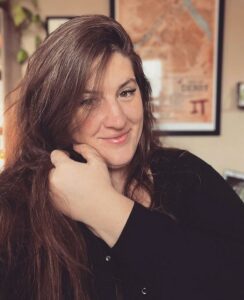 Elizabeth Austin’s writing has appeared in Time, Harper’s Bazaar, McSweeney’s, Narratively and others. She is currently working on a memoir about being a bad cancer mom. She lives outside of Philly with her two children and their many pets. Find her at writingelizabeth.com and on Instagram @writingelizabeth