Reviewed by Leslie Lindsay

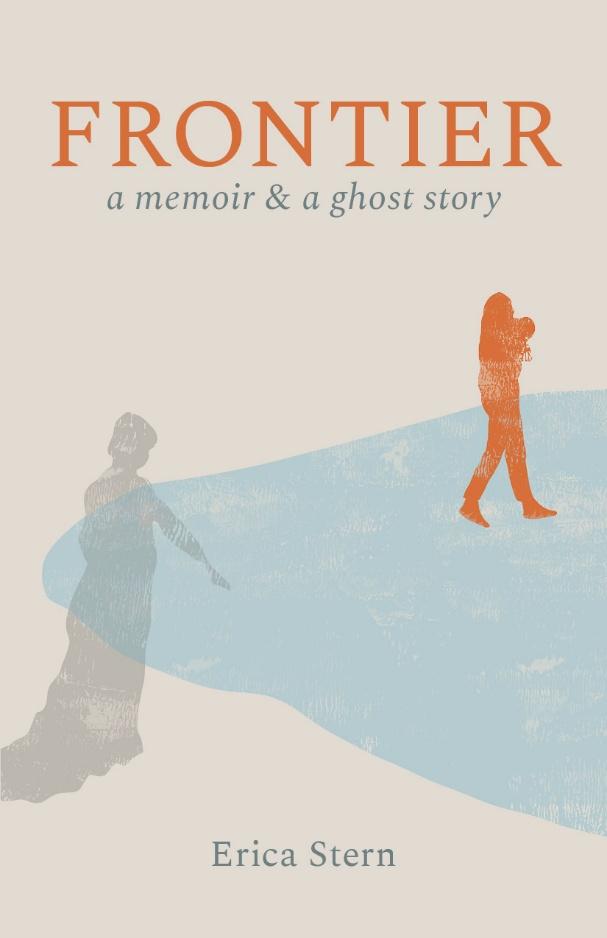 Twenty years ago, in a Prairie-style community hospital in the middle of a Minnesota cornfield, I gave birth to my first daughter. Like Erica Stern, I was on the edge of a new frontier. Like Erica Stern, I had idealized motherhood through tender diaper commercials and anodyne magazines with blisteringly serene mother-baby moments.
Having lived in New Orleans, Stern relocated to Chicago. After my time in Minnesota, I relocated not far from another cornfield, but also, if I squint, I too, can see Lake Michigan glinting in the distance. It seems we both traveled, not unlike pioneers, to begin our journey into parenthood. I’m thinking about land and water, bone and amniotic fluid, breath and wind, the crossing of a portal, a threshold from person to parent, but always a writer, always a worrier.
Frontier: A Memoir & A Ghost Story (Barrelhouse; June 2025), is a deeply raw and resonate work, seamlessly blending fiction with memoir with research in the most artful and imaginative manner, its imaginative prowess hovers over the speculative, much like the ghost of the mother from the Wild West who did not survive the ordeal of childbirth and continues to float along the cabin she once occupied and the life she left. This mother watches as her husband remarries and fathers another child, a child she feels should be hers, while her own deceased baby’s brain bobs in liquid in a jar at the physician/midwife’s home. What happened? What went wrong? That’s the main crux of this mesmerizing, genre-fluid expedition into the often treacherous, untamed frontier of childbirth, dovetailing effortlessly with Stern’s present-day glass-and-steel lakefront hospital birth.
Here, she writes, is ‘a serene emergency.’ More specifically, “His nose is mercifully spared; a perfect set of nostrils, flattened by gestation and compression and descent, dot both sides of a cartilaginous ridge. Wires measuring his oxygen saturation and heart rate and electrodes charting brain misfirings must remain slack and unkinked, and bags connected to his respirator must remain flat, for the smallest fold could disturb the flow of medication or oxygen in or the flow of toxins and information out, setting off beeps and alarms that populate the NICU halls, lulling its inhabitants.”
When Stern’s son, Jonah, is born via forceps, he experiences complications. Just why and what can be done? Stern explores these questions and so much more, from a theological Jewish standpoint, the Biblical myth of Jonah and the whale, while taking a cerebral and incisive journalistic approach to the all too universal experience of motherhood.
Stern leads the reader through the fraught history of birth from the Victorian-era sedation through the Natural Childbirth Movement, and modern-day Labor & Delivery Suites (‘How do we reserve the corner suite with the lakeview?’ Really. It’s all there), and the harrowing truth that not all babies—or mothers—make it, even in this day of modern medicine. Stern’s Frontier is a viscerally important read connecting generations of mothers and writers from the past to today.
As Stern closes in on a diagnosis for her infant son, she likens the experience to Freytag’s pyramid, that is, she writes, ‘Sciences has no name for this. I am not sure literature does, either.[…] Jonah’s story refuses to adhere to the neat diagram [of Freytag]. There’s rising action, crisis, falling action, then scramble.”
Questions persist, but the ones about sacrifice and parenting and telling a darn-good story, one that resonates and transforms and connects, will always be at the heart of identity.
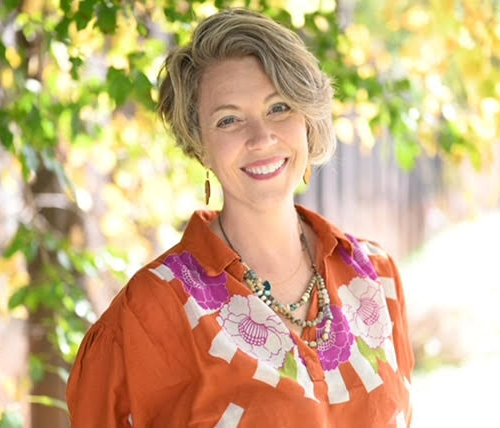
Leslie Lindsay
Staff InterviewerLeslie A. Lindsay is the author of Speaking of Apraxia: A Parents’ Guide to Childhood Apraxia of Speech (Woodbine House, 2021 and PRH Audio, 2022). She has contributed to the anthology, BECOMING REAL: Women Reclaim the Power of the Imagined Through Speculative Nonfiction (Pact Press/Regal House, October 2024).
Leslie’s essays, reviews, poetry, photography, and interviews have appeared in The Millions, DIAGRAM, The Rumpus, LitHub, and On the Seawall, among others. She holds a BSN from the University of Missouri-Columbia, is a former Mayo Clinic child/adolescent psychiatric R.N., an alumna of Kenyon Writer’s Workshop. Her work has been supported by Ragdale and Vermont Studio Center and nominated for Best American Short Fiction.