

Many years ago, in an adult writing workshop, the instructor asked us to profile a parent. At the time, I was struggling in my relationship with my father so he came immediately to mind. I began with, “My father is the tallest of two sons born and raised in Philadelphia who majored in philosophy in college and pursued a life in business.”
As we scribbled, the teacher, who was well regarded and known for being direct, strolled the aisles where we sat at small desks, reading over our shoulders, nodding and hmmm-ing.
When she arrived at my desk, she peered at my page. I looked up and saw her frown.
“Tell me about your mother,” she said.
“But there’s much more drama around my father,” I responded.
“That may be true, but just tell me one thing — one unusual detail — about your mother.”
It took a moment, but out came, “Well, my mother did grow up in a hotel.”
“Ah. That’s it!” A smile came to her face. “You must write about your mother.”
And, before I could argue, off she strolled to the next writer.
That was the day I learned about the value of the well-selected detail. The one that comes to mind when we think of a particular person. The one we recall long after reading a book. The ones that signals a storyline.
Details like: Mob boss Tony Soprano sees a therapist. Wednesday Addams wears a white-collared black dress, pigtails and has a fascination with the macabre. Harry Potter has a lightning bolt-shaped scar on his forehead.
What I discovered that day was that the right details don’t just set the table. They are more like the seasoning we add to a recipe. They project clues about the character and the storyline.
They can actually work as a narrative tool. Even if we call a rose by some other name, by its color or texture or aroma — as Juliet said to Romeo — naming it allows us to experience it.
All a reader learns about my father in those first words I wrote was his height, where he grew up, what he studied and did for a living. They expressed very little about who he was at his core, what my story about him might be and any sense of his relationship to me.
Compare this to when people learn that my mother grew up in a hotel. Their eyebrows go up. “Really?” they ask. They often bring up the children’s storybook character Eloise, though my mother didn’t live at the Plaza but at a hotel in Pittsburgh. She did, however, live with her mother and father in three rooms with no kitchen. She would take the elevator down to the hotel dining room, order a bowl of cereal for breakfast — which she ate alone — and a peanut butter and jelly sandwich for lunch. Growing up in a hotel not only left her with zero kitchen skills, but they influenced her decorative leanings to something I lovingly call institutionally immaculate. Clean. Spare. Formal. There was a lot about her that was formed by growing up in that environment.
These are the kind of details that can lure us into a story.
Here’s the thing — we don’t need many. Too much detail can distract your reader and slow the pace of the action.
An example from Dinty W. Moore. Compare this scene:
My mother walked quickly into the room and she sure seemed angry about something. She didn’t normally enter my bedroom when the door was closed. It was morning, and I figured it had to do with my sneaking in so late the night before and her wanting to know where I had been. She stood really close to me with a furious look on her face and made her suspicions of me entirely clear. She was holding a towel from the kitchen.
With this:
Mom charged in, ignoring the closed bedroom door, stood so close I could feel the heat coming off her body, could smell her morning coffee. “Where on God’s earth were you last night?” she demanded, twisting a dish towel in her reddened hands.
Details in list form can hit or miss. One or two may catch our eye, but we might miss a vital one for the story we are telling. The key detail is the mother’s worry and anger, which is beautifully shown in “heat coming off her body” and “twisting a dish towel in her reddened hands.” The well-chosen ones invite us to experience it.
In the years that followed that first writing workshop, I have written numerous pieces about my parents. Both show up in my memoir, “Seven Springs,” about how they responded to the automobile crash I experienced in the early 1970s. It was important to me to select details that shed light on why they reacted as they did.
My mother, having grown up in a tidy institutional setting, was very uncomfortable with mess or brokenness. On the way home from the hospital, she barely looked at me as blood was dripping from my mouth after the collision. As an only child growing up in a hotel, she never got the chance to make a mess. My father, like so many of his era, focused more on business than nurturing, so he was more concerned about the legal and insurance aspects of the accident than the hug that would have helped to calm me.
How my parents responded said volumes about who they were. And their behavior, of course, reverberated for me.
As writers of personal narrative know well, family provides some seriously rich subject matter.
It’s the lesson of the rose that I turn to most often when I begin a work of personal narrative. What is that one detail that brings that person or that moment to mind? It’s often the ink in our pen, the energy in our fingertips on those keys. Choosing one or two details that can work as a description and storyline thread can deepen both the writer’s — and the reader’s — understanding of that character in relation to the story.
Ernest Hemingway wrote, “Every man’s life ends the same way. It is only the details of how he lived and how he died that distinguish one man from another.”
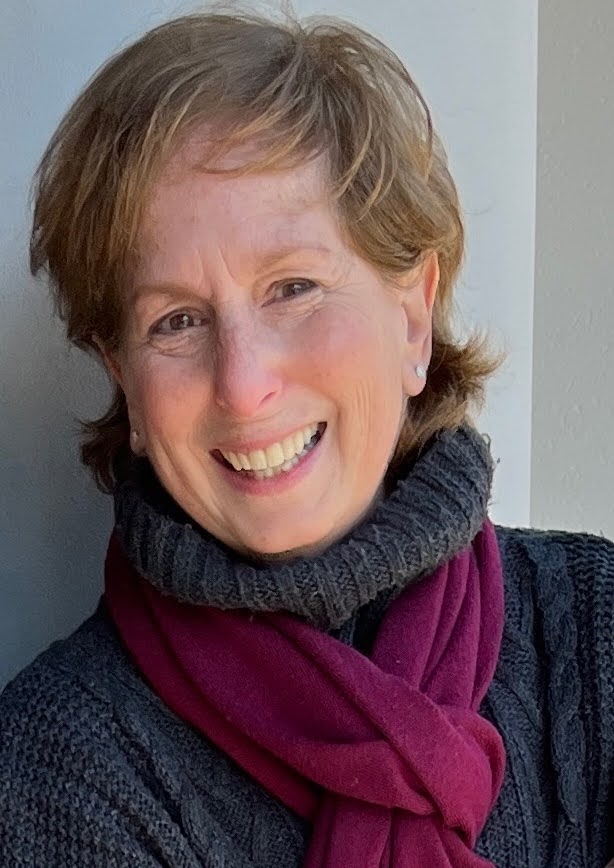 Ellen Blum Barish is a memoirist, essayist, teacher and coach of personal narrative. She is author of the memoir, Seven Springs and the essay collection, Views from the Home Office Window: On Motherhood, Family and Life, and a contributor to two anthologies published by Chicago Story Press. Her essays have appeared in The New York Times, The Chicago Tribune, Brevity, Tablet, Literary Mama, Lilith and have aired on Chicago Public Radio. Find out more at ellenblumbarish.com.