Interviewed by Michèle Dawson Haber

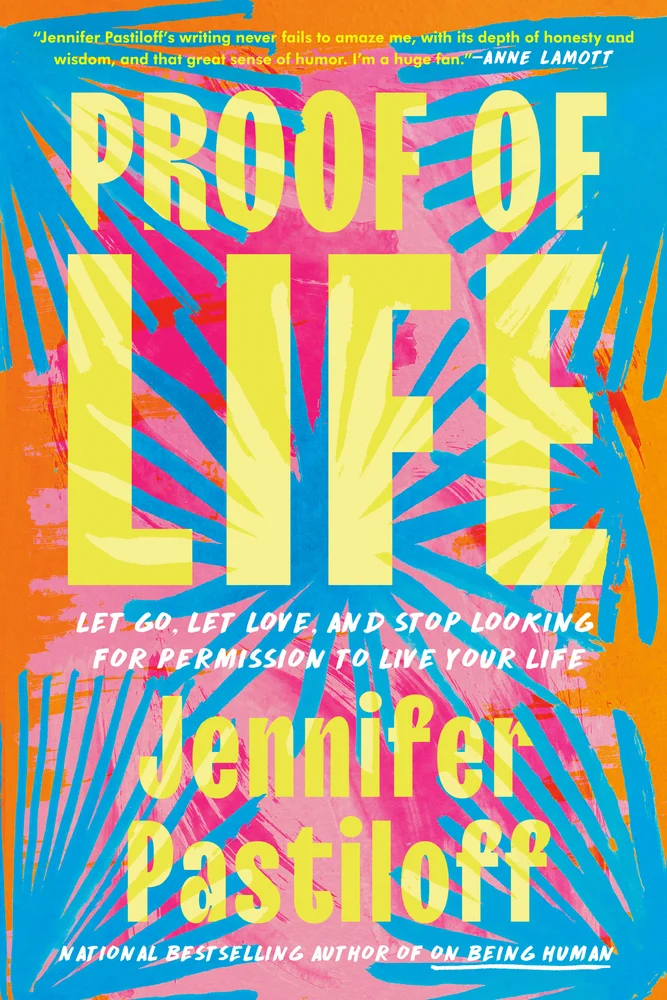 Jen Pastiloff’s eagerly awaited second book, Proof of Life: Let Go, Let Love, and Stop Looking for Permission to Live Your Life (Dutton), came out July 8, 2025, six years after the publication of her memoir, On Being Human.
I knew only the vaguest of details about Jen: she was the founder of The Manifest Station, an online literary magazine that began as her personal blog; she ran empowerment retreats where it seemed like a ton of laughing, dancing, and self-awakening occurred; and she has profound hearing loss. It all made me want to know more, so when the opportunity to interview her arose, I didn’t hesitate. And since I’m a researcher who always wants to know where things begin, I decided I had to read her first book too. But I had a problem: I was training for a long-distance bike ride and couldn’t sit around reading all day. And so, while putting in the distance on my bike, I listened to Jen read both her books.
There are so many profound moments in Proof of Life. Sometimes my eyes would well up and I’d sit at a stop light through a couple of changes just to think things through. I laughed at her jokes and obvious love of expletives (another thing we have in common), and sometimes I’d answer her questions to the reader aloud (usually, “oh yeah!” — if anyone noticed, they surely must have wondered). And often I’d stop my bike, pull out my phone, and write down what impressed me as especially powerful and resonant.
An extraordinary listen/read in its simplicity and its depth, Proof of Life imparts meaning simultaneously obvious and revelatory. I’m not normally a reader of self-help books, but I’m very glad to have experienced this one. As Jen would say: “this may be eye-rolly but — ” Proof of Life made me want to be a better person for others and also for myself. Read on, I think you’ll see what I mean.
Michèle Dawson Haber: Congratulations, Jen, on the publication of your second book, which is already a national bestseller! In Proof of Life you talk a lot about your personal struggles — in your marriage, about your alcoholism, with creativity — but it also has an equally prominent self-improvement/motivational element. I know you aren’t a lover of labels, but if you had to pick a genre for Proof of Life, what would it be?
Jennifer Pastiloff: I love this question! I have a category called “ish,” and you can put it behind anything: self-help-ish, memoir-ish, essay-ish — that’s my jam. I get that for bookstores, libraries, and the internet, we need a category. But beyond that, it’s whatever you want to call it. Truly. It’s taken me a long time to get past the “what are they going to think of me?” I always tell people, do whatever you want. You want me to do self-help? Watch me do it my way. I did all these wacky things. Self-help and humor are not usually synonymous, but I feel like that’s so indicative of what the book is, and I’m very proud of it.
MDH: As you should be! When your first book came out, you’d already established a fabulous career running empowerment workshops called On Being Human. Your memoir of the same name told the story of how you overcame personal tragedy and incapacitating self-doubt to achieve a life that embraced self-acceptance, happiness, and beauty. Can you tell me how your second book came to be? Did you imagine Proof of Life would pick up where you left off, or take the conversation in a different direction altogether?
JP: The most honest answer is, I don’t fucking know. Right after I wrote On Being Human, I thought, oh my God, I shot my wad! I put everything in that book; there’s nothing left to say. All I know is my love language is poetry and I look at the world and say, that’ll be a poem. I knew I wanted to keep making. I say making because, just like with genre, I wasn’t sure what. I didn’t know I was going to end up becoming a painter, because I could not even draw a stick figure. But three years ago, I started painting. I ended On Being Human with the words “Now what?”
I’ve always been self-aware; I was aware of my drinking, I just didn’t want to do anything about it. I knew I was afraid of change, but being aware of it didn’t make me suddenly embrace change. So, the knowing is important-ish, but what’s more important is the Now what? I knew for the second book it would be, Here’s what. Although it’s not answered for you, the book is an invitation to start asking your own questions with invocations and ideas that could become portals into healing, into love, into creativity, into whatever.
MDH: Was it hard to balance how much of your personal story to include?
JP: Yeah, and at this point especially I’m so sick of myself. It’s tricky. I want to share, but I don’t want to share all of it. Who cares anyway, right? But sometimes people, I’m not joking, will ask me, “I missed your post where you talk about buying your house or leaving your marriage, can you point me to it?” But I also don’t want to hide in shame. When you write a memoir, or you’re kind of well known-ish, there’s a sense that somehow you have to keep people up on everything, and that’s not true. We all get to hold what we want as sacred. The problem is when we hide in shame. That was my gauge: is this thing I’m sharing useful to the narrative or am I not going to share this because I’m ashamed? Whenever I got clear of why I was sharing, it didn’t steer me wrong. Now, art is subjective, so there will be people who will say, “Oh, enough of talking about yourself, you narcissist,” and then there will be other people who eat it all up. And it doesn’t matter, because there’s always going to be all the people: the lovers, the haters, and the people who don’t give a shit,
MDH: You get to be private if you want to.
JP: Exactly. And yet, I won’t hide in shame. I have in the past and that’s why I name it. This is supposed to be a “self-help” book and so there are other aspects besides just me and my story. Some of finding that balance was intuitive because I do so much group work outside of my writing.
MDH: As someone who is also hard of hearing, I really appreciate the space you give to talking about your deafness, the practical reality of living with hearing loss, and how it has impacted your life. One insight that resonated so deeply with me was when you wrote, “What is the word for laughing when you have no idea why everyone is laughing, but you do it anyway? Loneliness.” Oof.
JP: You’re gonna make me cry right now. Are you?
MDH: I am, I’m totally tearing up!
JP: I feel that on such a regular basis and also misunderstood because I’m so open and friendly people say I make it look so easy. It’s so frustrating.
MDH: I believe your writing about living with hearing loss educates people and fosters empathy and compassion. Do you agree?
JP: I do, and not just with people with hearing loss or deafness. Once I was giving a big keynote speech in the fall and afterwards a man came up with tears in his eyes. He was the cameraman for the event. He was 38 and had recently received an autism diagnosis. He said to me, “Your experience is the same as mine. I’m on the outside, I don’t know what’s going on.” He had never met anyone who named it, who gave it language. So whether it’s hearing loss, deafness, or another invisible disability, in a way they’re the same and sometimes you just have to get by. I cannot, for example, ask “What?” every five seconds. And even if I do and they repeat it ten times, sometimes I still don’t get it. And what this man was saying was that he felt less alone, and he felt seen. He was talking about being on the outside of jokes he doesn’t always get or not quite comprehending what’s being said. He was talking about loneliness.
MDH: Long before you wrote your first book, you became a yoga teacher, which then evolved into a unique workshop that combined movement, writing, listening, and connecting. You tell the reader that reading Proof of Life will be like attending one of your workshops; you include questions, prompts, poems and exercises designed to help the reader unpack what in their life they might be holding back. Your writing and coaching have eclipsed the movement elements of your workshops, which I imagine makes it easier to present what you do in book form. Do you imagine writers will be the primary readers of Proof of Life?
JP: Yes, I hope so. On the book jacket, I made them drop the yoga from my bio, because I simply don’t do it anymore and I do think as writers, as humans, we get pigeonholed. One of the big messages that I’m always talking about is: I get to say who I am. The world tries to tell us who we are and that we can’t change that. Well actually, I can! I thought I was going to have a path in academia and be a poet. Then I dropped out of college and became a career waitress, and I didn’t think I got to write poems. After thirteen years I got out of waitressing by becoming a yoga teacher, and made up this weird, wacky thing where I married it with writing. But even after I stopped teaching yoga, it still attached to me and I felt like I couldn’t lose the sort of new-agey “Yoga Jen” label. This made me feel like I wasn’t taken seriously as a writer. (Now, the joke is I can’t stand people who take themselves too seriously!) But when it came to how I wanted to be viewed, I always hoped it would be as a writer.
MDH: You have such a keen way of distilling what someone might experience as general unease or lack of self-confidence into specific, eye-opening insights which you then challenge the reader to push back on. Two of my favorites: “Choose curiosity over fear” and “As long as you’re breathing, you have time to begin again.” Writers, especially writers who hope to publish a book one day, come up against constant rejection: essays rejected, editors ghosting them, agents passing. How do you hope writers will apply the messages in this book?
JP: I’m not sure who said this, but a saying I quote endlessly is: “It’s not what you don’t know that gets you in trouble, it’s what you think you know for sure that just ain’t so.” When we decide beforehand that something’s never going to happen, the fear sets in. When we choose curiosity over fear in writing, from when we sit down to the pure creative state, the inner asshole — the editor/critic — is not invited. If curiosity leads the way that opens up everything. Going back to yoga: things appear one way but if you go down, everything’s upside down! But only we are upside down. What a cool metaphor because if we can only look at something a different way, then everything opens up.
That doesn’t mean that the person or the publication is magically going to say yes, but perhaps we’ll get curious about something else we can do with it, or think outside the box, which is my favorite thing. It’s like the school of whatever works, as long as you’re not hurting anyone or yourself intentionally. Fear shuts us down. It will do whatever it can to keep us safe, which is to stay stuck. Creativity is the opposite of that. When you’re writing or making art, if you can find ways to let go of that, the magic will show up. It’s not about is this saleable, are they going to like this, is this what they expect from me, but how do I feel when I’m making this? I’m interested in expansion and then allowing. In the book I invite people to get curious. It has to become a practice because if you’re not used to it, it’s really hard at first.
And the other idea you mentioned is one I literally have to remind myself of every day: As long as you’re breathing, you have time to begin again. Because if you’re stuck, you believe you’re stuck forever. Or you say to yourself, I’ve been rejected by all these publications or I don’t have any agent, and that’s the way it’s been and that’s the way it’s going to be. Well, it’s very easy to get stuck in that. But we can take a breath and begin again. We’re not fixed objects in space. This isn’t rocket science but somehow a lot of us [raises hand], forget that.
MDH: In the chapter called “You Are Right on Time” you encourage the reader to recognize and then stop being so hard on themselves. But I wonder if being hard on oneself, or striving hard towards a goal, is always bad? Lots of things that we want to be doing are not exactly enjoyable. Speaking for myself, writing is hell most of the time. Training for a week-long bicycle ride is mostly suffering. I may not look forward to it or even be lit up, but I keep on keeping on. To master a thing, many goals seem to require relentless slogging with little enjoyment. Are you saying there’s never any benefit to being hard on oneself?
JP: I think it’s hilarious that you’re asking me as if I’m some sort of PhD on the subject. Like, what the fuck do I know? I can only speak from my point of view. And I repeat that because the last thing I want to be perceived as is some sort of guru or that I’m speaking for the benefit of all people. Now I bet you there are many people, and perhaps yourself included, who respond to speaking shitty to themselves. But that’s only what you think, because it’s just so old hat and you don’t know any other way. If you’re defining hard as saying to yourself, “you’re so fucking stupid,” well I’m gonna say no, that’s not real beneficial. I’ve lived most of my life like that. I’m tired of it. For the rest of my time, however long it may be, I don’t want to spend it being so hard on myself. I want to be softer. So, what do you want? If we are defining hard and beneficial in terms of the end game and if it’s only about the end game, we’re also in trouble. I’m going to give you a perfect example. I decided that I really wanted to hit The New York Times bestseller list. When I didn’t, I fell apart and I wanted to die of shame. So, if it’s only about the end result, you’re kind of fucked.
MDH: So, you don’t see any conflict between being less hard on yourself and achieving your dreams?
JP: Not at all. There’s this mentality that if something isn’t hard, it’s not worth it. I think achieving your dreams doesn’t have to be hard. Let’s take writing. If you say I want to write and don’t, let yourself off the hook. Now, if a year passes and you say every day, “I’m going to write a book” and you don’t, then it’s time to take a look at the pattern, right? Either you better stop talking shit or create some intentionality. But the letting ourselves off the hook, for me, is the missing link. Alright, you didn’t write today. So what? You get to begin again. Maybe you think it’s beneficial to tell yourself you’re a lazy fucking idiot if that gets you to sit in the chair, but at what cost? I don’t think it’s conducive. If we’re speaking to ourselves that way we’re not going to become lit up, excited, or embody love.
MDH: Do you think one also has to be some sort of teacher and have an established following to write a successful self-improvement/motivational book?
JP: I think being a teacher with a following is all nonsense. Certainly, the more experience you have, the more you have to draw from, including confidence. But I just roll my eyes at the idea of needing a “following” because so much of it is BS, if not all of it. I’m not saying some of it isn’t well earned by people in the self-help realm like Brené Brown, but you know, some of these people on social media with a bazillion followers: it doesn’t mean a thing!
MDH: What was the single most difficult craft-related obstacle you overcame in the writing of Proof of Life?
JP: Coming up with a structure so that the book didn’t read haphazard. My editor would say, “You know, self-help has a certain structure,” and oh, boy, did I resist because I did not want to write a self-help book. But within those self-help parameters, such as the “takeaway” for the reader, or exercises, I made the book my own. I made it silly and goofy and creative and all the things. I remember when I sold the book back in 2022 my editor Maya said, “Think about what journey you want to take the reader on.” I think about that question all the time. And I know this sounds a bit eye-rolly but the journey is the journey back to you or to the parts you may have abandoned. So, I needed to figure out what structure would make it cohesive for the reader. To help me come up with that I hired someone. At first, I didn’t want to tell anyone, and then I thought, “that’s shame talking.” And then I heard from so many of my friends — famous writers, not famous writers — that they also hired someone to help them.
MDH: You’re talking about hiring a developmental editor?
JP: Yes, Sara Carder was who worked with me on this. I was all over the place and she’d tell me, “Yo, you’re so far off, we’ve lost you!” Because of my ADD, I’m just not good at structure. You say the word “outline” and I stop listening. So that was the hardest thing for me. But what’s interesting is that ultimately it was also the most fun and the biggest gift because I got to be playful and creative within the parameters we established. It’s another example of being curious. I asked myself, what if I open up to what’s possible with this instead of deciding this sucks, is hard, and I’m not good at it?
There’s a sense of freedom and play when I go outside the line, and when I bring that to my writing, it’s incredible. I take risks that I otherwise wouldn’t have and I’ve stopped caring about “Them.” My plan is to write more from that place.
MDH: That sounds like the best plan! Thank you, Jen, for sharing your thoughts with me today.
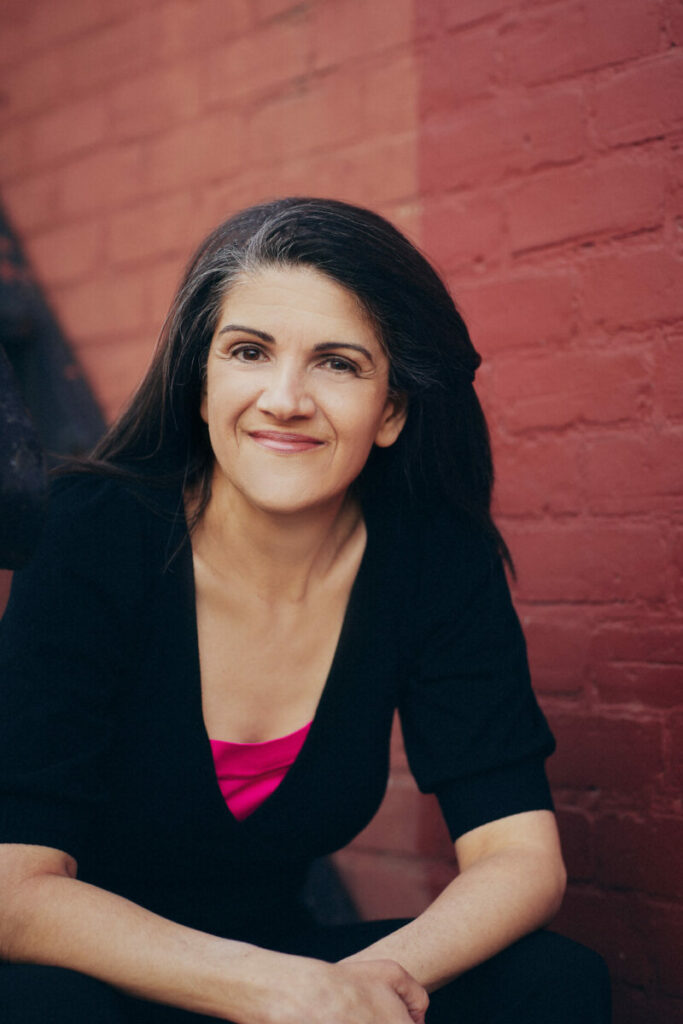 Michèle Dawson Haber is a Canadian writer, potter, and union advocate. She lives in Toronto and is working on a memoir about family secrets, identity, and step adoption. Her writing has appeared in Manifest Station, Oldster magazine, The Brevity Blog, Salon.com, and in the Modern Love column of The New York Times. You can find her at www.micheledhaber.com.