Interviewed by Hillary Moses Mohaupt

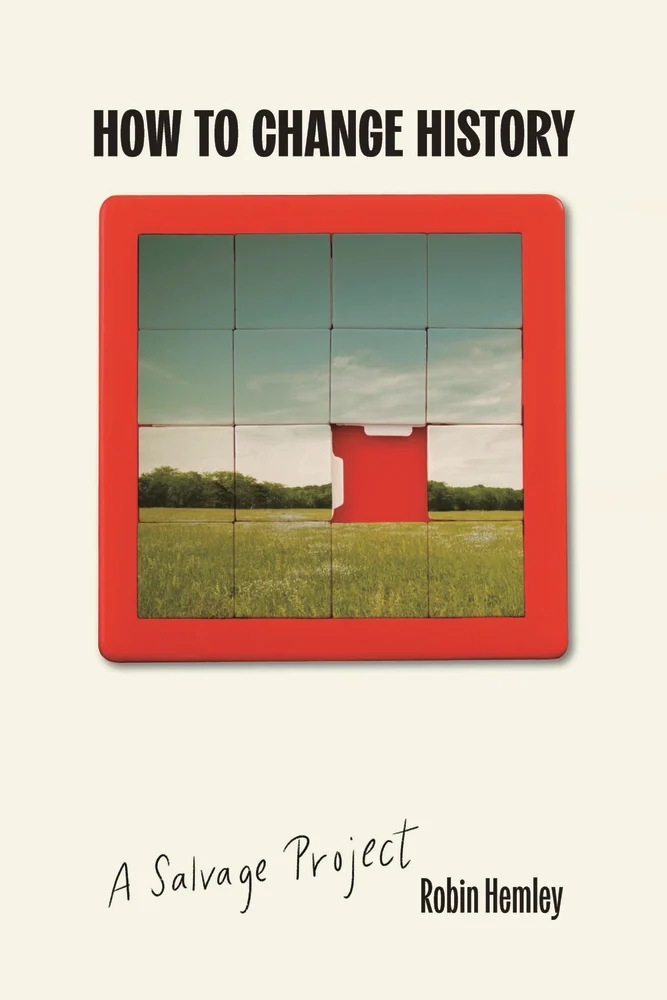 Robin Hemley is the author of more than a dozen fiction and nonfiction books. His latest, How to Change History: A Salvage Project (University of Nebraska Press, 2025), is a collection of essays that examine the histories that surround us, the grand and personal histories that make us who we are.
Traveling across decades and around the world, Hemley explores the power of photographs, the heroes who shape us, and the stories that are buried by trauma and conscious forgetting. But the essays aren’t all tragic: pulling together scraps about a dachshund, a brief career at the Playboy building in Chicago, and brushes with very famous writers as well as neighbors, family members, and other guides, Hemley reminds us that life is just as equally absurd as it is heartbreaking, as silly as it is serious – and that it is all worthy of a writer’s observing eyes.
I spoke to Hemley via Zoom while I was on the American east coast and he was 12 hours ahead of me in the Philippines, which was a fitting arrangement to discuss a book that considers the past, the future, and our place in time.
Hillary Moses Mohaupt: I loved your book, and found it so interesting to think about how history and memory are key things for writers to think about. One thing I really appreciated was the order of the essays, which I thought elevated some of the book’s themes and put the essays in conversation with each other in a way that offered additional layers. How did you go about putting together this book?
Robin Hemley: Thank you, I’m really glad you like the book. One of my friends referred to it as “accidental memoir.” Accidental because the essays were written separately, over many years. And in a book like this, you’re absolutely right, the order is crucial. At various times over the years I’ve thought I’d like to put together a collection of my essays, but that’s not enough for an essay collection. There has to be something that it all hangs on, and besides my family, what it hangs on is this erasure of history, the things we choose to remember and choose to forget in our imaginations, and all in relation to our personal and cultural histories.
Once I got that key idea, I could do the ordering, which I think is one of the most fun aspects of putting a book together. I started with the end essay, about finding this photograph with my grandmother and my sister in it for this studio audience for this horrible original reality TV show called “Queen for a Day.” It was just a short essay but I felt it had a bit of a gut punch if it was preceded by all these other essays about my family, about loss, and about how we deal with loss. My friend, the writer David Shields, has put together a number of collections, and he told me he spends so much time thinking about how each essay abutting the other speaks to or contradicts the other. That’s always stayed with me. That’s what I try for.
HMM: I’m glad that you mentioned that you wrote these essays over time. Did you have to edit any of them as you were putting together this book?
RH: Yes, in part because of course sometimes you repeat the same information, so you have to make sure you’re not saying the same thing over and over again. There was an essay about my mother’s cousin Roy who was a survivor of Pearl Harbor and wound up being murdered by his own daughter. I originally wrote a piece based on that almost twenty years ago. Afterwards, I met the other daughter, the one who hadn’t killed him, and we became friends. Then I approached her and said, I want to write about your dad, and asked to interview her. She said yes, so I learned so much I had not known before. It really changed the flavor of the essay and made it better. It’s interesting going back into an essay that you haven’t looked at for a number of years. You’re a different person and maybe a different writer, and you have to find a way to re-engage with it.
HMM: There are a lot of throughlines running through this book – grief in your family, for one, but also photography. And you talk in this book about the idea of telesma – as you write, “that talismanic aspect of the image that draws us into it.” That’s such a great description of those moments when you see a photo and you have to pay attention to it. Can you tell me more about telesma and how photos draw you in?
RH: I’m always drawn to old photographs and photographs with no context. Even a studio photograph from 100 years ago – you’re wondering about the lives of these people, what did they do before and after the photograph was taken. What stories are embedded in or suggested by the photograph? I have a few photographs that are really frustrating me. My mother was, in her time, a well-known short story writer and she lived in Greenwich Village for a long time. I found these two portraits of this woman who was, I’m sure, a friend of my mother’s, but my mother’s been dead since 2004 and I can’t ask her who this person is. They’re beautiful photographs of this woman – you can sense her intelligence and the depth of who she is. It’s captured perfectly but I have no idea who she is. Because of that, I’m drawn into this moment where I engage with a photograph in a way that forces me to use my imagination, to step partially into it.
I first thought about the talismanic quality of photographs when I was writing my memoir about my older sister Nola. This was at a time when desktop computers didn’t have a lot of memory, and when I wrote my chapters, it was always tough to get the photographs in there because they took up so much space. I could insert the photograph and then write around it, so the words would kind of wrap around the photos. And the photos themselves felt like talismans, like magic tokens to transport me back into the past that I wanted to write about. So that’s a thing that is really rich about photographs for writers: they unlock something, and give you permission to write about something that you didn’t experience but you have evidence of.
HMM: I love that so much. So, you mentioned your mother’s friend and your older sister, and other people in your family, who all make appearances in your essays. Both of your parents knew or were related to famous people, so it was also neat to see these famous names come up – writers, artists, actors, comedians, generals. They all felt like ghosts to me, in the best sense, if that’s possible. You write in the book, “For me, history is one long ghost story.” Can you say more about that?
RH: On a basic level, history haunts those of us who pay attention to it. I think history haunts us whether we acknowledge it or not, and not acknowledging history brings out the ghosts even more. Countries that don’t take responsibility for the actions of the past are haunted by that and it keeps coming back, because those things can only be suppressed for so long. For instance, I love landscapes that I consider haunted, like Tasmania. Tasmania was the site of a terrible genocide against the Aboriginal people there in the 19th century. And if you go there, and if you know anything about that history, it’s hard to be in the place without it looming large around you. You can enjoy yourself, but it’s just there. And there’s something that is very melancholy about the landscape. I feel the same way about the Cathar region of France, where the Cathars were exterminated at the orders of the Pope. These places really have power.
HMM: One of the things I’m taking away from this book is the importance of paying attention – to details, to the things that are left unsaid between people, the things that make a moment feel unique, and the way some things stay with us – sort of what you were talking about earlier. What helps you pay attention?
RH: It used to be my journal. Now it’s my Notes on my iPhone. I was teaching recently in the Iowa Summer Writing Festival, and I asked the people in the class to listen for conversations, to eavesdrop, just walking around Iowa City, to see if they hear anything. I think so often we tune out everything; we’re not even conscious that we’re tuning out the world. So if you make an assignment to actually pay attention, things will happen. In my case, something funny happens to me every day. I was just walking in the pedestrian mall on my way to class a day later. And there were these two young boys, about nine years old, playing in the fountain in the middle of the pedestrian mall. And they were just chatting, and then from about 50 feet away a girl about their age shouts over to them. And one of them looks at the other with resignation and says, “What are the odds?” I just love that, it was so funny, such an adult thing to say. I don’t think I would have noticed that had I not made the assignment to my students.
You know, artists have sketchbooks and they’re always sketching. In fact, the first creative writing assignment I ever had was from my mother when I was 18, and it was to go out and observe and sketch in words three different people. It was a revelation to me. I realized I could capture some essence of the world around me by just putting pen to paper and have it always. So, to me, it’s really being an active listener and observer, and viewing the world the way an artist views the world when they sketch something.
HMM: That makes me want to start carrying a notebook.
RH: Yes, and reading the old entries – which you don’t do a lot, but when you do, it’s so interesting.
HMM: Yeah. And I say notebook, but as you say, I could just put notes on my phone. It doesn’t have to be complicated. As we talk about paying attention and going back to your previous essays and seeing how the work has changed and how yourself has changed, I’m thinking about an essay in your book about finding a scrapbook at a sale and feeling like you had to take it with you – because you had the same birthday as the woman who made it. And about this scrapbook you write, “I see a sliver of her mind at work, though I can’t possibly know her in all her complexity, as I can’t even know myself.” (26) Do you think writing, whether it’s memoir or fiction, helps us know ourselves better, or, at least, in a different way?
RH: Absolutely. I’m not the first to say this at all, but it’s thinking on the page. It’s trying to discover what you think about something. I don’t think knowing oneself is a static thing. I think you know yourself better at some times, and then throw away that knowledge at other times.
And it’s not only a matter of knowing who you are now but who you were at another time. I think it was Joan Didion who said she would read her old notebooks to discover who she was at the age of 19. That’s something I value, too: seeing who you were a decade, or two decades, or three decades ago, what are the consistencies and what are the differences. It’s amazing how little your personality does change over time, when you look back. I don’t think I could really live a full life if I didn’t write. It goes back to Socrates, who said the unexamined life was not worth living. I don’t think truer words were ever said. What are you doing if you’re not paying attention to the way you move through the world? Then you’re just moving through the world at a blinding speed and what do you have to show for it?
That’s one thing about tourist snapshots. They don’t say anything about us, unless you’re actually using the camera to observe, the same way where you’re observing not the extraordinary but the ordinary. For instance, there’s a book I like called The Other Venice. He wanted to write about Venice, which is one of the most written about places in the world. So the way he did it was to focus on the things that everyone else overlooks. I spent several months in Iceland last year and I wanted to take photographs, but I didn’t want to take the typical tourist photographs, so I started to notice things that were lost. And I finished fairly recently an essay called “Lost and Found in Iceland,” which is really about the things that we lose and the things that we find in a larger sense. I actually don’t have anything against tourist snapshots, but as far as knowing yourself, you have to look a little deeper.
HMM: That’s another good reminder about the writerly way of paying attention. Throughout the book you talk a lot about role models, starting with your mother, but also role models you don’t really ever meet. Who are your role models now?
RH: That’s a tough question. Someone I like very much is Nobel Laureate Annie Ernaux and her auto-fiction/memoir approach to her life. I was reading this book of hers called The Years, about the years between her birth and 2005. It’s got a lovely sense of understanding the personal and the larger sense of culture.
A lot of my role models are the people I grew up reading – Borges, Kafka – those people never get old to me. But I would also say that some of my role models are writers who are active in the world in ways that are not just writing. I love activist writers like Grace Paley, who was not just a wonderful writer but also a peace activist, and Studs Terkel, who was doing amazing oral histories about society. People like that, who are both really good writers and observers, and who are really committed to not being selfish or self-observed, I find really inspiring.
HMM: You talked in the book about the exhibit your father curated in Provincetown that meditated on the question, “What is art?” How would you answer that question?
RH: It’s an impossible question.
HMM: Yes, it is!
RH: Was it Marcel Duchamp who did the urinal, and said, “this is not art”? And it’s a famous piece of art! For a long time artists have been not just asking that question, but subverting it. I think artists and writers are always trying to subvert complacencies or conventional wisdoms. It’s an open question, always, what is art. The artist Milton Avery once said that art is a series of blind corners, and you don’t know what’s around the corner, and still you take it. That’s not a definition, that’s more of an approach to one’s artistic practice, but I still think it’s pretty good because if something gives you this thrill or frisson when you’re taking this leap in your artistic practice, that to me is approaching the feeling one gets when one either makes or confronts a piece of art that was unexpected that throws the world upside and makes you pay attention again.
It’s a question we’ll keep asking forever. I’ve been fascinated by the whole idea of public art and how municipalities across the world and especially in the US wrestle with monuments and statues. Art is really disturbing to people. I think of Maya Lin and her Vietnam War memorial. I’ve always admired her and how at such a young age she designed this memorial that people were completely upset about it. Now it’s the one that everyone wants to go to, but at first it confronted people as too new, too shocking.
I love that about art – not that it has to shock you, but I think lasting art always has an element of perpetual newness, perpetual something that is going to give you, in the words of Roland Barthes, a punctum, a little wound.
HMM: Something that has some telesma.
RH: Exactly! I hope that makes sense.
HMM: It does. And it makes me want to wander by some monuments and pay close attention, as I’m taking this assignment with me. So we’ve talked over the course of this conversation about history and how writers engage with it. Having written this book, how would you define “history”?
RH: I think back to what a high school teacher told me, which is that history is not the event, it’s the recording of the event. That to me is really the key. Because those old questions arise about who gets to write history, and what if those histories contradict one another?
There are a lot of different kinds of history – personal, social, cultural, conventional, accepted, the history that’s secret, and the history that maybe has been forgotten. A lot of histories get recorded in someone’s mind and don’t usually find an outlet. One example: my wife and I were recently invited for dinner with a friend of ours, Norbe, who was born in the Philippines. She’s about 93 years old, and she’s a delightful person, a really big reader. She came to the US fifty years ago, maybe more, having lived through World War II in Manila and a horrific period where the Japanese were committing massacres, all this horrible stuff. But we never knew about this until we went over for dinner. I must have asked this simple question and she started talking about the war and how they would see the planes dog fighting in the sky. She said, “I was young and I saw it all but I was not scared at all, except I saw my parents were scared and that terrified me.”
You could see this raw terror in her eyes: at the age of 93, she was dropped right back in 1944, 1945, and she kept repeating that phrase about her parents. There’s this private history that’s going on in her mind, that’s as alive as anything else, that I just got access to, but only through serendipity.
HMM: That’s an incredible opportunity to witness that.
RH: And think how many people are still alive who lived through that.
HMM: And their stories are just personal stories, not recorded anywhere.
RH: And unfortunately the things that are remembered, recorded, are things that are large traumas, which are also the kinds of things that we keep to ourselves. So larger histories are erased because it’s a national trauma, and the nation either doesn’t want to remember, or doesn’t want to accept responsibility. And I think that’s a case of history haunting you – the history will haunt a nation until it comes to terms with what it did. But in terms of personal trauma, those things that my friend was recounting are the things we often never let out, and it’s a shame because there are those important intersections of personal histories and larger ones. Norbe’s witness is, to me, very important because it corroborates certain things I’ve heard and that some people deny ever happened, but they did happen.
HMM: Once again, the importance of paying attention, listening, recording.
RH: I don’t know how anyone can be uninterested in history.
Hillary Moses Mohaupt’s work has been published in Barrelhouse, Brevity, Lady Science, Dogwood, The Rupture, Split/Lip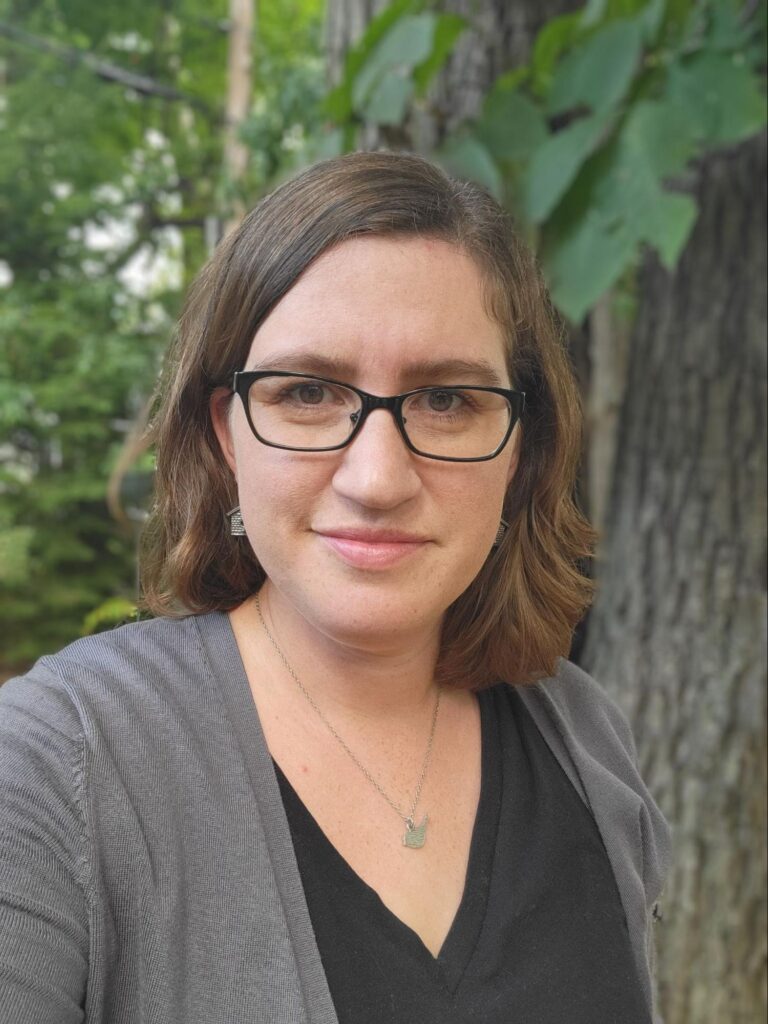 , The Journal of the History of Biology, and elsewhere. She lives in Delaware with her family.