

Johnny told me he never saw the gun. He didn’t know what hit him, people say. Johnny really didn’t.
They didn’t shoot him. That’s why we didn’t know it was a gun at first. A tire iron, a bat, maybe. No, the doctors said, it had to be a gun because of the way his eye socket was broken in four places.
Here, and here, one of them pointed. And here. He indicated to Johnny’s face, held his fingers in a pistol-like shape, and pretended to hit. With the butt of the gun, like this.
We all winced.
One thing I had loved about Johnny right away was the blue of his eyes. He had big, round, bright blue eyes. I couldn’t know then that eight years later, our first daughter would be born with those eyes.
He was hospitalized for a week. To save that eye, they had to screw the bones together and hold it all in place with a titanium plate. Facial reconstruction surgery. In cold weather, it freezes and the plate burns inside his face. For a long time, we worried his face might set off metal detectors, but it never did.
I didn’t see what happened because I was in the shower.
At twenty-nine, I had two Ivy League master’s degrees and nothing to show for them but a shitty apartment in the then-undeveloped Journal Square section of Jersey City, an embarrassingly entry-level job in publishing that didn’t even cover the rent, an angry ex-girlfriend who couldn’t understand why I loved Johnny more than I loved her, and an endless pile of dirty black clothes mostly from thrift stores that I’d fashioned to look like I’d bought them at Trash & Vaudeville.
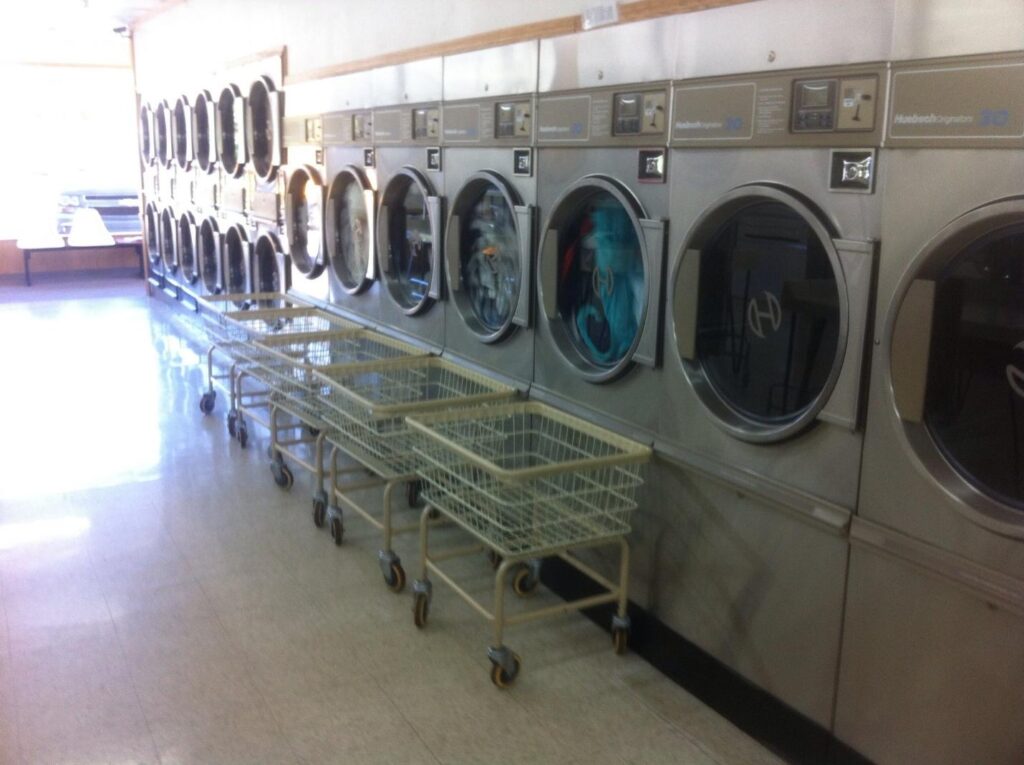
I hated laundry and saved it until I was down to my least favorite underwear and mismatched socks, making it an all-day project involving a granny cart piled precariously high, pockets laden with hoarded quarters, and my sniper’s eye for any available machine.
When Johnny entered my life, I decided: no more sitting in laundromats.
Now, he stayed over. Our bodies came together at night and his clothes accumulated on my floor. He offered to drop the laundry off for me. For us. Wash-n-fold: his first contribution to what was becoming our household. Because now Johnny’s black T-shirts and underwear were mixed in with weeks of my clothes. Everything came together perfectly. It felt like a beginning.
His tall, lanky frame, pale skin, dyed black hair hanging in his face, those big eyes, and full lips often meant he was mistaken for a girl. He’d been stopped on the street or in bars by talent scouts and asked to do modeling. Heroin chic, they’d said, in awe. Effeminate. I often sang that ’80s song to him, giggling, Johnny are you queer? He was, in fact. Except for me and another girl here and there. Too funny. That song could have been written for him, for us. But other people were not as nice.
He was returning from the laundromat when it happened.
He’d seen the teenagers on the way there, he told me later, but he hadn’t thought anything of them. At least not anything more than any of the other times he’d had to walk through an intimidating group. Faggot, they usually hissed. Sometimes they got in his face. I could rape you, one might say. Fuck you up. He wouldn’t say he was used to getting beaten up, but it had happened more times than he could count. Starting with his own father. Then his stepfather. Kids at school. And now, strangers on the sidewalk. They tended to be kids, usually boys, race was irrelevant. His way of dealing was to walk past as quickly as possible. These particular kids may have said something to him, but he couldn’t hear a thing because of the Joy Division in his ears. Within minutes he was past them, and the laundromat was another two blocks down, around the corner to the right. The kids were still there on his way back and, in his mind, once again, the safest way around was through.
We’d been together less than a year on that November day. We were an unlikely pair. We’d met in a New York City nightclub where most people wore black; some hooked up in stairwells and had sex in bathrooms. I’d just broken up with my girlfriend and could not take my eyes off him, this adorably androgynous boy in black. I was impossibly goth but also queer and loved to mix my platform boots, black vinyl, and heavy eyeliner with an oversized hoodie, tattoos, and short nails. I was used to people calling Halloween is only once a year! And Where’s the funeral? when I walked by. Johnny asked me for my phone number when he left at 2:30 am with a weak smile and a weaker excuse. I thought he was ditching me politely, awkwardly, leaving with another boy. I was surprised when he called me the next night. That boy, he explained, was his cousin and his ride home.
Johnny described himself to me as an audiophile. He liked to play his music so loud that it was an atmosphere, an environment. He wore big headphones because they drowned out all external sound. Music played not just in his ears but throughout his tall, waiflike, twenty-three-year-old body. It helped him forget everything around him.
The kids didn’t take his headphones or his iPod. They took the five dollars he had in cash and left the wallet dangling from a chain on his belt. For years, we said: They took him out for five bucks.
He was sprawled, unconscious, on the sidewalk. A guy on a bike found him and shook him awake. Johnny roused, thinking it was time to get ready for high school before realizing where he was.
Hey man, you ok? I saw what happened. The kids ran off.
They’re gone? Where did they go?
The guy pointed away from my apartment and Johnny followed his finger with the undamaged eye, but he was in no shape to be chasing anyone.
From the shower, I heard a commotion and realized someone was banging at my door. I hurried to open it, dripping, pulling a towel around me. It was Johnny, broken, torn, bleeding, dizzy. There were cops with him.
I blanched at the sight of Johnny’s torn face, and he paled at my reaction, nearly passing out. The cops caught him and I caught their surprise that I was female.
Toldja you need an ambulance, one chided him as he struggled to his feet.
No. I need her, he said and reached for me.
This confirmed what seemed a transformative relationship from the start. He’d come over after that first phone call, and when we undressed each other, we’d seen it. Despite our seven-year age difference, our dramatically different educations and upbringings. The deep razorblade scars that crisscrossed his chest and stomach were the same ones that lined my arms and legs. That first night, and every night, our bodies fit together perfectly. We could read each other’s pain.
I stared from him to the police and back. We assumed it was a queer bashing, one of the cops was saying. But now−
I didn’t respond. It was a queer bashing. How could they not understand that? My being a woman changed nothing.
Johnny, you need to get to a hospital, I said instead.
Please don’t leave me alone, he begged.
This deployed my action mode. The best way I knew how to love him in that moment, and every moment of crisis thereafter. Don’t worry, I’m coming with you.
When they heard he didn’t have insurance and we had no way to get to the hospital, the cops offered to take him in their patrol car. Johnny hesitated. Too often it was a police officer or someone else in a position of authority who would refer to him as ma’am or call out to him: excuse me hon, that’s the men’s room you’re walking into, the ladies room is over there, or say to us you girls have a good night but, caught between a rock and a hard place as he was, he relented.
Great, I said. Give me two seconds to get dressed.
No, they said. Not you. We can only take him.
Johnny looked at me pleadingly through his bloody face for direction. For a millisecond, I stood stupidly in my towel, hating that I was a woman because of how quickly the police dismissed this obvious act of violence, hating that I felt so helpless to say or do anything that would incite them to act. A man by my side made my friends think I no longer belonged at Pride. A woman on his arm, and now cops didn’t think Johnny was queer enough to have this deemed a hate crime. I hated feeling erased in this weird, opposite way.
Go with them, I said finally. You don’t have a choice.
I closed the door behind them and dressed. I practically ran the two miles to the hospital while he was rushed into surgery.
From his bedside, I called his mother. His job. My job. The precinct. I sat in the hospital with him whenever I was allowed to for over a week. Half his face swollen and bruised the color of an eggplant, he was still beautiful to me.
The cops said there had been a rash of similar street attacks. Robberies, they said. They couldn’t do anything, they claimed, and they didn’t.
While he recovered, I had to keep waking up every morning, working, functioning. Coming home at night, walking the streets in the dark, alone. It felt impossible.
I had a huge green parrot who screamed out the window whenever he saw me coming home. He screeched and squawked and lunged at other people, but he purred at me like a lover. While Johnny healed, I wore him on my shoulder to run errands in my neighborhood, which made other people on the street back away from me. One false move and this bird could bite through bone. I knew I looked like the local lunatic, but I didn’t mind. I felt safe.
When Johnny returned to life, the scars were slight and pink, but they ran deep. He startled easily. His fingers jumped to his face, touching the new skin, remembering. He bought big movie star sunglasses, both to hide the scars and to keep the sun off his face. They made him even prettier and seem even more androgynous.
The state of New Jersey eventually dismissed the $28,000 in medical bills because Johnny couldn’t pay them. It took years, a nagging reminder of that day.
But we still had each other. For such a young couple, we had aged a million years together. We’d survived.
We moved away from that awful place. When our children were small, Johnny became the primary caregiver because my job required a great deal of travel. At Starbucks, the gay baristas made him laugh with their free coffees and You must be the manny! When he took the girls to the playground near our Manhattan apartment, he tensed when the teenagers playing hooky called to him: Hey pedo, whatchu doing with those little girls? When we could afford it, we moved again, choosing a house in a location where if people thought we were weird, they mostly didn’t say it to our faces. You two must be artists, they sang at us instead, looking at us up and down.
The lines around his eye faded with time but it took the emotional pain a lot longer. He remained self-conscious about the scars, especially where his bottom eyelid had torn. Where it was sewn back together, two eyelash hairs now grew towards each other, one directly into his eye. Every month or so, he had to pluck it out, something he dreaded. He used a bright pink pointed Tweezerman I bought for twenty dollars to make it a less arduous chore.
Once, not long ago, I found him in the bathroom, peering into the mirror, tweezer in hand, gathering courage.
Have you ever plucked an eyelash hair? he asked me as I sat down on the closed toilet seat to watch him.
No, I said, growing quiet, thinking about stepping out of the shower to find him torn and bleeding in my doorway.
Stings like a motherfucker.
He held his breath and pulled. His eyes turned glassy, his nose red. The right eye spilled a tear while he examined the hair in the tweezer. The scars that normally no one sees unless they know where to look were lit up like they’d been plugged in and turned on. He exhaled slowly and looked down at me.
You know, I loved you from the moment I met you. But when that happened, the way you were there for me? No one had ever done that for me before. That’s how I knew you loved me back.
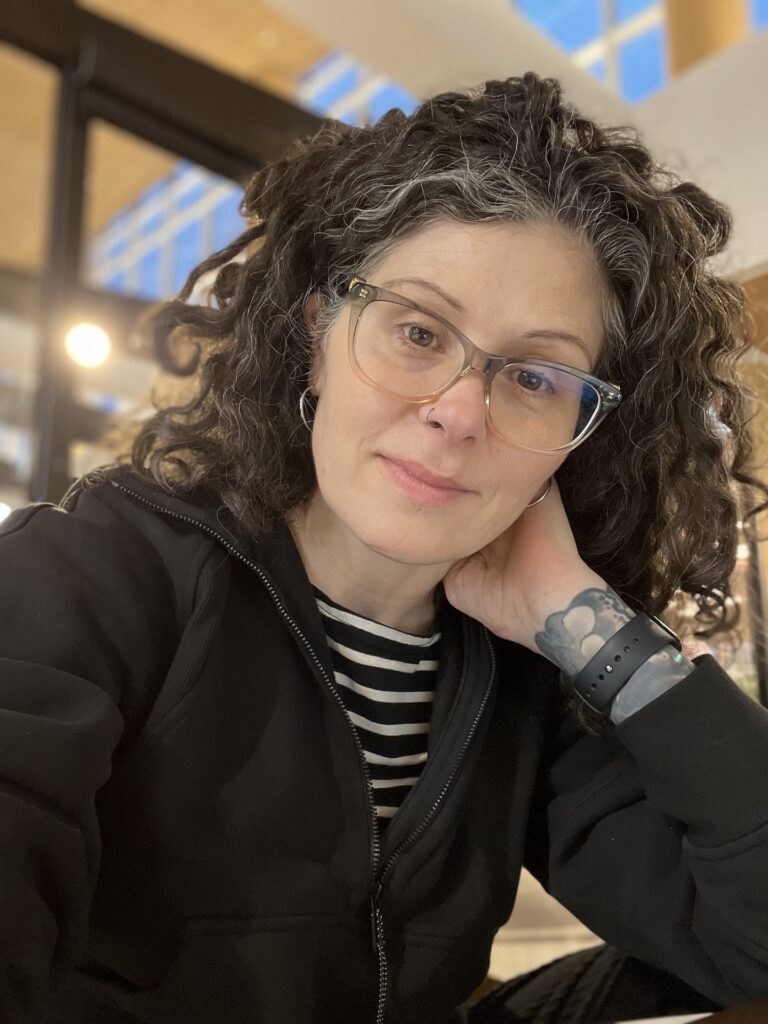 Aimee Seiff Christian writes memoir and creative nonfiction. Her writing has appeared in The New York Times, The Washington Post, Poets & Writers, The Rumpus, Pidgeonholes, Atticus Review, SmokeLong Quarterly, and more. She is a writing instructor and developmental editor, and is currently querying her memoir, Nobody’s Daughter, about adoption and identity. She is from New York City and currently lives in Massachusetts with her family. Find out more about Aimee at aimeechristian.net.
Such a beautiful and powerful reminder of what love makes possible, even in the worst of times… Thank you for this, Aimee.