
Reviewed by Kristy Wessel

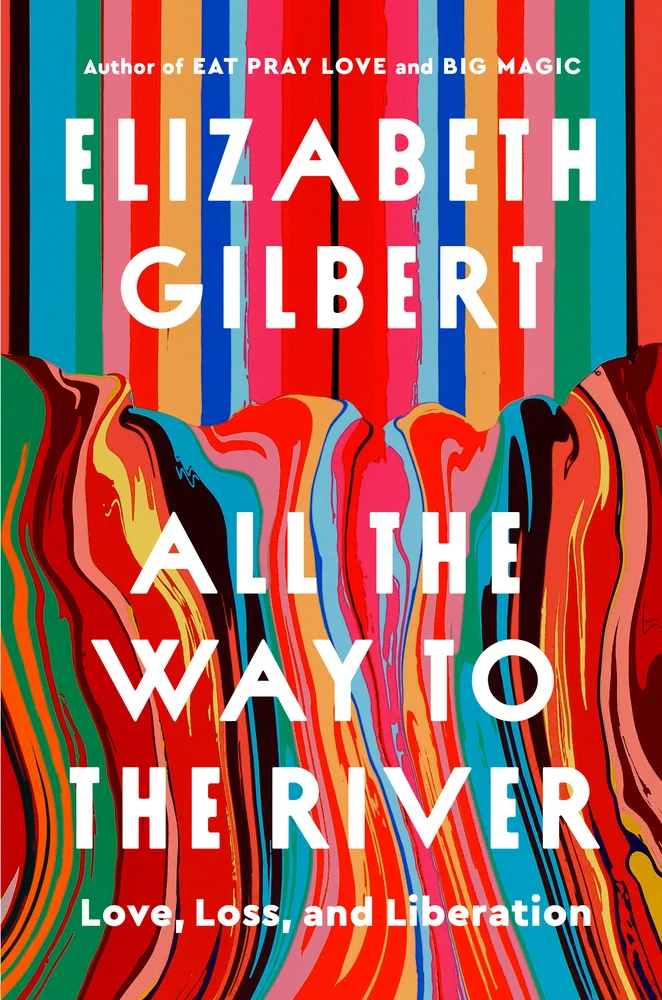 All the Way to the River: Love, Loss, and Liberation (Riverhead Books, September 2025) is a raw, vulnerable memoir that dives deep into Elizabeth Gilbert’s personal reckoning with addiction, grief, and spiritual transformation. Known for Eat, Pray, Love, Gilbert returns not in a phase of expansion or joy — but in collapse. The book reads more like a private journal than a traditional memoir: unpolished, nonlinear, and intensely personal. At times it’s almost too raw to bear, but that’s also what makes it so powerful.
Gilbert’s honesty about sex and love addiction is rare. She writes openly about chasing partners, losing herself in relationships, and confusing desire with self-worth. Her words don’t hold back, especially when she describes the desperate need to feel alive through someone else. “What we commonly call an ‘addict,’” she writes, “is just an exaggerated version of all of us—just a person so desperately in search of relief from the sting of life that they will use anything (or anyone) to soothe it.”
That line hit me like a tuning fork, sounding out something I’d always felt but never named. It’s one of the many moments where Gilbert gently dissolves the boundary between addict and non-addict, inviting the reader to see compulsive behavior as a universal human response to pain.
The memoir doesn’t follow a clean arc of recovery or closure. Instead, it captures the emotional whiplash of healing in real time. At times, Gilbert is philosophical and tender. At others, she’s spiraling and sharp. There’s a part where she describes her partner’s cancer diagnosis in blunt, unsentimental terms, and then quickly backtracks with a burst of love and guilt. That kind of whiplash may be hard for some readers to follow, but for anyone who’s lived through grief, it feels honest.
One of the most compelling aspects of the memoir is its spiritual throughline. Gilbert writes about being visited by the ghost of her partner, Raya, with an openness that avoids sensationalism. She reflects on the idea of “Earth School,” a belief that souls choose their incarnation and relationships before entering this life, a concept rooted in shamanic and metaphysical traditions. For me, these reflections added a mystical, haunted layer to the memoir. Others may view them with disbelief, but they didn’t feel performative or forced. They felt like someone trying to stay in conversation with the mystery of life and death.
While much of the book felt carefully vulnerable, not everything landed for me. The poetry that opens many of the chapters often reads like unfiltered thoughts or spiritual affirmations. As a poet, I sometimes longed for a bit more refinement… but I also appreciated the transparency of someone working through their experience in real time. Their rawness matched the tone of the book, but they sometimes distracted from the emotional pacing of the prose.
Still, the heart of this memoir is undeniably strong. Gilbert isn’t offering a resolution. She’s offering a practice: living with discomfort, naming the truth, finding stillness in the middle of emotional noise. “The world will never arrange itself to keep an addict safe,” she writes. “We must learn to do that for ourselves.”
That line could apply to any of us trying to manage anxiety, overstimulation, heartbreak, or perfectionism. Learning to care for ourselves in a world that rarely slows down is a kind of sacred work, and this memoir doesn’t pretend it’s easy. It simply insists that it’s worth doing.
All the Way to the River isn’t the story I expected from Elizabeth Gilbert. It isn’t tidy or triumphant. But it’s honest in a way that feels increasingly rare. In a culture that rewards resilience and image, Gilbert offers collapse, confusion, and deep spiritual hunger. And she offers them without apology.
This is not a comfortable read, but for anyone grappling with addiction, loss, or the longing to feel better, it offers a powerful, unflinching reminder that we are all broken, and that healing is possible.
 Kristy Wessel is a writer and editor based in Minnesota, where she explores the intersection of creativity, healing, and everyday life. Her work is rooted in the belief that storytelling can be both a survival tool and a form of quiet revolution. She’s the creator of Write to Heal, a gentle journaling space for deep-feeling people recovering from burnout. Find her online at thewritetoheal.com or on Instagram at @kristywessel.

This is one of the most beautifully written, insightful and compassionate reviews I’ve ever read. Elizabeth Gilbert owes you a ‘thank you’ note. Why am I not surprised you’re from Minnesota?’’ If you’ve never written s book, I hope you will!