Reviewed by Marissa Gallerani

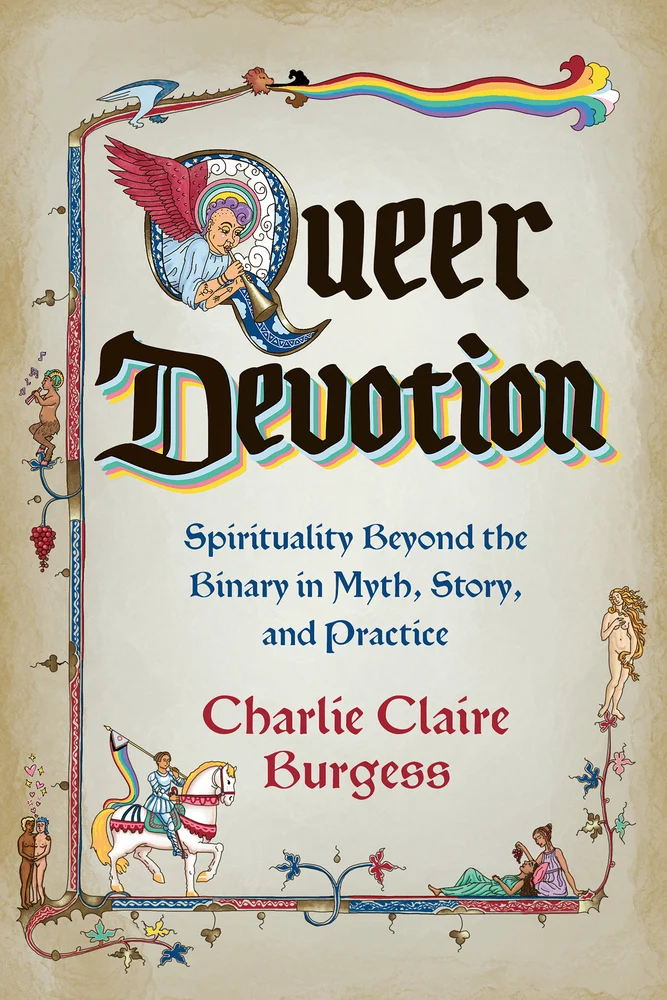 Though organized religions might consider their doctrines static and absolute, Queer Devotion: Spirituality Behind the Binary in Myth, Story and Practice (Hay House; 2025) by Charlie Claire Burgess challenges this notion by analyzing historical portrayals of major religious figures that depict them as queer. The book includes deities and mythical figures from the Christian tradition, Greek and Roman gods, Norse myth and Arthurian legends, with the express understanding that there are many more queer gods in various pantheons worldwide.
While it deals with historical representations of gods and goddesses, Queer Devotion also connects to modern day religions and the continued discrimination against queer people. Notably, Burgess examines the 2024 Dignitas Infinita declaration from the Vatican that purports that all human beings have dignity, but also asserts that IVF, surrogacy, gender reassignment surgery and living as a trans person are ‘grave violations.’ Burgess further examines how religion has been used for centuries to demonize and torture queer people, from the persecution of Joan of Arc to her canonization by the same Church that executed her, to how Norse gods like Loki and Odin have been coopted by Neo Nazi and white supremacist groups.
Despite these real and concerning developments, Burgess devotes the majority of the book to an expansive affirmation of queerness. They look at the changing artistic and written portrayals of gods and goddesses like Aphrodite and Dionysus, who can be connected to Mother Mary and Jesus, respectively. Ultimately, the consolidation of religious doctrine stifled differing opinions – such is what happened with the Gnostic Gospels, and the Gospels of St. Thomas and Mary Magdalene, all more lenient and liberal in their interpretations of Christ’s teachings. Burgess’s writing is very validating, and they include examples of their own religious practices to give the reader ideas. Burgess emphasizes that “[w]e must forget what we’ve learned to remember what we know.” If everyone is made in the image of God, is then God not queer? Trans? Nonbinary?
With the wide range of traditions consulted, from actual historical figures to mythical ones, the book allows the reader to reclaim this heritage for themselves as they see fit. As someone who grew up Catholic but has since distanced themselves from the Church, I found the notion that I did not need to accept the Church’s depiction of God and could create my own to be deeply touching.
Every chapter has the same structure: there is an examination of the deity and their connection to queerness, followed by journal prompts and ritual suggestions. Queer Devotions also has an appendix including modified versions of the major Christian prayers, if the reader wishes to use them. Burgess emphasizes throughout the book that they are offering suggestions; it is up to the reader to personalize their religious practice and decide what’s right for them.
By examining the historical depictions of gods and goddesses, Burgess proves once and for all that the gods have always been queer. The book is an affirming read for queer people who might find themselves distanced from organized religion, and yet still wish to develop a relationship with the Divine. As Burgess says as they close the book, “We’ve always been here, and we’ve always been queer, and we’ve always been divine. Hail Holy Queer.”
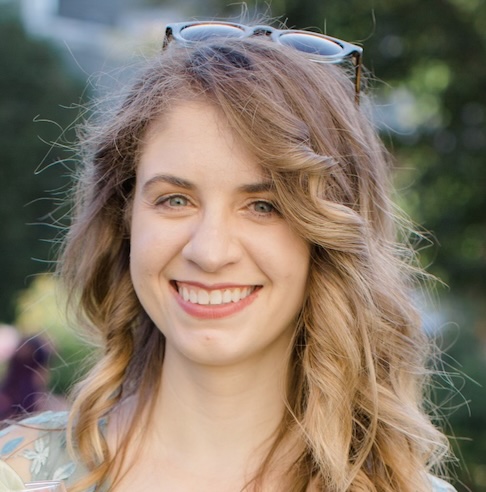 Marissa Gallerani is a queer and disabled writer and teacher living in Providence, Rhode Island. She received her MFA from The Newport MFA at Salve Regina, and has taught at multiple institutions of higher education including the New England Institute of Technology, Salve Regina University, and Write or Die. She has been published in The Harvard Review Online, the public’s radio, and The Financial Diet, among others. Marissa’s Substack, The Chaotic Reader, details her wide-ranging reading adventures. A life-long SFF fan, Marissa is currently at work on a science fantasy novel.