Reviewed by Leslie Lindsay

 I am obsessed. I can’t stop thinking about my great-grandmother, a woman I never knew. She was old and demented when I was born. Maybe I have a memory of being at her deathbed? Maybe I insinuated myself into a photograph? Maybe I only think I knew her from stories?
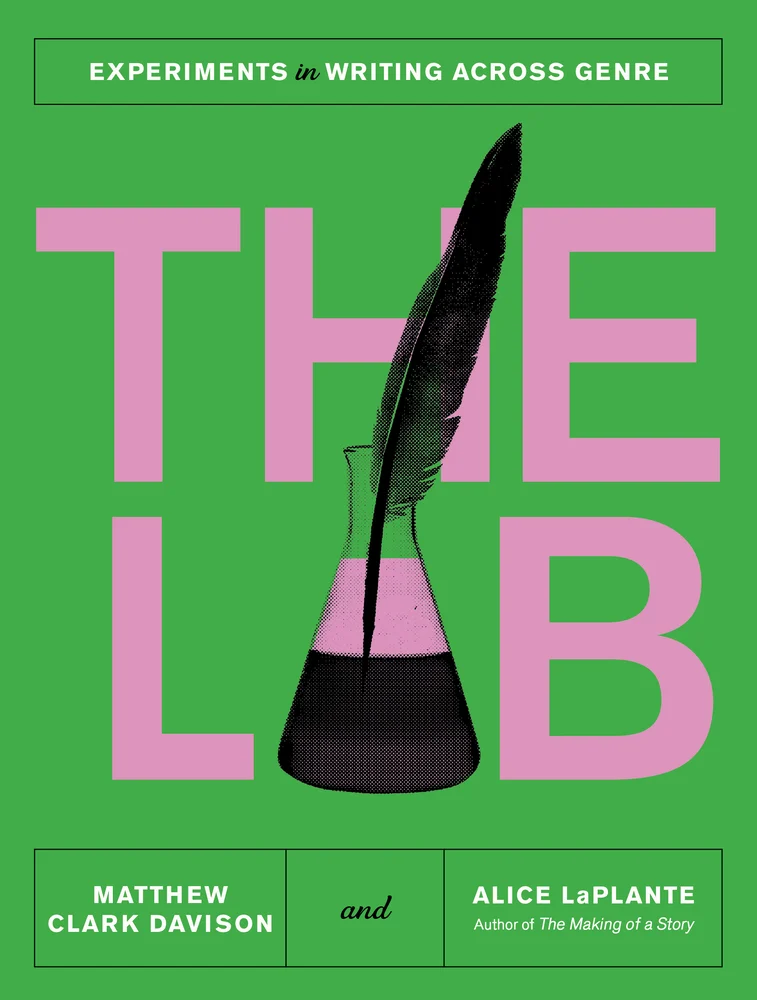
That’s exactly where Matthew Clark Davison and Alice LaPlante, novelists and creative writing instructors, want me — where they want all writers. The Lab: Experiements in Writing Across Genre (W.W. Norton, July 2025) is their solution to the traditionally taught formulaic-style of writing. You know them as “The Hero’s Journey,” or ABCDE (action, backstory, conflict, development, end), or something about saving the cat. I get it. Formulas are tidy. A + B.
Nothing about writing is tidy. Not when you’re following deep lines of inquiry. Or your familial lines, for example. I am trying to understand not just the ‘who beget whom,’ genealogy, but the stories behind the tombstones. I yearn to follow my ancestors into trouble and joy, perch on the rail of their front porch, and peer into their living rooms. Am I writing historical fiction? Memoir? Poetry? That’s one of the ‘research questions’ The Lab asks.
“The goal isn’t to force you to adopt a genre you don’t feel comfortable with or suited to,” write Davison and LaPlante, in The Lab, “but to identify and learn techniques that writing in different genres frequently practice.” What connects obsession to writing isn’t genre, it’s loyalty to what is urgent.
When I described the great-grandmother project to writer friends, three agreed: historical fiction. Another encouraged something about the process of uncovering my great-grandmother’s life, so narrative non-fiction? Memoir? A final suggestion was, “maybe poetry?”
What makes a poem a poem? Can I interject poetic methods and elements into this…thing I’m writing? This experiment? What is the line between fact and made-up things? How can we traverse it? Should we traverse it?
Within The Lab, Davison and LaPlante refer to writing exercises as ‘experiments.’
Readers/writers/scientists will find something like 90, tucked within ten robust chapters and 450 pages. This is a hearty reference guide, a study in craft, a pep talk, an instructional manual, and good for all writers of all levels; it’s quite literally everything Davison and LaPlante have been obsessing over their entire writing and teaching career.
Because this great-grandmother fixation knocked loudly, begging to become something artful, a book of some kind, I felt desperate to choose a container. Or did I? Davison and LaPlante suggest discovering or deepening what needs to be said by just ‘getting something on the page.’ The entire premise of The Lab is based on the desire to create. How fitting for a creative work investigating ancestors and their descendants? How true and right to combine my obsession with their lives, which through the alchemy of time, place, and love, created me, a vessel for their stories? Not because I wanted to be avant-garde, or defiant, or artful, I chose to work past known forms into something else, something hybrid. The goal, at least for me, was to follow the pattern of discovery while musing-over-the-facts of ancestry. Ancestry and writing, after all, are forms of creation.
Maybe the idea is to supersede expectations, to generate fire. Those obsessions—be they personal, aesthetic, intellectual, emotional—are present for a reason. They are not to be dampened or managed, but pursued relentlessly, glimmering in the ether, sparking our creativity, cracking open new horizons.
Leslie Lindsay
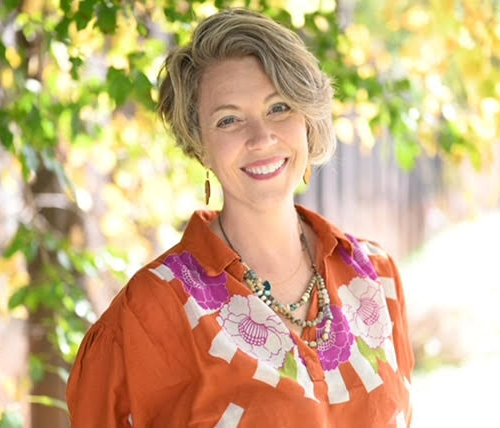
Staff InterviewerLeslie A. Lindsay is the author of Speaking of Apraxia: A Parents’ Guide to Childhood Apraxia of Speech (Woodbine House, 2021 and PRH Audio, 2022). She has contributed to the anthology, BECOMING REAL: Women Reclaim the Power of the Imagined Through Speculative Nonfiction (Pact Press/Regal House, October 2024).
Leslie’s essays, reviews, poetry, photography, and interviews have appeared in The Millions, DIAGRAM, The Rumpus, LitHub, and On the Seawall, among others. She holds a BSN from the University of Missouri-Columbia, is a former Mayo Clinic child/adolescent psychiatric R.N., an alumna of Kenyon Writer’s Workshop. Her work has been supported by Ragdale and Vermont Studio Center and nominated for Best American Short Fiction.