Reviewed by Sarah Evans

 “Young children think their families are the norm; as they move toward adolescence, they begin to uncover the distinctions.”
This line that Ren Cedar Fuller drops in the middle of her essay “Let Us Sit on the Lawn” aptly describes the journey she embarks upon throughout her book, Bigger: Essays (Autumn House Press; October 2025).
It’s a theme we all can relate to in one way or another. Until about second grade, I thought mayonnaise was the only condiment you could put on a baloney-and-cheese sandwich because that’s how my mom made it. When one of my best friends introduced me to the magic of mustard, I felt transformed. As I got older, the family norms I dissected became much deeper and darker — racist, homophobic, and misogynistic views that I struggled to unlearn.
In each of her essays, Fuller peels back layer after layer of her family’s ways. Sometimes it’s simply the act of becoming older, more mature, and more educated that helps her understand what made her family different. Other times, she uncovers the distinctions through observing those whose ways of life differ greatly from her own.
In the opening essay, “Naming My Father,” Fuller writes, “When I was young, I did not know my father was unusual.” As far as she knew, it was normal dad behavior to type out Bible verses on index cards and organize them with a self-created sorting system; explode if someone didn’t use the correct color of cup at dinner; and force your children to memorize the names of the books in the Bible forward, backward, and alphabetically. It wasn’t until Fuller started studying neurodivergence as an adult that she realized her father may have had undiagnosed autism. Fuller skillfully weaves her research on autism into the anecdotes of her father’s behavior to further emphasize her realization.
Fuller undertakes similar research and analysis to uncover the distinctions between others’ moms and her own. Parts of this journey take Fuller all the way back to her mother’s childhood at a missionary boarding school in Ecuador. Her mom rarely talked about the school, but Fuller’s research revealed the traumatic conditions her mother must have endured. In one essay, written in the form of a scientific paper, Fuller investigates how Alzheimer’s has robbed her aging mom of vocabulary and clear thought but made her happier in the process.
In all her essays, Fuller does not seek to condemn or blame others. Rather, she draws upon her deep love for her family to craft delicate stories that simultaneously reveal and protect their subjects.
Fuller’s love is most evident when she writes about her own child, who never conformed to gender norms and eventually came out as transgender. As a straight, cisgender woman, Fuller knows that she cannot fully understand all her child’s feelings and adolescent struggles. But she tries her best to be loving, open, and honest every step of the way. Her child continues to expand Fuller’s world in ways she could not have imagined, and her writings about this journey are refreshing in a society where too often we only hear about families who reject their transgender kids.
Fuller embraces the differences she encounters in her own past, her parents’ past, and her child’s present and future, weaving them into valuable stories of love, connection, and empathy. In a time when people’s differences seem to have brought us to an impasse, perhaps her book could teach us all a thing or two.
Sarah Evans
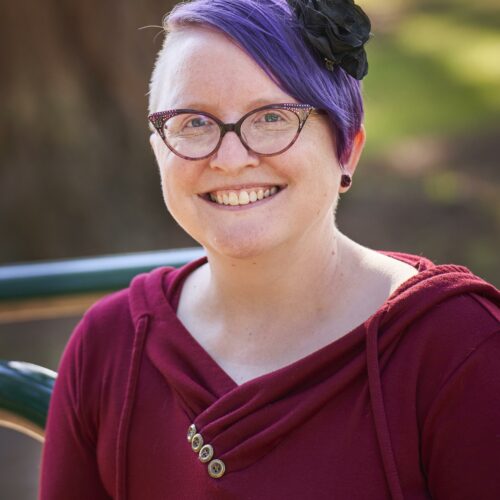
ReviewerSarah Evans is an Oregon writer and social justice activist who tries to raise marginalized voices by reviewing books written by and about people of color, women, and those who identify as LGBTQ+. She has an MFA in nonfiction writing from Pacific University.