

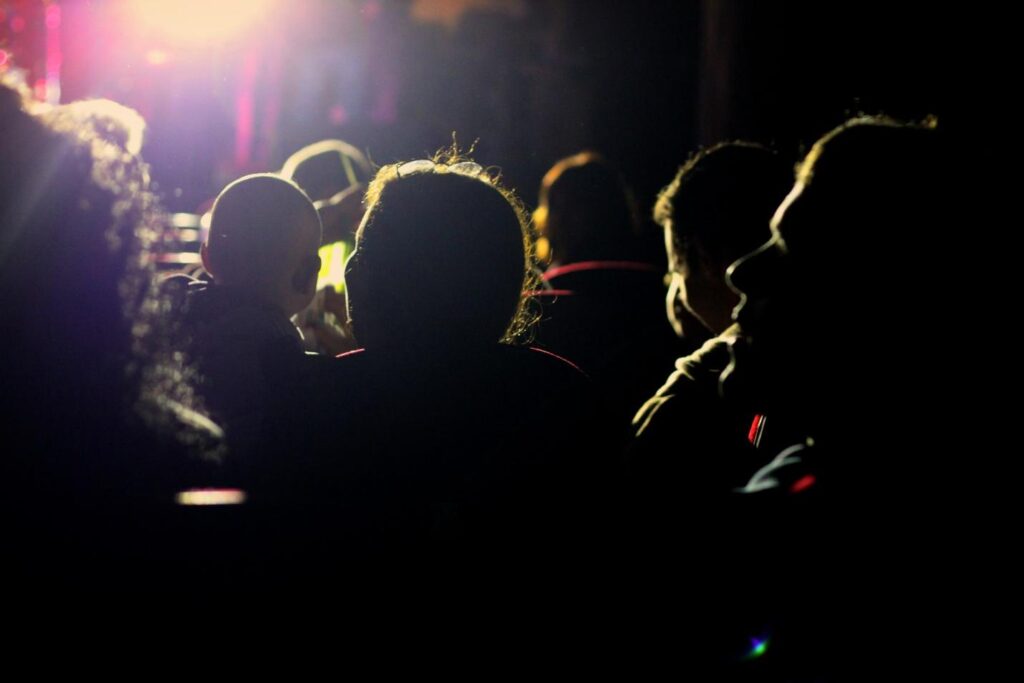
Close to the one-year anniversary of our daughter’s death, my husband Alan and I went to a movie theater to see a comedy. One of those art-house theaters with a vast marble floor, Italian gelato, cocktails, and buttered popcorn. I craved laughter, a fleeting escape into the normalcy of life. Yet sitting shoulder to shoulder with strangers felt jarring after months of retreat. I felt both invisible and exposed. The dimming of the lights was a relief—finally, no one could see us.
Previously, I could find humor almost anywhere, but after Sarah died, laughter came to a halt.
Shielding myself, I wore sunglasses indoors and out. Being in public, whether speaking to a stranger or someone I’d known all my life, felt like being cut with glass shards. A neighbor questioned, “How can you be out? Surviving? I know I couldn’t.” Another mother who’d lost a son asked me how many people attended my daughter’s memorial, then bragged about the high turnout at her own child’s funeral. Even at the supermarket, if I spotted someone I knew, I’d abandon my cart and flee. When another neighbor saw me on the street, I stiffened as she approached. She hugged me, said nothing, holding me for a moment before walking on. She got it just right.
As a psychotherapist, this was the first time in my life I struggled to believe in the power of talking. Here was something there were no words for, something I couldn’t imagine talking my way out of. How could a child so confident, loved, and happy, tell me, at the age of 13, “I feel like I’ve been hit by a tidal wave. It’s like I’m underwater and I can’t find my way to the surface.” That she had thoughts of killing herself. As her mother, I couldn’t comprehend it, but as a therapist, I knew how to get this fixed–therapy and medication.
Except I didn’t.
***
Somehow, the months after Sarah’s death passed and, slowly, some color crept back into my world. I resumed my Friday exercise class, returned to my book club, and even made it to the grocery store. Alan and I began planning a weekend away on the Eastern Shore. I even started shaving my legs again — most of the time, at least.
But as I approached the anniversary date of Sarah’s death and what would have been her nineteenth birthday, things began to slip back to gray. I skipped my book club, ignored calls from friends, found excuses to stay home. Part of me didn’t want the grief to lessen. The pain kept me connected to Sarah.
In that heaviness, memories returned — like the day we rode the metro downtown to see a Modigliani exhibition. In the first gallery, sculptures lined the hall, pencil and crayon sketches adorn the walls. We passed through the nudes to the portraits at the end.
“Look, Mom. You could have been one of his models. You have that same elongated neck and almond eyes.”
I tilted my head at the painting of Jeanne Hébuterne. “I’m not sure if that’s a compliment or not.” I smiled.
“Of course it is, Mom! They are beautiful, just like you. I will paint you one day and you’ll see.”
***
Choosing to watch a comedy felt like an act of defiance: in the face of the greatest grief, we would create a small pocket of light. As the lights dimmed and the previews began, Alan appeared beside me with a bottle of water, buttered popcorn, a large Coke, and a box of Milk Duds. He cozied up next to me, and a moment of unexpected laughter emerged — despite myself — when the movie’s son opened his father’s coffin only to find the wrong body.
I glanced at Alan, who popped a Milk Dud into his mouth and took hold of my hand, perhaps sharing my fleeting joy or, more likely, his relief that I was having fun. I felt relieved, too: I was passing as someone who could be anyone.
The audience erupted into laughter just as the undertaker returned with a new coffin, this time containing two bodies spooning—the originally sought father alongside another man. I laughed, then looked over at Alan, whose face showed no trace of amusement.
“You don’t think that’s funny?” I whispered.
Silence.
“Come on, don’t you think that’s funny?” I asked, my tone shifting from curious to uncertain as his complexion moved through the color wheel from ruddy red to purple to ashen gray.
Still, no response.
“Babe, if you don’t say something, I’m going to have to stand up and scream.” Adrenaline surged through me. If he was choking, why wasn’t he clutching his throat? I hesitated; Alan despised being the center of attention. If I misjudged the situation, he’d be livid.
I stood up.
“A Milk Dud is killing my husband!” Fortunately, I had the presence of mind to also shout, “He’s choking! Is there a doctor in the house?”
A dozen earnest souls rushed towards us. Then, a man seated directly behind us sprang into action, wrapping his arms around Alan, lifting him up, and administering what my stepson, Peter — a high school wrestler — would have called a Samoan drop.
Like a musket ball, the Milk Dud shot out of my husband’s mouth. Alan slumped back in his seat, and we both resumed breathing. Relief washed over me — he wasn’t going to die. But another part of me felt weary at the thought of enduring yet another disaster. I was simply too worn out for this.
Within minutes, two EMTs burst into the theatre. They assessed the situation, checked Alan’s oxygen levels, and suggested a trip to the ER. As we exited the theater, I trailed behind Alan, who was prone and strapped onto the stretcher. The movie poster caught my eye: Death at a Funeral — You’ll die laughing.
***
Before Sarah fell ill, I believed we had some control over our lives. My experience as a psychotherapist led me to believe there were clear predictors of mental illness, clear protectors. I believed that love and consistent devotion would shield my child from harm, that my uber-mothering, my just-right attunement, would keep her safe. How could a child so loved and cared for kill herself? What happened to Sarah went against everything I knew. Or thought I knew.
Years earlier, when a colleague’s child had taken their own life, my first thought had been: What went wrong there? I could almost hear those same words echoing. How naive and arrogant I’d been. I’d thought I could do things exactly right, that I could control my daughter’s outcome simply by parenting her in just the right way. Most parents believe that. Death strips away that illusion.
Steadying myself, I trailed behind the stretcher, past the line of curious, concerned movie-goers waiting for the next showing. Alan pulled down his mask, attempted to reach for my hand. “Are you okay?” he asked, his voice filled with concern.
Once Alan was secured in the back of the ambulance, I climbed into the front with the driver and started mumbling to myself: “I can’t take any more of this. I really can’t.”
The driver nodded, his calm demeanor a small comfort. “I’m Jake. He’ll be okay,” he reassured me as the sirens wailed.
How could I lose the man who caught me when my knees buckled, walked me through sleepless nights, sat beside me through hours of mindless TV, and cooked dinner after dinner when nothing tasted right?
I glanced at my unshaven legs and blurted, “I’m a disaster magnet! No one’s inviting me out anymore. Look at me — weeks without shaving, and I’m in a skirt!”
Jake shot me a quick glance.
“Eyes on the road,” I snapped, gripping my seatbelt. “Haven’t I been through enough?”
“Honey, really, are you okay?” Alan called from the back, his voice somehow strong and reassuring.
As the lights of the hospital flickered into view, I turned to see Alan propped up on his elbows. No longer hooked up to oxygen, his color had returned.
“I’ll never get to see the end of that movie,” I joked, half-laughing, half-crying. Alan’s laughter joined mine, bubbling up from the shared adrenaline-fueled absurdity of near-death by a Milk Dud.
Sarah’s death had stripped me of the illusion of control—just like the Milk Dud had reminded me how fragile everything is. The unpredictability of life and death. And yet, amidst the chaos, I felt a glimmer of possibility, that grief and love could live side by side.
Alan was alive — unscathed by a simple, terrifying mishap. And I — stunned, undone, grateful — was learning to laugh again. Not because life was safe. But because it wasn’t.
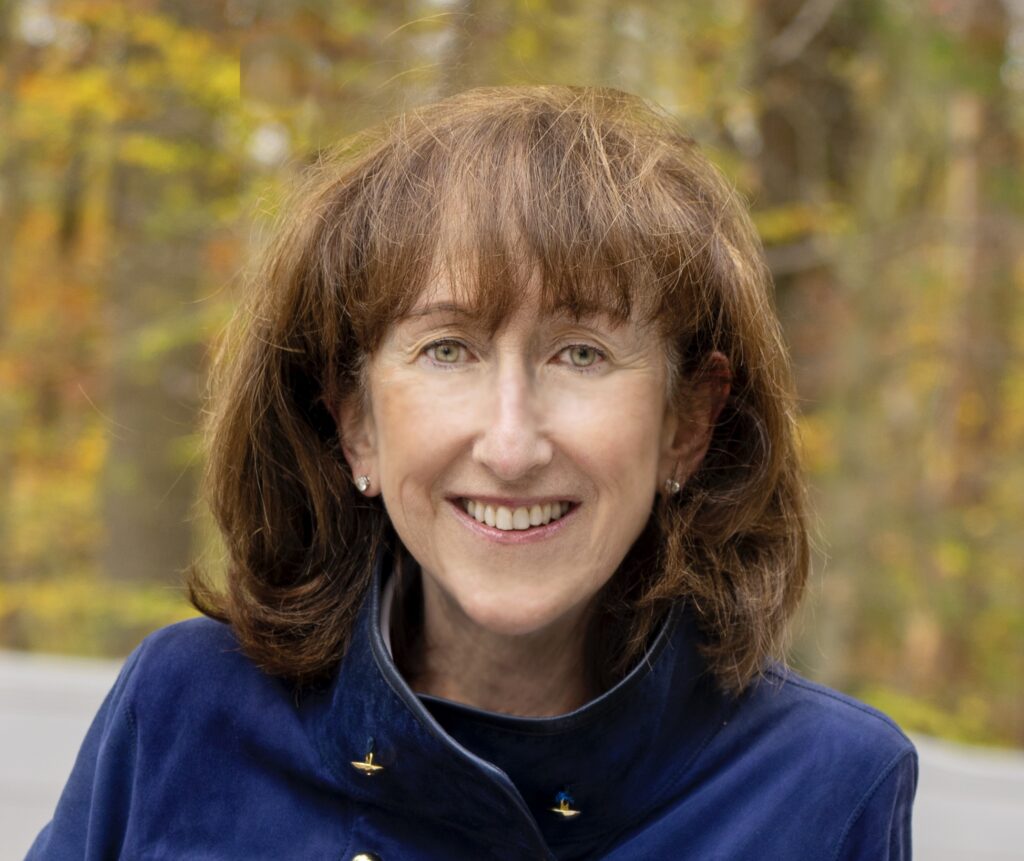 Kerry Leddy Malawista’s writing has been nominated for a Pushcart Prize and published in The New York Times, The Washington Post, The Baltimore Sun, The Boston Globe, and numerous literary magazines. She is co-author of When the Garden Isn’t Eden and Wearing My Tutu to Analysis and Other Stories; co-editor of The Therapist in Mourning and Who’s Behind the Couch. Her novel Meet the Moon (2022) was a Kraken Prize finalist. Associate editor at The Journal of the American Psychoanalytic Association, she created a creative nonfiction section featuring distinguished writers exploring psychological themes.
Beautifully written, honest and raw. Heartbreaking.
Beautiful! Thank you for this!’
test comment for troubleshooting