
Reviewed by Leslie Lindsay

 TW: suicide
Last night, I dreamed I spoke to a ghost. She was living in a box in my laundry room. I was pulling sheets from the washer to the dryer, and there, in the dreamworld of my life, a fully-formed woman emerged. “Why are you living in my laundry room?” I asked. She said she had been there all along, but now it was time to come clean.
At first, in the dream, as I stood holding balled up wet sheets, terror ran along my spine. I was talking to a ghost in my house! And then, as dreams do, something morphed. I was at ease, proud, even of my…bravery?
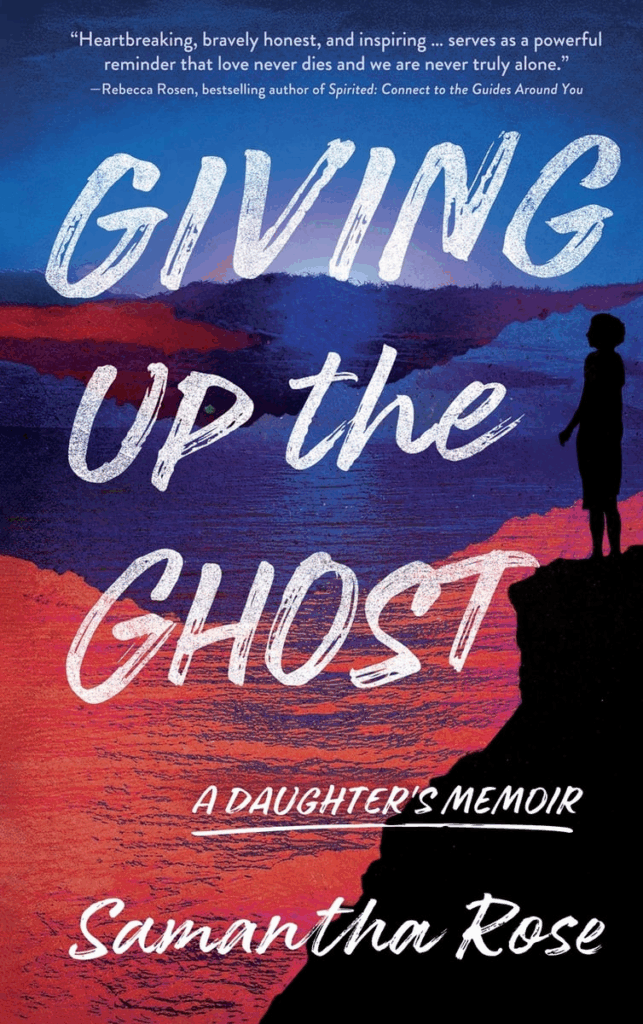
This is just what Samantha Rose, author of Giving Up the Ghost: A Daughter’s Memoir (Sibylline Digital First; February 2025), wants us to feel. Five years ago, in the early spring of 2020, just as the world was shutting down due to the COVID-19 pandemic, her vibrant, beloved mother, Susan, took her own life by jumping off a beachside cliff.
Rose, a New York Times bestselling ghostwriter, was shocked at her mother’s sudden and tragic death. Her mother wasn’t depressed…was she? She wasn’t struggling with an invisible disease, physically or mentally…was she?
At first, Rose’s grief journey is solitary, but she is buttressed by her younger, can-do sisters, Jenni and Gretta, as they wade through the challenging steps of closing out a life—informing family, writing the obit, paying remaining bills, closing accounts, clearing out the house, and so on. The sisters approach this in such a way that is almost humorous, a dark resilient humor that brought a dark chuckle from me; it was equal parts relatable and aggravating. I’ve been there. My own mother also died of suicide, over a decade now.
While Rose’s relationship with her mother is different than mine was with my mother, the experience of navigating the questions surrounding a loved one’s suicide is often the same, that’s what I found comforting in Giving Up The Ghost, that while human experiences vary, our emotional truth almost always resonates.
As Rose excavates the layers of her quest, she does so in crystalline prose, turning over every facet, every worry, question, notebook, and jewelry. She has the impossible task of sharing the news with her nine-year-old son, and beloved grandchild, not just that his Mutti, as he called her, is dead, but how she died, because children always have questions. What legacy — and what words — must a mother use? How can a grieving daughter also be the mother she so desperately needs?
As Giving Up the Ghost progresses, Rose begins dreaming about her mother. She connects with a Rabbi who offers unconventional wisdom: talk to her through your dreams. As I was dreaming, about wet sheets and cardboard boxes, there was something niggling me. A ghost of some kind? True enough, my experience was similar to Rose’s: my mother came to me in dreams. Often still. A relationship can continue, a conversation can occur. Was I dreaming about her last night? I don’t think so. But I completely understood how the metaphors in that dream were speaking: air your dirty laundry, let go of the things that aren’t serving you. You owe it to yourself to be daringly, unabashedly, free.
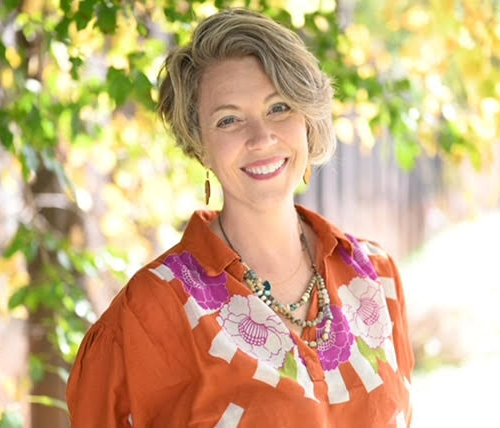
Leslie Lindsay
Staff InterviewerLeslie A. Lindsay is the author of Speaking of Apraxia: A Parents’ Guide to Childhood Apraxia of Speech (Woodbine House, 2021 and PRH Audio, 2022). She has contributed to the anthology, BECOMING REAL: Women Reclaim the Power of the Imagined Through Speculative Nonfiction (Pact Press/Regal House, October 2024).
Leslie’s essays, reviews, poetry, photography, and interviews have appeared in The Millions, DIAGRAM, The Rumpus, LitHub, and On the Seawall, among others. She holds a BSN from the University of Missouri-Columbia, is a former Mayo Clinic child/adolescent psychiatric R.N., an alumna of Kenyon Writer’s Workshop. Her work has been supported by Ragdale and Vermont Studio Center and nominated for Best American Short Fiction.