
Reviewed by Leslie Lindsay

 I have a portrait of my Appalachian great-grandmother on my desk. Her long, graying hair is pulled back into a bun. She wears glasses and a plaid blazer, also, a smirk. For years, I’ve wondered what was behind that grin, tucked in those chiseled cheekbones, the same ones that formed mine.
When I came across Jeremy B. Jones’s Cipher: Decoding My Ancestor’s Scandalous Secret Diaries (Blair, September 2025), I knew I needed to read it. Discovered in a box on the curb in 1975, a man unearthed dozens of hand-sewn notebooks. The house was set for demolition in Wadesboro, North Carolina. But then, he thumbed through the delicate pages, found them written in code, and knew he had found something worth saving. He then took them to a retired cryptanalyst who deciphered them, and when he did, a white Southern farmer and schoolteacher, William T. Prestwood, came to life. Jeremy B. Jones, the four-times great-grandson of Prestwood, father, writer, and professor set out to understand the man behind the diaries.
At first, they appeared to be an Everyman’s accounting of his days. He longed for a woman named Mary Norwood, like really wanted her, badly. But it seems even in the early 1800s, women played hard-to-get. He calculated planetary orbits, read algebra and Goethe, recorded eclipses, and broke into barn lofts and closets and behind fence posts with dozens of lovers. He wanted to get married, travel, or teach.
But really, the reader of the diaries is left with so many more questions than answers. Just who was William T. Prestwood? What secrets and worries did he carry? How was his life the same — yet different than the lives of our future generations?
I was completely mesmerized as I read the accounts of this man, which are interspersed and juxtaposed with pieces from Jones’s present-day life as a father. I found his tales of his two young boys, fatherhood, marriage, place and emplacement, social and political conventions very resonant and timely, even two hundred years later. The weaving and connecting of these moments is nothing short of genius.
Like with my own great-grandmother, I have become a bit obsessed. Why do our forebearers capture so much interest? Are we looking for kinship in the most literal way? Maybe it’s something about a line of men or women walking the same, yet different path? Jones, not having been one to keep a journal, starts writing letters to William. Of course, he won’t receive a response, but he gleans greater clarity about himself, about his family, the present family, and the ones who came before.
Cipher contains so much lyrical precision, deep emotional truth, and even drama, I found it hard to put down. From romps in the fields with various women, the Trail of Tears, everyday farming, there is one secret — and it’s a doozy — Jones dwells and speculates upon that left a lasting impression for me. This is a book like no other — part history, part-mystery, part-memoir, that so many will be clamoring for a chance to unearth some of their own dark family secrets, maybe in journals, diaries, or photographs.
As for Cora Bell, my own great-grandmother, I have a sense she might have found herself in these pages, felt a kinship with William, walked similarly dusty paths, and whispered to me, her descendant, that time and memory and place are not ever really gone, but live within.
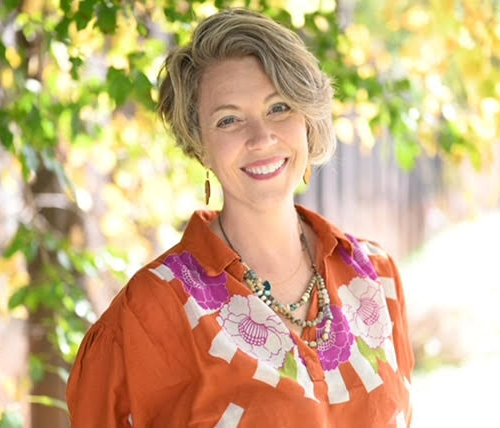
Leslie Lindsay
Staff InterviewerLeslie A. Lindsay is the author of Speaking of Apraxia: A Parents’ Guide to Childhood Apraxia of Speech (Woodbine House, 2021 and PRH Audio, 2022). She has contributed to the anthology, BECOMING REAL: Women Reclaim the Power of the Imagined Through Speculative Nonfiction (Pact Press/Regal House, October 2024).
Leslie’s essays, reviews, poetry, photography, and interviews have appeared in The Millions, DIAGRAM, The Rumpus, LitHub, and On the Seawall, among others. She holds a BSN from the University of Missouri-Columbia, is a former Mayo Clinic child/adolescent psychiatric R.N., an alumna of Kenyon Writer’s Workshop. Her work has been supported by Ragdale and Vermont Studio Center and nominated for Best American Short Fiction.
What a captivating review, thanks Leslie!