Reviewed by Layla Khoury-Hanold

 In Famished: On Food, Sex, and Growing Up as a Good Girl (Eerdmans; December 2025), author Anna Rollins tees up one of the most powerful reader takeaways in the book’s preface: “When women worked to heal from body shame, their relationship to religion was intricately involved.”
Rollins blends personal narrative with journalistic reporting and research to share her journey, and that of so many other women, as they worked to divest from purity culture and diet culture to reframe their relationship to religion and faith, and to food and their bodies. We learn over the course of the book that both of these relationships deeply affect the way that women feel safe showing up in the world and in their bodies. As Rollins writes in the preface, “The more women I spoke with, the more I felt I had found a lost sisterhood trying to redefine a way to take up space and reclaim our appetites for life, love, and food, both physical and spiritual.”
Rollins does a beautiful job structuring her memoir in easy-to-follow timelines — organized by short, digestible chapters into sections titled Girlhood, Marriage and Motherhood. She first charts her childhood against the backdrop of being raised Baptist in an insular Appalachian community, sprinkled through with pop culture references — like the pervasive quote “Nothing tastes as good as skinny feels” — that plant the seed for her restrictive eating. To be a good woman (not taking up too much space), and a good Christian woman (regulating her body so as not to lead men into temptation), meant strictly monitoring calories and obsessively exercising while abiding by a mantra-prayer of “We must decrease so that He can increase.”
Rollins becomes trapped in a cycle of shame and restricted eating, which is rendered in such poignant prose that the reader’s heart breaks for her. One particularly devastating line: “I, too, felt this way eating meals in the company of others. As if everyone else had a natural talent for consumption, while I was playing a barely learned game with rules I didn’t understand, always on the verge of losing.” But the reader and the protagonist both get some relief once Rollins reaches college. Her outrage toward the way she’s restricted her eating, and in turn, her life, leads her to begin relaxing her food rules, not completely, but enough to open up her life to include forging friendships over late night snacks, skipping studying for an exam to play soccer with a boy she has a crush on, planning weekend road trips and eating fried food by the side of the road.
While taking a course on Gnosticism in film and literature during her sophomore year, she unlocks what she believes was the key to understanding her childhood.
“I was sure that I was raised in a religion that hated bodies. Black bodies. Females bodies. Fat bodies. Poor bodies. Disabled bodies. This is why we were obsessed with perfecting the self: We were fearful of our own flesh and blood. […] I was so fearful of desire. I believed my body was bad. I desired for it to be reduced to nothing: to have only spirit remain.”
It’s one of the first times she meaningfully connects desire to appetite, and how appetite extends beyond the food on her plate. In the marriage section, this presents as challenges with penetrative sex; something that she later learns afflicts many women who grew up with purity culture and strict religious upbringings. By sharing her experience, Rollins gives voice to and names the source of shame that has affected so many other women.
Famished: On Food, Sex, and Growing Up as a Good Girl is for anyone seeking to repair their relationship to body image or readers invested in self-help and personal growth. The book’s generous prose and vulnerable tone make it an inviting read for fans of memoir and offers a fresh perspective for unpacking the ways that society influences and sublimates the appetites of women.
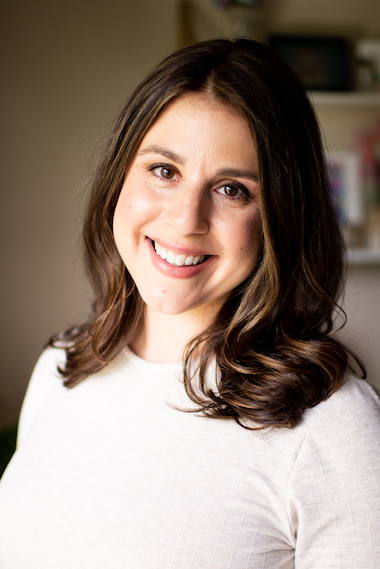 Layla Khoury-Hanold is a freelance journalist who has written for Food52, Food Network, and the Chicago Tribune, among others. She is working on her debut memoir. Follow her on Instagram @words_with_layla or on Twitter/X @words_withlayla.