
Reviewed by Sarah Boon

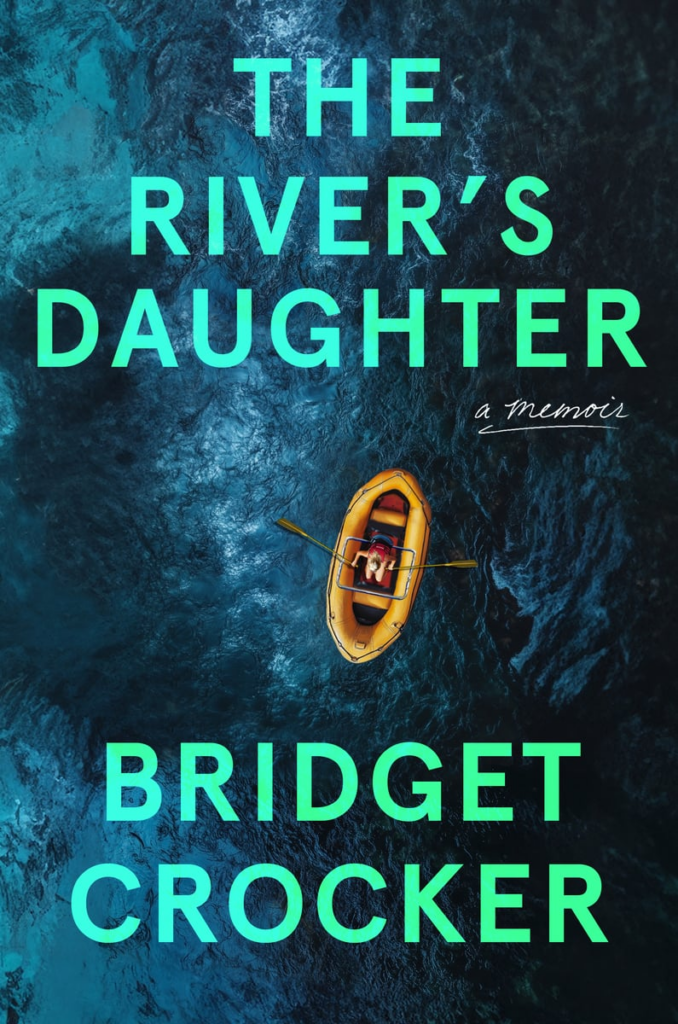 In The River’s Daughter: A Memoir (Spiegel & Grau; June 2025), Bridget Crocker was born into a dysfunctional family. Her mother left her father when Bridget was four years old, as he beat her in front of Bridget. Her mom moved on to build a life with a quiet, decent man, Sully, who was Bridget’s well-loved surrogate father for seven years.
One day Bridget’s mom decides she doesn’t want to be with Sully, turning Bridget’s life upside down. Bridget is sexually assaulted several times as a tween/teenager, and her mother’s response is, “Well…you better get used to it. It’s just going to keep happening to you.”
Disillusioned with her mother, Bridget moves from Jackson Hole to live with her birth father in California. At first it seems idyllic, but he begins to beat her the way he beat her mother, then acts as though everything’s fine and nothing happened. Bridget finds refuge in her closet, where she’s pinned up pictures of Africa and other remote destinations that she hopes to visit.
After a year or two, Bridget can no longer endure the beatings, so she moves back to her mother in Jackson Hole. Her mother has become a rabid environmental activist with her partner, Mark, and they lead backpacking trips in the wilderness around Jackson. Bridget works as a trail guide with them, even though she’s still in her teens. When she returns to school in the fall, she gives up her status as a smart girl and starts cutting classes and smoking weed. She hooks up with Steve — a man ten years older — when she’s 17. Then Steve gets a job training river rafters, and Bridget signs on.
When Bridget discovers rafting, it stirs something deep within her. She feels most at home on the river, whom she can hear talking to her, and she gets in a flow state while rafting, seeing nothing but the line she must follow through the rapids to get safely to the other side. “I shifted into another dimension, where there was no mom, no clients, no self. My focus on the sound was so intense and constant that I became the vibration, I was no longer observing it but channeling the hum into my cells,” she writes. She also becomes more assertive, and has a member of the rafting team fired for sexual harassment. This is empowering for her, especially in such a male-dominated job.
After two years of guiding on American rivers, Steve gets an opportunity to run rafts down the Zambezi river, on the border between Zambia and Zimbabwe. It’s a dream come true, given the images Bridget had posted on her closet wall at her dad’s house. She signs up to work with Steve and finds the river is ten times as fierce as the rivers she’s used to guiding, and the boats are different – they use oars not paddles and the clients don’t do any paddling, just highsiding: jumping on the side of the raft to keep it from tipping up and over. On her first day on the Zambezi she pilots a boat through massive rapids and manages to keep it from tipping. She sees the line she must take, and follows through into the eddy where they pull out the boats.
The best part of the book is that Bridget can talk to rivers—the Snake River, which runs past the trailer park she lives in with her mother, tells her to swim when she falls in as a child. She asks other rivers to bless her passage by splashing her face with water and touching her third eye. The Zambezi River (Nyaminyami) is much angrier than the rivers she’s rafted in the US—it’s angry about the loss of its wife river, which was dammed. Bridget feels its anger and power, and asks for safe passage anyway.
Her time in Zambia is marked by injury and death.
Amidst all of this is the shocking racism of Whites over Blacks, which Bridget seeks to rectify. She learns to speak one of the local languages and deals with people’s ailments with her first aid kit at her side. She makes friends with the Black women who work in the rafting company’s home base. But her push to get other Whites to treat Blacks with respect is out of place and very American in what used to be a British colony. She struggles with meeting the standards of the White men who run the rafting company while also being respectful of the Black people who work for them, which I imagine is a tricky line to follow. But as she writes: “I had no business trying to save anyone or change anything when I was incapable of saving or changing myself.”
Bridget loves her rafting life, and wants to share it with her family. Once she’s back in the States, she invites her mom on a rafting trip. Unfortunately, her mother alienates the other clients on the trip and Bridget has to rein her in and tell her to play nice. Not something her mother wants to hear. Later she invites her dad and half-brother on a trip, which goes remarkably well, and her dad apologizes for everything he put her through. “All I want is to be a better dad…I’m so sorry. I want to be the dad you deserve,” he says.
I enjoyed this book because it’s so far out of my wheelhouse; I’ve never even been river rafting. But Crocker writes about it so compellingly that I feel like I’m on the river with her, highsiding in Zambia or paddling a jerry-rigged boat in California. I was also rooting for her to find her way through life emotionally, and appreciated the inclusion of Crocker’s spiritual connection to rivers — something that makes her book stand out amongst others in this genre.
The River’s Daughter is a page-turning tale about a woman coming into her own in a male-dominated profession after a childhood of sexual, physical, and emotional abuse. River rafting is her lifeline, something that brings her back to herself and helps her rise above her troubles. The rafting scenes are riveting, and the book is well-written, with excellent timing and pacing.
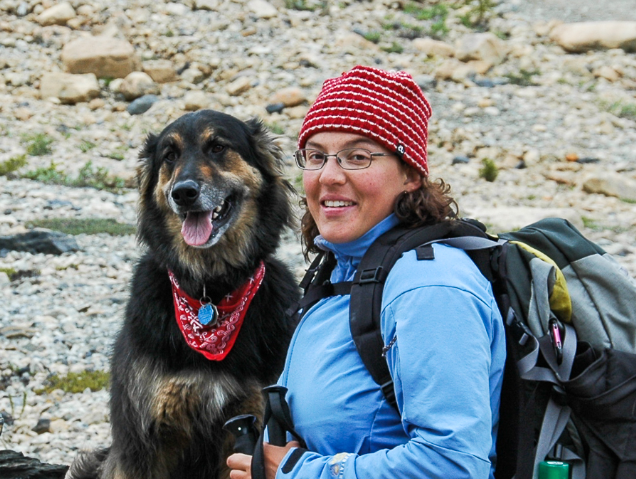 Sarah Boon has written for The Rumpus, LA Review of Books, Times Literary Supplement, and other outlets. Her first book, Meltdown: The Making and Breaking of a Field Scientist, was published in June 2025. She lives on southern Vancouver Island, unceded territory of the Quw’utsun and Malahat Nation, with her husband and dog.