

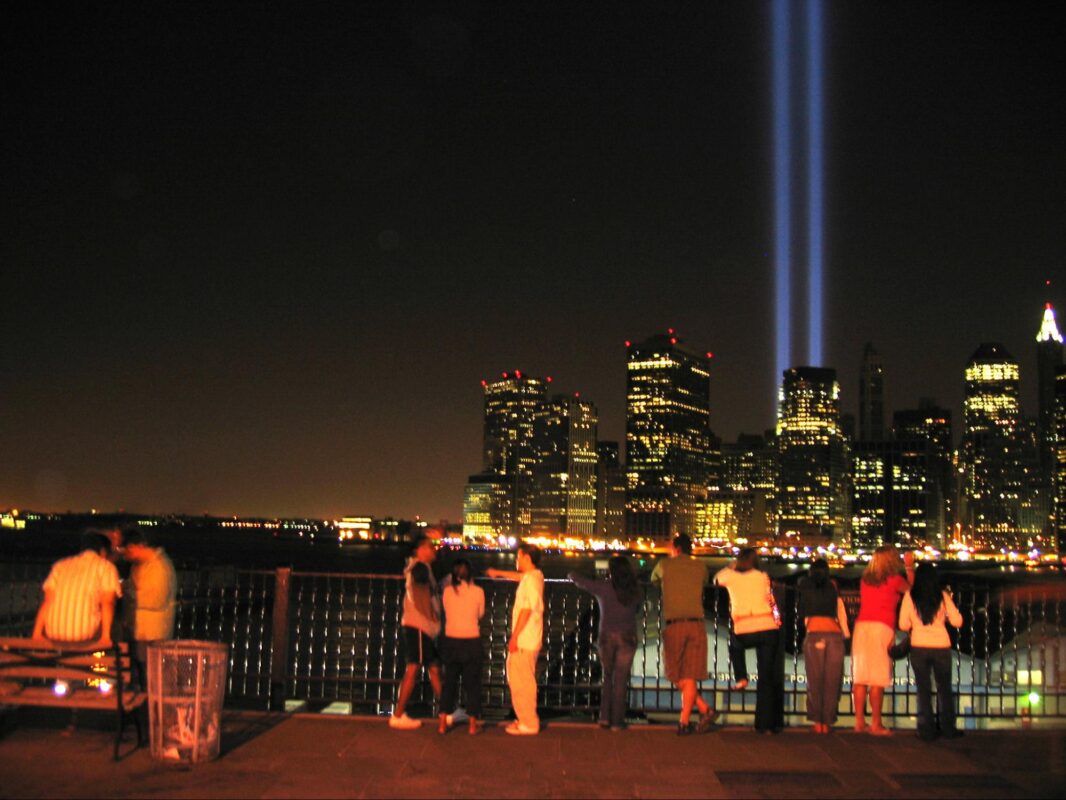
They said it wasn’t bodies. The adults. The teachers. The ones who were supposed to know. They said it was metal or whatever buildings are made of that you never smell burning, so of course it was unique, but it wasn’t bodies. They explained it, citing facts, betraying no hint that it wasn’t full truth. They probably believed it was truth.
We breathed it in together. Not that we couldn’t. But maybe we noticed it less, thought about it less, were able to go about our days, smiling, roughhousing on the bus as it found a new route through the city, pointing out dead animals hanging in the Mott Street windows, holding onto the ripped rubber seat backs as the Chinatown cobblestones tossed us about, providing layups for young flirtation, bodies rocked close in the lingering summer heat, all with that scent in our noses, permeating our lungs. It was just the remnants of buildings, the still-smoldering cinders, so the minutiae of daily living could return. Homework could stress us. Priorities and pain could return to the superfluous and mundane, seeming once again extraordinary and unsurmountable.
It wasn’t bodies. It wasn’t seared human flesh.
I’ve now smelled burning buildings. I’ve smelled forest fires and overcooked s’mores, burnt rubber and the embers of a crack pipe, the hot stones that summon ancestors into a sweat lodge, and smelled the difference between a Cuban and Dominican cigar. I’ve smelled polluted rivers and fresh rain and low-tide marsh. I’ve smelled street meat and seared steak at fine restaurants. I’ve smelled sex wax on a surfboard and sex lingering in a room locked with new lovers.
I’ve tasted a burning building as it forced its way past my nostrils and down my throat, powerless to stop it, to stop breathing. I’ve floated on the Pacific Ocean as hills and homes burned, unable to escape the path of the smoke, jealous of the gilled creatures below. I know those smells.
Burning buildings don’t smell like death. Burning buildings don’t smell like men plummeting.
Burning buildings don’t smell like home never safe again.
They said it wasn’t bodies. They said it wasn’t flesh. They said it wasn’t fathers or brothers or sisters or wives. They said it wasn’t heroes or cowards. They said it wasn’t janitors or firemen.
But I know what it was. And I can still smell it.
 After a misspent youth in Manhattan, Peter attended Bennington College, renowned for literary icons, high tuition, and students dancing naked. He dropped out, moved to Toronto to work in documentaries, then worked his way through University of Southern California as a valet at The Beverly Hills Hotel. He burnt out as a Hollywood assistant, then drifted through less demoralizing jobs, from aviation concierge to Uber driver, eventually becoming a security driver and bodyguard for a major music star. He works more than full-time as a writer and resides in Los Angeles. Cohen surfs the great white-infested waters beside the Pacific Coast Highway and has a traumatized Pitbull named Baby D.
Image Credit: Flickr Creative Commons/ClatieK

A compelling, lyrical story. Bravo!
“They” said whatever “They” could to survive that hideous day. You have done the same, job well done!
Mr. Cohen paints quite a picture here, an almost lyrical, even poetic description of death denied. Proust would approve. We look forward to more well-wrought work from Mr. Cohen. He is a keen observer as well as a fine writer.
Beautiful and moving work!
Powerful and moving. Got me choked up. This is great writing.
Closest experience to the battlefield or aftermath of such. A very well written article of the horrors of 9/11.