
The key to deciphering memoir is that it answers three main questions: What happened? How did it affect you? And, what did you learn from it?
Basically, a memoir covers a specific period in your life. Unlike in autobiography, you don’t just recount events, you explore how they impacted you. This is where memoir sub-genres come in, as you may write about trauma, specific relationships (mothers, siblings, fathers, etc.), or personal growth.
At its heart, a memoir reveals your emotional and psychological response to the events described above. This requires that you explore the feelings, thoughts and actions that you had after what happened to you. How did the experience make you feel? What kind of changes did it engender you?
Finally, memoir is a reflection on the lessons learned from the experience. What insights did you gain — about yourself and the world around you? What lessons do you think you’ve learned? What about your internal self? Did you upend some deeply held beliefs, or reconsider how you ended up on your current life path? These lessons are not just surface-level observations — they’re deeper truths that you unearth by exploring how a particular experience changed your approach to life.
So, for example, what happened is that, as a kid, you put your hand on a hot burner. How it affected you is that you had to go to the hospital and get bandaged up and your mom was really mad at you. What it means is that you live in a family that doesn’t look after their kids and lets them do whatever they want.
This is a simplistic example, and there are many ways in which this could mean something (maybe you like hurting yourself, maybe it’s the beginning of a neurological disease that makes it hard for you to distinguish hot from cold. Maybe it’s not even about the burner at all, it’s about the attention you got from doing it).
Regardless, these are the tenets of memoir — especially the question of what it means. As Vivian Gornick writes in “The Situation and the Story: The Art of Personal Narrative,” “Truth in a memoir is achieved not through a recital of actual events; it is achieved when the reader comes to believe that the writer is working hard to engage with the experience at hand.”
Memoir is a genre of its own but has many sub-genres. The trauma memoir, the grief memoir, the relationship memoir and more. But, science memoir is something different.
When Hope Jahren published Lab Girl in 2017, she blew open the door on academic science, how it works and how it affected her. It was an instant bestseller, even though it was focused on science. It helped that it was framed as the friendship between Jahren and her lab technician, but it was scientific through and through. Although a few science memoirs had been written previously (see Mean and Lowly Things (2008) by Kate Jackson, and Sea Legs (2004) by Kathleen Crane), it was Jahren’s that opened up the field to other science memoirs. These include, for example, A Lab of One’s Own (2020) by Rita Colwell, Finding the Mother Tree (2021) by Suzanne Simard, and Unrooted (2024) by Erin Zimmerman.
However, narrative nonfiction can sometimes be confused with science memoir. For example, I was going to include The Arbornaut (2021) by Meg Lowman, and The Plant Hunter (2021) by Cassandra Leah Quave, as science memoirs, but I realized that they miss the final part of the triptych: What does this mean? They write about what happened and how it affected them, but there’s no reflection on meaning, or how it changed them or altered their life’s path.
So, how do you write science as a memoir, as opposed to a scientific paper? If we consider Vivian Gornick’s discussion of the situation and the story, in this memoir sub-genre, science is the situation and the story is what happens to the protagonist in this scientific setting. Science permeates the book, a constant backdrop, while the protagonist travels through that landscape, writing about what happened, how it affected them, and what it means.
In science memoir, it’s very easy to get stuck on the track of “this happened and then this happened and then this happened,” because we’re not used to the “how it affected you” and “what does it mean?” components of memoir. We write what we know, and scientists are trained not to talk about anything else. When I was writing my memoir, Meltdown: The Making and Breaking of a Field Scientist, I had to dig a bit to figure out how certain events affected me, but I really had to dig deeply to assess what it meant to me. It was mainly through reading old journals that I got into this aspect; it was a heavy lift to re-live my experiences after so many years.
Scientists also need to write in plain language in a memoir. While we’re comfortable sharing our research with colleagues who speak the same scientific language, it’s difficult to write so that the reader is engaged rather than turned off. This is particularly difficult when writing about your own research, likely because you know it inside out and don’t see where you’re including too much information rather than just enough information. Whenever I talked about science in my book (which was pretty much all the time), I worked hard to make it accessible and engaging. I tied it to a scene or an anecdote, or explained it in a few paragraphs that linked to a section about what I learned. I hoped that the reader would come along with me and understand what I was talking about so they could connect with it later in the book when it came up again.
When writing science memoir, it can be tough to define how what happened to you changed you, because your story is always moving forward chasing the goal of tenure, published papers, supervised graduate students, etc. It doesn’t seem as though there’s time to process what’s going on. This is where writing memoir comes in: it makes you stop and think about what’s going on and what it means to you.
You have to think beyond the to-do list and instead dive deep into your emotional self. This can be hard for objective scientists, but having seen some like Hope Jahren and Erin Zimmerman — hell, even me, pull it off, I know it’s possible.
One of the benefits of publishing a science memoir is that you can straddle several worlds with your marketing. I’ve been interviewed for a podcast about memoir. My book has been reviewed in Science. I’ve been interviewed for a creative nonfiction magazine (full disclosure: Hippocampus). I’ve been asked to do a webinar for the Association of Women Geoscientists and am doing a Canadian podcast interview on books and writing craft in the new year. All of these events capture different audiences, which is the best way to market my book.
Science memoir is an important sub-genre of memoir, and has a lot to offer readers: a different perspective on the world, an inside look into the world of science and the experiences scientists have and what they mean. Whether you’re a reader or a writer of science memoir, remember these three tenets and you’re well on your way to determining the difference between an autobiography and a memoir, or sharing your story in your own memoir.
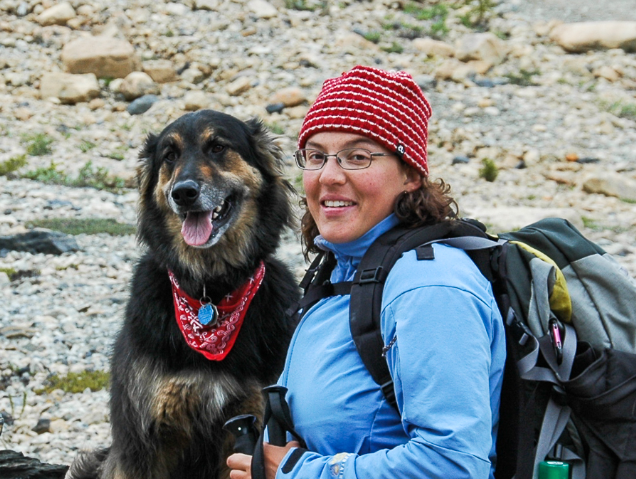 Sarah Boon, PhD, has written for the LA Review of Books, the Times Literary Supplement, Science, Nature, Undark, and other outlets. Her first book is “Meltdown: The Making and Breaking of a Field Scientist,” and she’s at work on her next book. She lives on southern Vancouver Island (Quw’utsun lands) with her husband and dog.