

Years ago, I worked up the nerve to show a draft of a piece I was working on to an accomplished visual artist, a cousin of my wife. The only comment of hers that I recall was: Make it more visual.
This was the first critical feedback I remember receiving about my creative writing and, maybe because it was the first, it has imprinted onto me.
As a writer, I fancy myself a wordsmith, but visual and spatial abilities are areas in which I have never been skilled. I can’t draw. I can’t shoot baskets. I often cannot read my own handwriting. I can’t find my way to a favorite local shop and home again without a GPS. And, heaven forbid if the GPS makes a mistake! Screwed!
It was sometime after that feedback that I started taking pictures. Not necessarily of those things that we usually associate with picture-taking: family barbecues and birthdays, cute babies, vacation locales. I just photograph anything that I find visually interesting thinking that, maybe, it will find its way into a future piece of writing.
I often do this in art museums. In the Broad Foundation in Los Angeles hangs a large black and white charcoal drawing by Robert Longo of police in riot gear in Ferguson, Missouri, during the unrest that followed the 2014 Michael Brown shooting. This piece powerfully captures the fog of civil disturbance with its blurred boundaries and its oppressive blackness with searing patches of white, from artificial lights piercing the darkness. In a piece I was working on, my photograph of that artwork allowed me to imagine myself inside the heads of citizens and law enforcement in the midst of a riot.
At an outdoor art fair, I was taken by a photograph of a large tree in the distance against a pure white background of snow. The tree was striking, even dreamlike, in its luminosity. I kept an image of that in my phone until I used it to imagine a vision that a character I was writing about might have had.
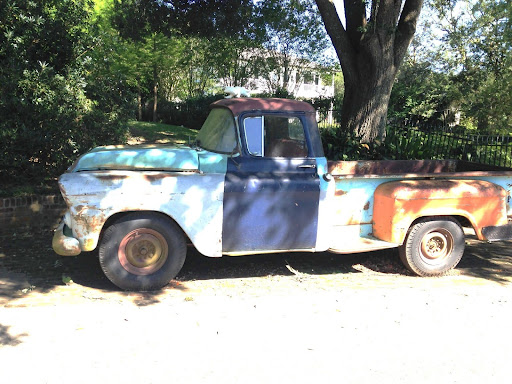
When I needed a description of an abandoned vehicle, I was aided by a photo I had taken of a truck, in a field overgrown with weeds, that had mismatched door and hood panels, and abundant rust around the wheels.
I was walking in Manhattan with my wife and friends when I suddenly stopped without warning. After taking a few steps more and realizing that I was no longer beside them, they turned to see me with a look of “What the heck is he doing?” on their faces. I had stopped to photograph a pile of rubble — some gray stones that were sitting on the sidewalk at a construction site. Something about how the stones were arranged caught my eye. My wife and friends could not recover from their puzzlement at what I had seen in those objects. I have not yet used this image in my work, but it is waiting there in case I need it.
It’s a writer’s ability to “see” that distinguishes him or her from many others. Not just to put things into words — of course, that is a writer’s gift. But, before the words, before consciousness, it’s the “seeing” that forms the foundation of the writer’s work. It’s the ability to perceive the beauty, the uniqueness, the oddness or the symbolism in an object, an action, even a relationship, that exists before any words are formed and before what strikes the writer is articulated. An image is more than just an image to the astute writer, just as words are more than words to the astute listener. Years ago, the psychoanalyst Theodore Reik published a book, “Listening With the Third Ear,” discussing how he tried to hear the meaning, the depth, the emotional and symbolic resonance behind the words of his patients. A writer needs to listen and to look with a set of ears and eyes that are not just sensory organs, but that tap into the deeper regions of the brain.
I believe that this ability can be trained and nurtured, because we all have the brain mechanisms that allow us to do this. The writer just has to train him or herself to deeply look and listen.
Back in Manhattan, walking in the crush of people, I notice most of my fellow humans looking just a few feet in front of them, or at the ground, as they make their way from point A to point B, or avoid colliding into something or someone. I walk around looking up — at the pediments, the doorways, the ironwork and the stonework that so elegantly decorate so many of the buildings. Many high rise structures in Manhattan are works of art, created with painstakingly skilled labor and artistry. And it’s all there around us to behold and admire.
These photographs allow me to enter the minds of the characters I am writing about. In creative nonfiction, the images that are used do not always have to be historically accurate. The point is to help me visualize the person’s experience, to imagine what the characters were thinking or feeling, to enter a state of empathy. I often do not have access to the internal lives of my subjects, unless they speak to me or to someone else directly. And even then, I cannot be sure that I really know what’s going on inside their heads. After all, how many of us are truly honest with others about our private thoughts and feelings?
These visuals help me to walk through that door of my imagination in order to make my subjects more alive and relatable. What is important is to get at the emotional truth of my subjects and, in the absence of such private information, these visuals allow me to unlock my own mind so I can better unlock the hearts of my characters.
If I succeed, people will find my work interesting and enlightening to read and will enjoy a more empathic experience. And what could be more enriching than that?
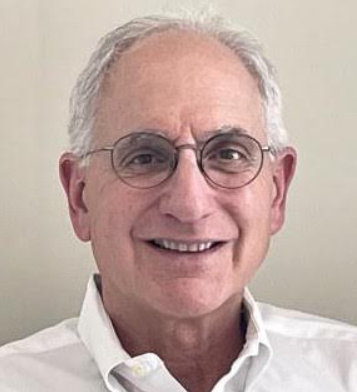 E.H. Jacobs is a New England-based psychologist and writer. His debut novel, Splintered River — a literary political drama — was published in the fall of 2024. His work has appeared in Penstricken, The Writers’ Journal, Libre, Santa Fe Literary Review, Permafrost Magazine, Hawaii Pacific Review, Streetlight Magazine, and elsewhere. He was a finalist in the Derick Burleson Poetry and the Phil Heldrich Nonfiction Contests and was a nominee for the Nina Riggs Poetry Award.
He has published two books on parenting, as well as professional papers and psychology-related articles. He was a contributing book review editor for the American Journal of Psychotherapy and served on the clinical faculty at Harvard Medical School. He holds a bachelor’s degree from Vassar College and a PhD from Temple University.
You can see his work at www.ehjacobsauthor.com.