

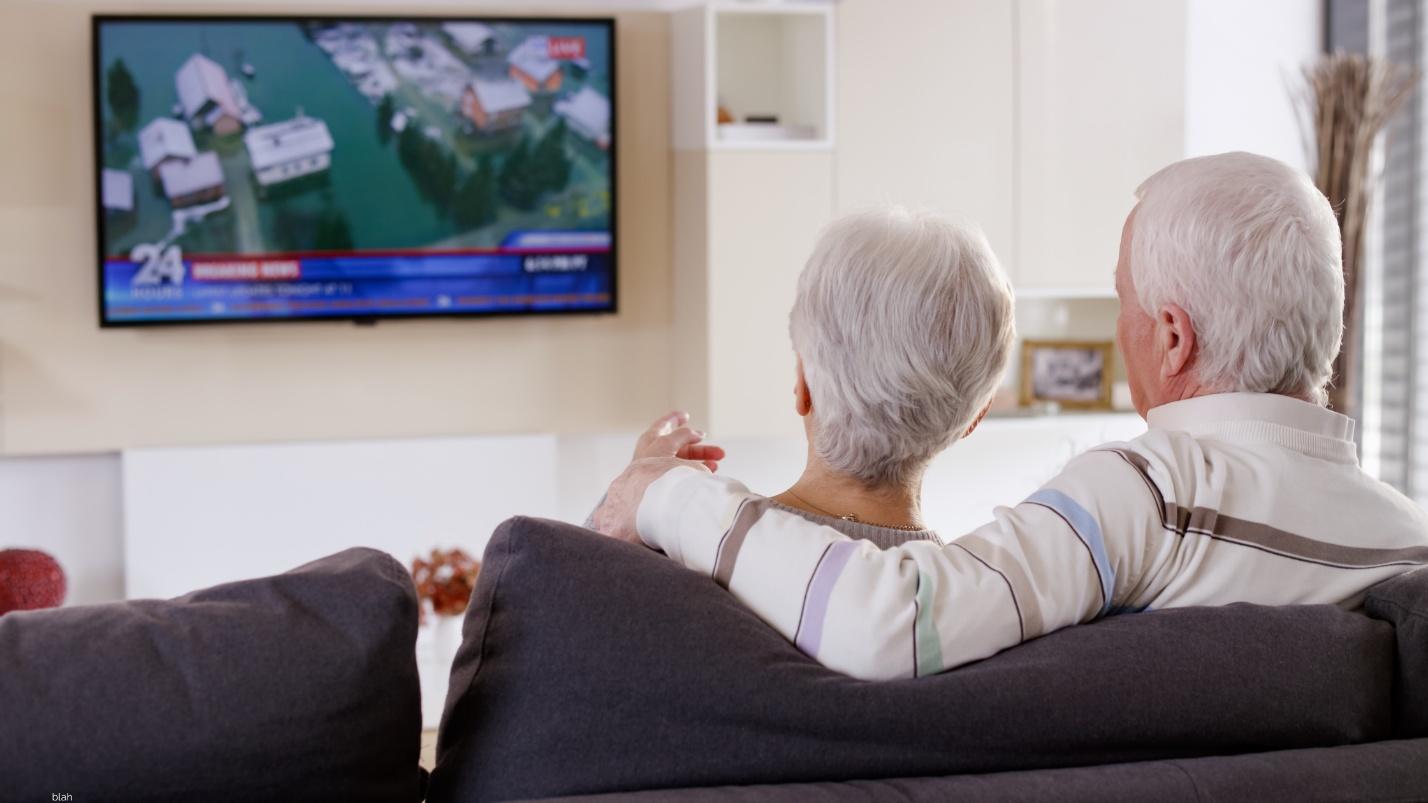
“Ay, Edward will use women…honorably!” proclaims my 88-year-old dad in his most sinister, faux British accent.
“Hal, stop — you’re scaring me!” returns my 90-year-old mother, thrilled he’s trying to terrify/flirt with her.
They’ve done this bit for as long as I can remember, more often since she lost her short-term memory. I’m in their kitchenette zapping Jimmie Dean breakfast sandwiches for their morning meal, taking tally of lots of things, as I am wont to do; they’re on their well-worn loveseat, first coffee in hand; my nine-year-old twin boys are at school; my husband, in our adjoining side of the double house, is taking a shower.
My dad continues reciting the Gloucester aside from Henry VI, in which Gloucester curses Edward’s virility and kingdom-winning odds.
“…Would he were wasted, marrow, bones and all/That from his loins no hopeful branch may spring,” Dad says, coughing a bit now, working up to his extra spooky finale. “To cross me from the golden time I look for!”
Mom is squealing giddily: “Betsy, help me — your daddy is scaring me!”
I leave the meal prep and saunter into their living room, muttering, “I’ll save you, Mom.”
Dad’s Gloucester has never scared me. But his sudden coughing fit does. Imagine a desperate choking scene in a restaurant, the kind that would have every patron calling 9-1-1. Dad is turning redder than I’ve seen him in a long stretch. We have had such a good month of only one attack. But he’s been in final stage COPD for two years now, his lungs barely there, and, each flare is worse than the last.
I sprint in what feels like slow motion to their loveseat, where I kneel at my dad’s paint-splattered walking shoes and hand off his rescue inhaler. Still coughing, he shakes it and puffs twice deeply. Mom, in a daze, sips coffee and reviews how to turn on the TV.
Dad does his trick to increase his oxygen, breathing deeply in through his nose, out through his mouth. He coughs some more. His eyes bug — he’s terrified, same as me.
Within a few minutes, his face is no longer red, but he’s spent—pale as some Shakespearean ghost. While my mom watches a puffy tribute to Barbara Walters on The View, Dad breathes mindfully beside her, his huge hand on her veiny one. I crank his stationary oxygen machine from two to three liters, a luxury he might not permit himself.
“Aren’t we lucky to have such a lovely daughter?” my mom asks the room.
“What?” shouts Dad.
“Aren’t we lucky that we had you when we were old, and that you asked us to move here?” she says. “Two repulsive old people to ruin your life! What were you thinking, my darling girl?”
“I’m glad you came,” I repeat for the zillionth time, my words authentic but my voice less than cheerful. Her jokes and narrativizing grow so tiresome, same as my own to my children when I ask them if they’re glad they have such a cool, perfect mommy. I need to think in peace!
Dad hasn’t coughed so hard since he was diagnosed with acute pneumonia six months ago, I decide. I should take his temperature under his arm while he mindfully breathes.
“No fever,” I shout. Thumbs up from him.
Fever decides whether we opt for the ER, unless Dad’s coughing simply won’t stop or his pulse ox drops below 88 — advice from Dad’s pulmonologist. If we’re lucky, the shortness of breath that follows a flare will improve within an hour, a day, two days.
“Aren’t we lucky we had you when we were old?” Mom asks me. “Weren’t we smart?”
“Did you plan it this way?” I say angrily. Then I zip home through the connecting door to take care of a few quick things.
“Luck,” my dad tells my mom on a typical morning before he clinks his coffee mug against hers. When she hears the clink, even if Mom’s eyes are glued to the television, she understands to echo the sentiment. And she does: “Luck.”
When we are lucky, life is really dull at our house, the double house my husband, Michael, and I bought almost six years ago to share with my parents and our young sons. Picture a big gray box with two red front doors. We live in scenic Monkton, Maryland, 25 minutes north of Baltimore, where I teach English. Dull I have come to appreciate. If the TV next door is humming with life, if my dad is okay — no gasping — if my mom hasn’t fallen, and I’ve slept enough, I’m calm, me, a middle-aged woman with a diagnosed anxiety disorder. If I’m calm, we all are.
Born when my parents were 40ish and my two siblings were close to starting college, I was often referred to as “The Surprise” growing up. I didn’t mind. Surprises were gifts, right? I craved any praise that hinted at my life remotely resembling a gift. “Afterthought” might have been a more fitting moniker, not that I wasn’t provided for and cared about. My mother was depressive, which meant she might run very late to fetch me from school. As my dad came in from work each day, though, he hugged me like a dad in a commercial, exclaiming, “You’re under arrest by the daddy police!” Then he would take a nap.
Thanks to laissez-faire, been-there-done-that parenting, I came home from school and goofed off as I pleased until dinner, every day, while my stay-at-home mother read novels on the long living room couch. I waited for her to speak to me, to ask me a question about what I was thinking. What show was my tops. I often fantasized about getting grounded as my friends did. But why? I had already grounded myself in front of our bulky color TV.
When I proved to be an advanced reader/speller—like my English major parents, I live for stories — my mother was briefly excited and inspired, maybe a touch surprised by me for the first time. I liked that and aimed to surprise her as often as I could, at least academically. Lucky for lazy me, basic schoolwork came fast.
At the Monkton compound, after I fire off some work email, talk to one student, and reread the short story I’m teaching tonight, I reheat the three greasy sandwiches (two for Dad, one for Mom) and plate them beside handfuls of almonds and raisins. Dad is still wide awake — he’s set his machine back to two, willing his body to be strong and sustained at that level — and they are now returning to a gory docuseries about The Times Square Torso Killer. From the kitchen. I cringe over the overhead stalking, the maiming, the manhunt. As I set down their meal, Dad, who greatly prefers a policier or crime documentary to my mother’s go-to programs — Call the Midwife, Gilmore Girls, or any classic movie with a happy ending — clinks my mother’s hot coffee cup for a second time this morning, as if to reset the luck.
“God is great; God is good; let us thank him for our food,” Mom speed-prays each day after I set down my parents’ trays. My good-natured, intellectual father, a prolific fine painter and former ad man—who, as I was growing up, went through periods of believing in a monotheistic god, then finding strength in Heidegger and then, bewilderingly, finding firmer answers in Lacan — daily recites this singsong blessing in sync with Mom, his eyes closed.
“Maybe there is a god; at this point, I don’t want to rule anything out!” he told me. “Maybe I’ll be pleasantly surprised!”
“Do you want to watch another episode of this program?” my father asks Mom as they dig in. Credits are rolling on the first installment of Unsolved Mysteries.
“How about The Sound of Music?” she asks.
Maybe he hasn’t heard her; he tunes his hearing aid.
“The Sound of Music?” she repeats.
“We watched that last night,” he reminds her, and since I can tell by the pace of his speech that he’s breathing fairly well, I offer his pulse oximeter for the first check of the day.
“Don’t be afraid; I’m not,” he tells me, knowing I’m still somewhat freaked.
“No, I’m not afraid, Dad,” I lie, same as he acts out his bravery for me. “Just doing my job.”
“Please be at least 89,” I tell my brain, as he clamps the pulse ox device onto his index finger.
Though I didn’t attempt to pray for decades, when I fear that he and I are about to have to speed to the ER in my RAV4, I pray the desperate way I did as a kid that he’ll be fine, fine, fine. “Please, for now,” I’ll say to “God.” “For now. Please, don’t let anything bad happen. God, please, don’t let him die in fear.”
I don’t look at the number yet. Dad performs his breathing trick, in through the nose, out through the mouth, and again, until his number hits 93. I’m a quick 99, like anyone healthy. This number is the best he can reach these days.
“Looking good,” I say loudly, deeply, so that he might hear me, and he gives me a thumbs up.
His color is also looking decent, pinkish, not gray. I tidy up the kitchen and prepare to walk, modest spring in step, the several steps home, through the door in their kitchen. My parents’ afternoon helper, Emily, will arrive in half an hour. During that time, Mom will get a bath and patient conversation, maybe a manicure, and Dad will likely paint for several hours, sitting in a comfortable chair and leaning into his huge canvas.
“Don’t leave, please, Betsy!” my father calls to me. I halt at the door. What is wrong now?
“Can’t we watch The Sound of Music?” Mom asks him.
“We just did, O.L.,” he tells her, clearing his throat. O.L. stands for “Old Lady,” one of many pet names he has used for at least fifty years.
“I think I would remember watching The Sound of Music!” Mom says.
Dad cues Julie Andrews.
I tap his shoulder so he’ll know I am standing beside him. My nerves are crackling.
“We’re out of French roast,” he tells me, smiling warmly, tuning his hearing aid some more.
“On it,” I shout, sighing. Only a small surprise, a doable request.
“Thank you, my darling girl!” he says.
“Aren’t we lucky we had her?” asks my mom.
“What’s that?” asks Dad.
“Aren’t we lucky?”
I roll my eyes, step over the threshold, and groan. Next door, Michael, a retired journalist, sits at our kitchen island reading about tragedies worldwide, including the upcoming election.
“Do you think they could turn up the volume on The Sound of Music?” he jokes. “A Problem Like Maria” is easily audible.
After he drops the boys at school, Michael prefers to spend an hour or so catching up on news, especially New York Times obits. But because my parents are officially out of coffee, and they brew it all afternoon and into the evening, I ask him to run to the grocery while I prepare to teach my evening class.
“On it,” he says, only a hint of exasperation in his voice.
“She’s a darling! She’s a demon! She’s a lamb!” transmits loud and clear.
We can often hear my folks’ television through our walls, as well as my dad’s wet, phlegmy coughing, my mom’s walker scraping the floor as she plods back and forth to the bathroom. Michael endures it; I find the noises, attached to their redundant patterns, reassuring. House music.
“I’ll read later,” Michael tells his computer.
Before dementia, my mother spent most of her waking life reading novels, often a book a day. At bedtime, as a child, I read books with great interest, but not usually before. I came home from elementary school in the early 1980s, ate piles of cookies and carrot sticks, and watched television for hours, reruns of Leave It to Beaver, The Brady Bunch, new episodes of Three’s Company — though my mom tried and failed to ban the “vulgar” latter — and The Jeffersons and The Facts of Life. If she wasn’t reading, Mom might occasionally deign to sit with me or stand and iron. She approved of The Waltons. We agreed upon the likeable intrigue of Hart to Hart. I would somehow get my homework done well enough during commercials to make good grades, better than my siblings had, which brought an encouraging word or two from my parents. Words I clung to. Proof that they loved me as I loved them. Proof that I was their good surprise.
Every Wednesday, after Dad and I dropped Mom at choir practice, we would dine at one of our favorite Mexican restaurants — we lived in San Antonio — devour enchilada platters, slurp Cokes, and talk about which movie we might go see that weekend (all ratings allowed). Then we would zoom home and watch The Equalizer starring Edward Woodward before picking up O.L. at our Methodist church. Man, we loved The Equalizer. “Woodward has performed Shakespeare! The man is a truly great actor, a consummate professional!” my father might exclaim. “The best,” I’d echo. Wednesday, so reliable yet so special, was the best night of my week. Now that I think of it, I’ve typically disliked being on the receiving end of a surprise.
Perhaps because my parents were so relaxed, perhaps because I had seen The Godfather by age seven, I took it upon myself to worry a lot as a child. I worried that my mom would be killed driving while I was at school, and obsessively traced heart-shaped patterns on the palm of my hand to keep her safe; even as I began college out of state, I worried that my father would die unexpectedly in the night, and flipped my dorm light off and on at least twice before I climbed into my bed, a precaution my roommate kindly overlooked.
Holiday break was my favorite time of the year. My sister, married and out of state, my wild-at-heart brother, consumed by his girlfriend and his band, I got to be The Surprise again. The surprise who always did the same things: watched TV and read. Jogged to de-stress. Didn’t make waves. Made good grades and hung out at home with my folks. Before even calling my friends, I drove Mom’s clunky blue Saab to Blockbuster and loaded up on movie rentals for my parents and me to enjoy. The night we three watched Dumb and Dumber on VHS, my dad laughed so hard, his big, expressive face went bright, bright red like he was about to explode, and that was well before any symptoms of COPD.
This evening, after Emily leaves, after I teach, I walk back over to my parents’ side to help my mom scrape her walker to the bathroom and try to “go” before bed, to change her Depends, and remind her to brush her teeth. I am about to tap her on the shoulder, but I wait. I’m standing beside them, but my parents have no idea I’m in the room. They’re watching To Kill a Mockingbird for at least the fiftieth time, Boo Radley carrying Jim home after murdering Bob Ewell. This scene is so beautiful, Scout dashing home after them without shoes.
“Are you all right after that coughing fit, Hal?” Mom asks my father loudly, clearly, remembering the events of the morning, likely because they were more dramatic than ever before.
He pauses the movie, his eyes shining, because how can you not tear up over that scene?
“I’m happy,” he tells her, yawning, taking her hand.
“You aren’t going to die, are you?” Mom asks.
“Not tonight,” he says. “Not tonight. And we hope not for a long time. I’m painting so well right now, despite the fact that my lungs are Swiss cheese.”
I so hope Dad can have one more art show — maybe — and then I wonder again if he might possibly outlive my mom, the best outcome, and, again, how we will cope if he does not. I wonder how many more times he can be hospitalized before his pulmonologist advises him in no uncertain terms to call in hospice and stop trying.
“Are you going to die tonight?” Dad asks Mom teasingly.
“I certainly hope not!”
Dad starts his Gloucester lines again, and Mom squeals crazily: “No, stop!”
“It may be time for a nursing home, right?” my close friend, Chris, asks me now and then. Many people do. Not a silly question. But a nursing home would mean my parents’ separation, my dad living in a skilled nursing unit, my mom in memory care, without him, with nothing but the TV to remind her minute-to-minute that families exist. I want them together; I’ve always wanted all of us together, it feels right.
Not that I don’t also wonder, especially when I’m spent, just how long I’ll be shopping for extra groceries twice a week, heating the Jimmie Dean breakfast sandwiches, organizing the pills, making the endless medical appointments, giving my mom a suppository whenever she needs one, taking my dad to the ER to camp out for hours before he is assigned yet another room, sleeping with my fall-risk Mom while he is away, all while working full-time and being a mom to kids who don’t brush their own teeth without prompting. Scrambling to get my own writing done. I remind myself I need to get to sleep.
“Hello,” I announce loudly, “is Mom ready to brush?”
Dad gives me a thumbs up. He looks fantastic right now.
“First, let’s measure pulse-ox, okay?” I ask.
He places the device on his index finger, and though I’m expecting good news, the number sticks at 87. Lower than earlier today.
So, he may have a slight cold that will be gone in two days, or he may be getting sick enough to see a doctor soon; he may deteriorate quickly.
I bump his oxygen to three.
“What is it now?” I ask, afraid to look.
“Still 87.”
“Crap. Do your trick!” I shout.
“Watch,” he says, reassuringly, “I will get…myself…to 89.”
If he can get his pulse ox even to 89, we’ll both feel better; we’ll both feel like we can watch things and wait, as we’ve been instructed by his new palliative care physician.
Mom, seemingly oblivious, examines her freshly painted fingernails.
Dad does the trick, breathing in slowly, holding the air, breathing out, his full lips quivering.
“Need to get to 89,” he repeats, and I nod.
“You will,” I say.
I know how much he would like to live to 89 or 90, how hard he has fought to live this long. When he doesn’t want to live, I will have to let him go. It should be doable. I let him go a little bit every day.
I think of how much my sons will someday soon miss running in to show him their art, their spelling bee ribbons, their weird meme creations, delighting at his surprised and expressive reactions.
As Dad puffs in and out, I find myself combing my mom’s soft white hair with my fingers. I find myself praying, “Please?” Finally, Dad gets his pulse ox to 89.
“Do your trick?” I ask him again. He does. I watch the tiny screen of the device, willing it to project a higher number.
We wait.
“90!” I proclaim.
Dad claps his hands to celebrate.
“That’s your age, O.L.,” my father tells my mother.
“Don’t say that number out loud!” Mom shouts playfully. And then, “Let’s watch something happier.”
“Could we watch The Sound of Music?” Dad asks Mom, winking at me. “It’s been such a long time.”
“Good thinking,” she says. “Hooray.”
“Ay, Edward will use women honorably!” Dad starts up, and immediately Mom squeals: “No, help me!”
Dad cues the movie. The music soars. I sit down with them—on the arm of their ancient loveseat—and watch the film’s opening credits, because why not? You can’t go wrong with a classic, my kids are asleep, and for this brief moment, we all get to watch and wait.
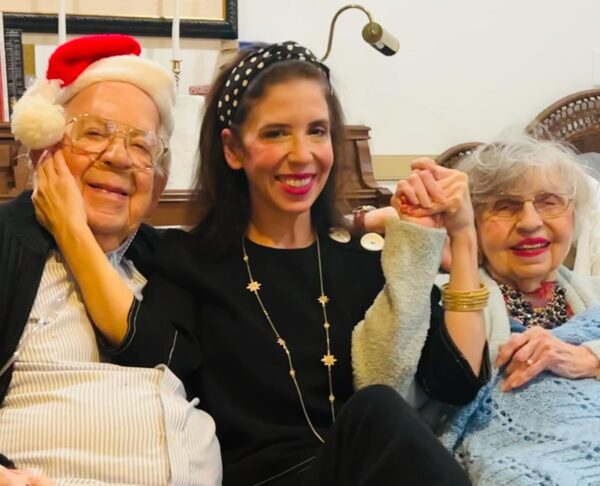 Betsy Boyd’s fiction has been published in Kenyon Review, American Short Fiction, Five Points, StoryQuarterly, Shenandoah, and elsewhere. Her short story “Scarecrow” received a Pushcart Prize. “A Random Strike” was a Wigleaf top 50 for 2023.
Betsy directs the creative writing and publishing Arts MFA program at the University of Baltimore and is the recipient of two Maryland State Arts Council awards, an Elliot Coleman Writing Fellowship, a James A. Michener Fellowship. and residencies through Fundación Valparaíso, the Virginia Center for the Creative Arts, the Alfred and Trafford Klots International Program for Artists, and the Kimmel Harding Nelson Center for the Arts.
I identified with many elements of your story. I too was a “surprise.” My mother was 37 and father 40 when I was born, and I had one sibling 13 years older who married and left home when I was five. Unfortunately because both my parents died suddenly, 13 years apart, I was however fortunately spared many, though not all, of the aging health issues you describe with yours. Though I’m much older than you, your reflections on bonding with older parents, growing up often unattended, and TV memories rang true for me too, and I’m finishing up a memoir collection of my own. Enjoyed your work.
Wonderful, Betsy. My love to all of you.
lovely, Betsy!
Beautiful work—both on a literary level and a personal, human level.
So poignant and authentic. Thanks, Betsy, for this portrait in words.
So poignant and authentic. Since I have met Clif and Hal, I felt I was right there. And who doesn’t love “The Sound of Music”?!!
Thanks, Betsy, for this portrait in words.
Beautiful 💛
Really moving. I felt like I was right in the room with the 3 of you.