
Interviewed by Morgan Baker

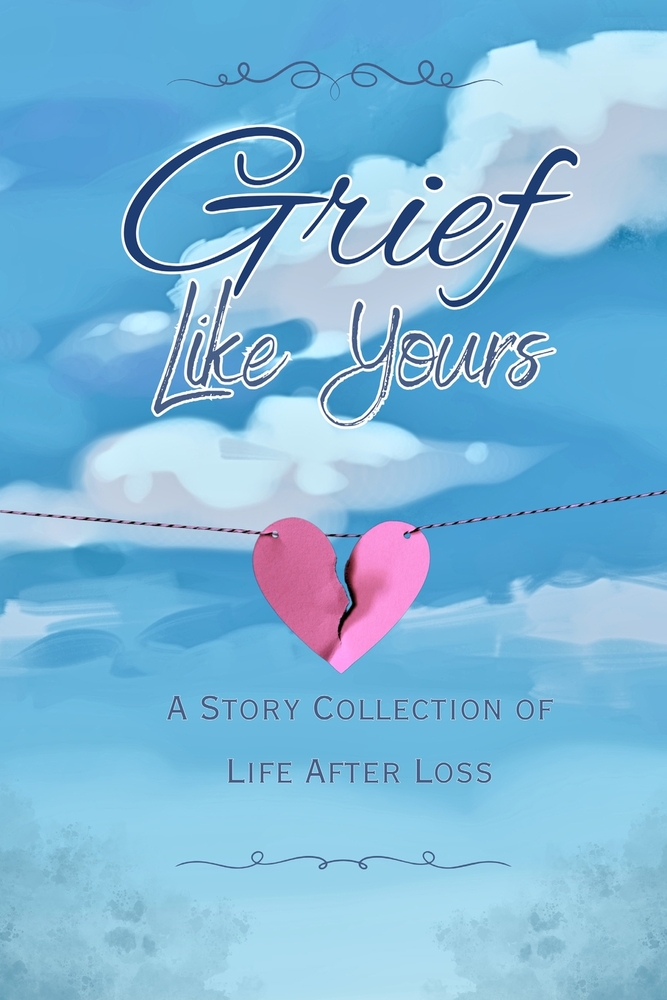
Grief is universal, yet so individual. Grief can make you feel very alone, so when you find a community, like the one that editor and writer Cindy Eastman created in the anthology Grief Like Yours: A Story Collection of Life After Loss (Carpe Vitam Press; June 2025) you feel seen, recognized, validated, and less alone. Not only have I lost humans I love, I’ve also lost dogs and places. And, I know only too well what anticipatory grief is like, so talking to Eastman was like talking to a good friend about the losses we all experience.
Grief Like Yours is split into sections — Everyday Grief, Family, Husbands, Parents, Children, Friends, Animals, and Pandemic. Grief is not solely about losing a person. And, as Cindy and I discussed, grief doesn’t ever go away. It changes shape and years after someone has died, it can resurface and surprise you.
Morgan Baker: Cindy, thank you for talking with me again. I want to acknowledge your daughter’s death and how hard that must be. I was wondering, because the last time we talked, you mentioned how much Annie loved Thanksgiving, so now that you just had Thanksgiving, can you tell me a little bit about how Annie made Thanksgiving so special, and how you’ve been able to continue her traditions.
Cindy Eastman: Thank you for asking that. Annie wanted people to feel cozy and welcome and she did throughout her life. But Thanksgiving was one of those days she could really do that in all her glory. She liked hosting, and she liked it if there were decorations, but not overdone.
MB: Had you started working on the anthology before she got sick? Or was her illness a motivation?
CE: No, it was all the losses I had experienced — my parents, my sister, and some friends who had died suddenly, and the anticipatory grief of caring for my dad and then losing him. Her death wasn’t imminent when I started. We thought we had years when I put out the call for submissions.
MB: One of the things I have a personal pet peeve about is the language around cancer – that you have to fight, that it’s a battle, and then people say “they lost.”
CE: Right. You know as many times as I write that Annie lost her fight, that is not at all what happened. This disease was so pervasive and relentless. It just overtook her. If Annie could do anything right now, she would make sure I’m using her story to enlighten other people.
MB: Do you think doing this book was a challenge, or cathartic?
CE: I don’t think it was challenging. If I couldn’t read another story, I just wouldn’t. I didn’t let it make me too sad. It was kind of comforting, because of what everybody says about it now. The contributors and the readers say it’s comforting because we have community. We have company in this horror. It’s a horrible experience that nobody wants. It takes books like this, I guess, to help people. All the other stuff, all the medical or psychological, cultural or societal ways of looking at grief are so off base about what it’s really like for a person to experience this and go through it. We have to have the underground, to get the stories about This happened to me too. And, yeah, I felt that way too. Yes, we laughed at that too. So, I think it’s the stories…
MB: We talked about this last time a bit – the notion that there are steps or stages and then you’ll be fine. Elizabeth Kubler-Ross.
CE: That’s right. It gives the illusion that you’ve got five steps, and once you’re done, you’re done. That’s a false equivalence. I saw a post today – her husband and son died 30 years ago, and she writes about grief. It doesn’t go away. It just doesn’t go away. And it’s big for some people, and some people can’t understand it or are afraid of it. So, they push it aside. The ‘stages’ make you feel like something’s wrong with you if you’re still grieving? Well, tick-tock.
MB: I’m not even sure this is a good question, but what do you think helps somebody who’s grieving?
CE: Well, from my experience with this book and facilitating a writing group specifically for Writing Through Grief, I think it is the company, the non judgey company that says, well that really sucks. You’re safe here. Cry if you want to, don’t cry. I really think it’s the community of those who really understand.
MB: That makes a lot of sense. It’s one of these things that everybody is going to lose somebody. Everybody has lost or will lose a parent, so what is so special about my parents?
CE: That’s anticipatory grief, right? You’re already grieving that loss because it’s coming. That’s the immobilizing feeling. Maybe they’re 95. They may or may not have some complications. They’re not going to live and that’s rational and scientific, but emotionally it goes against everything you are here in this family to do, like take care of these people and keep them safe and keep them alive. That’s the thing I’ve been struggling with — Well I struggle with different things with Annie, but it was my one job — keep her safe. I’m confident that I know she loved me and I know she knew how much I loved her, so I’m clear with that, but every once in a while, that creeps in. I had one job?
MB: I’m finishing up a semester with one group of creative nonfiction writers, and out of 17 people, three have written about their mothers dying.
CE: I had three students write about losing their grandmothers. What an impact that was for them.
MB: Last time we talked about how you divided the anthology – into different categories, but there are no wives.
CE: When you talk to novelists or fiction writers or even creative nonfiction writers, they allow their stories to speak to them. The characters reveal themselves. I decided, as I read the submissions, that the sections began revealing themselves to me —- children, friends, husbands, place, was the best way to put them. I’ve heard people don’t want to sit down and read a whole big book about grief, you know. So, if they’re looking for a story like theirs, they can just go right to that section, and they don’t have to page through this whole big thing. I know people who have lost their wives, but I just didn’t get any stories and I specifically asked men.
MB: What was the hardest or most challenging aspect of putting this book together?
CE: Finding a publisher, and then not being as hands on as I was used to being, having been hybrid published before. Being a hybrid author, you get to learn some things about the publishing industry.
MB: What was the best part? Or one of the best parts?
CE: The best part was that everybody shared these stories, and they were so different and so beautiful. I was so grateful because I didn’t know what I was doing. I put a call out for submissions, and when they started coming in, I just started to recognize the importance of it. I thought, I have to take really good care of these stories. I didn’t know how I would get so connected to so many people sharing these stories.
MB: It’s a real gift that you gave these people.
CE: Thank you. I hope it is. It felt that way to me. So, I hope it’s reciprocal.
MB: I have one more question. But when I said, tell me about Thanksgiving and Annie, you lit up. It was amazing. It was like, it just brought joy to you, to think about those things about her.
CE: I had seven different stories in my head I wanted to share right away about Annie and Thanksgiving and Annie and comfort and Annie and caring for people. I love that you asked me about that.
MB: So back to the writing part of this. What would you advise to someone wanting to do an anthology?
CE: I would look at some. I don’t know that I would do a deep dive into anthologies, but, look at the ones you like and look at the ones that appeal to you. Have an idea of what the goal for the anthology is. Why do you want to do something like this? Then research publishers and contracts.
MB: I think there’s some people who don’t like anthologies. What do you think is the benefit of an anthology? I’m in a couple of them, and I always wonder if people actually read them.
CE: I know, I’ve been in six of them. I do think people like them, because, especially in this day and age of sound bites and, you know, 10 second reels, you can sit down and read an essay or a poem or a couple of things and not have to commit. You can put it down and pick it up. It’s an easy reader for grown-ups.
MB: Great. There’s a lot of that. I was writing to somebody, and I said, you know, getting old is hard, but it’s a real gift. It’s a real gift because not everyone gets to do it.
CE: Not everyone gets to do it easily. I’m a little achy, but you know, I can still go hang out with my 14-year-old grandson for the better part of a week. So that’s good.
 Morgan Baker writes about reinventing yourself, learning how to handle loss, and emerging from depression in her award-winning memoir Emptying the Nest: Getting Better at Good-byes (Ten16 Press). Other work can be found in the Boston Globe Magazine, The New York Times Magazine, The Martha’s Vineyard Times, Dorothy Parker’s Ashes, Grown & Flown, Motherwell and the Brevity Blog, among others. She teaches at Emerson College and is managing editor of The Bucket. She is the mother of two adult daughters and lives with her husband and two Portuguese water dogs in Cambridge, Mass. She is an avid quilter and baker.
A note to readers: I actually talked to Cindy Eastman twice: the first time, I made a technical error on Zoom and lost the recording of our conversation. Every semester, I tell my students to make sure they know how their technology works before interviewing someone for a profile, or Q&A. However, I didn’t follow my own advice. Luckily for me, I’m fascinated by grief and Cindy was more than willing to chat again, so we made up for it. But let this be a lesson to other interviewers – always double check the recording! My first interview took place the day before Thanksgiving as Eastman was preparing for her second Thanksgiving without her daughter, Annie, who died at the age of 43 only two years earlier of Triple Negative metastasized breast cancer. Annie loved Thanksgiving and made it her holiday. When I interviewed Cindy the second time, it was after Thanksgiving, so I was able to find out how the holiday went.
I’m one of the contributors to the anthology, writing about my husband’s death. Cindy’s vision gave so many of us an opportunity to commune and grow. I’m forever grateful. The experience led me to taking David Kessler’s Grief Educator certification program. Soon I’ll be running grief support groups. I don’t think I would have taken this path if not for Cindy. 💗