
Interviewed by Leslie Lindsay

 I have no heirlooms of my grandmother’s. Nothing even, of my mother’s. The one thing I have of my great-grandmother’s is a black and white photo of a ruinous country store that I took myself when visiting Kentucky and had blown up. It’s an odd size so I haven’t found a proper frame. And it keeps falling from the wall I blue-taped it to.
Is that a sign? That we are not meant to be in possession of…anything? Is it the spirit of my great-grandmother telling me I have it all wrong, that the old country store had nothing to do with her life?
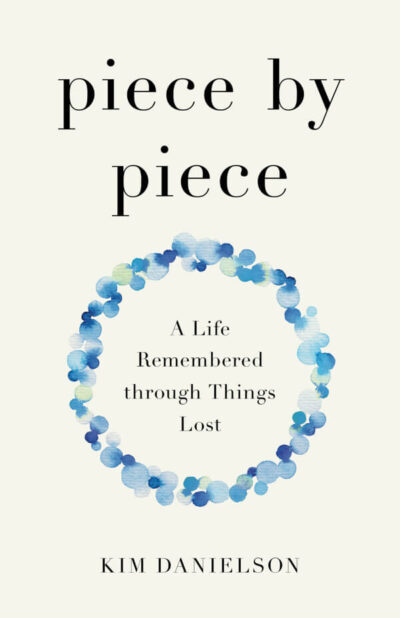
These are just a few things that came to mind as I read Kim Danielson’s Piece by Piece: A Life Remembered through Things Lost (SWP; February 2026). Four years ago, in January 2022, Kim Danielson’s Colorado home was burglarized. They rampaged into the home she shares with her husband and three boys, went right for the safe in their primary bedroom, emptied out dresser drawers, culling through nightgowns and underwear, leaving with a handful of precious keepsakes and heirlooms. It’s a harrowing loss, igniting memories and old grief, while also creating a new type of grief, that of having one’s home broken into.
Piece by Piece looks at not just things, but the psychological and emotional reasons why it hurts so much to lose them. But Danielson goes a step farther. She creates a lasting legacy in writing this book that not only provides her solace in the aftermath of such a loss, but a tangible and lasting reminder of her tenacity, memories, and enduring spirit.
Please join me in conversation with Kim Danielson.
Leslie Lindsay: Kim, thank you for chatting with me about Piece by Piece. I always like to start with the origin of a book, because when we get down the ‘why’ of a long project like this, we are reminded of our intentions. My sense is you felt bereft after losing not just these family heirlooms, but having your home, your private sanctuary, invaded. What better way than turning to the page to resolve these feelings. Am I on the right track, or was it something else?
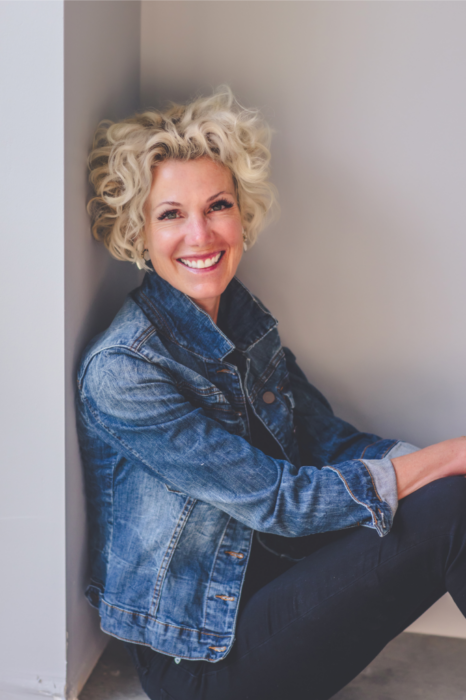
Kim Danielson: Yes, absolutely. Not only did I lose these things of meaningful value, but I also felt unsafe in my own home. It felt like a violation upon violation. Additionally, I struggled with the heaviness of this loss. I was devastated by it in a way that seemed disproportionate. I lost things, and I kept reminding myself of that. “It’s just stuff,” everyone said and I agreed, and I kept trying to focus on the fact that everyone I loved was unharmed. But no matter how hard I tried, I couldn’t find solace there. It wasn’t until I started writing that I realized why this loss hurt so much. Writing the stories gave me peace.
LL: Piece by Piece is told in such a unique structure and I love that. Structure is tough! But you handle it beautifully. I don’t think I am spoiling anything when I say that each chapter is based on the story behind the piece of jewelry that was stolen. Each item conjures different meaning, symbolism, a different period in your life—from childhood to law school, marriage, babies, and more. Was this your plan, all along, to go through the artifacts one by one? What were some of your earlier drafts like?
Kim Danielson: The original draft of this book was a numbered list of stolen items—a list requested by the police for their investigation. After months of searching and hitting so many dead ends, I realized I needed to find another way to move forward. I went into my office, grabbed that list, and started writing the stories behind each piece. In that sense, the structure was built in from the start.
Later, I added the alternate timeline, which follows the day of the burglary as it unfolded in real time. I like the contrast between the one-day timeline and the one-life timeline. I love playing with structure, and I think that is what makes Piece by Piece distinctive and unique.
LL: In writing, there is a lot of grief. Killed darlings. Crumpled pages. A deal that falls through. And that’s just the tip of the iceberg. I love this quote that you share in Piece by Piece by Brene Brown, “grief is the loss of expectation.’ And that’s so true! There’s the narrative we imagined and the one that actually happens, and it’s often challenging to reconcile the two. Can you speak more about that, please? In terms of writing and in general?
KD: Oh yes, I really think Brené Brown nailed it. When we experience loss, we lose not only the object of that loss—a loved one or a precious thing—but also the future story we envisioned. For example, when I had kids, I expected my mom to watch them grow up, to be involved in their lives in the same ways my grandmothers were involved in mine. When she died, I lost not only her, but the story I had imagined and expected. That’s why grief makes us feel so untethered; we’ve lost our solid ground and our clear path.
I think the same is true of writing. We experience grief in our work, too. I naively expected writing a book would be a straight and direct path, and it certainly wasn’t. I didn’t expect it to be easy, but I never anticipated the amount of rejection and self-doubt along the way. Eventually, I had to let go of my expectations and learn to hold everything more loosely.
LL: I can also completely relate how you looked everywhere for some of the lost items—pawnshops and consignment stores, how you read the news with obsessive regularity. We’re always looking for ways to make the unsensible sensible. I think what I’m getting at is what we are seeking is our nose. I’m curious if that’s how you felt with the book?
KD: Yes—this really resonates with me. I started writing after I stopped searching, but I think you’re right that I was searching the whole time. I desperately wanted to make sense of what had happened, and it wasn’t until far along in the writing process that I realized the understanding I was looking for had been right in front of me all along. I thought the return of the things was the end goal, but what I was really seeking had been there all along—I just couldn’t see it yet.
LL: I absolutely love how you write about artifacts commemorating events, places, or people, that they are more than their ‘face value’ of stones and metal. In some ways, the loss of these items made them more tangible. You were able to share the stories behind them, something you may not have done had this horrific burglary happened. In that sense, it’s almost a gift. Can you speak into that, please?
KD: That’s exactly it. I didn’t appreciate these pieces nearly as much as when I had them, because I never had reason to sit down and think about their intrinsic value. It wasn’t until I lost them and had to come to terms with why the loss hurt the way it did, that I discovered their true value. Had the burglary not happened, I would never have done this deep reflection or unlocked so many old memories. I also would never have had the conversations with friends and family members that answered questions I would never have thought to ask. This kind of excavation would never have occurred.
In many ways, this loss was a gift, because it gave me the opportunity to investigate my own history and tell stories that otherwise would have died with me. I lost many precious heirlooms, but I gained an heirloom that can never be stolen.
LL: Do you have any tips or ideas on how others can preserve those memories of family heirlooms? Things we might do to ensure not just the item, but the memory and symbolism get passed down?
Kim Danielson: Yes! Start with one beloved piece, a family keepsake or priceless memento—the kind of thing you’d grab if your house was on fire. Sit down and write about that piece, including the who, when, where, how, and why of it. What or who does it remind you of? What memories are associated with it? How did you come into possession of it? What meaning does it hold for you? And do you have any unanswered questions about this piece, and if so, who might be able to answer them?
Start with one piece and then move on to another, until you’ve captured stories that reflect a spectrum of your life.
And finally, make sure you type them and save them somewhere safe—beyond a single device—so the stories don’t disappear. You know, just in case.
LL: Kim, it’s been an absolute pleasure. Is there anything you would like to add that perhaps I forgot to ask?
KD: Thank you for these thoughtful questions. I’m so grateful for this opportunity to talk with you and for the care and attention you brought to this book. My hope is that Piece by Piece will be helpful for readers and serve as a practical template for writing their own legacies.
In the years I spent writing, editing, and pursuing publication, there were countless news stories of devastating loss—fires, hurricanes, floods, landslides, theft, and the heartbreaking destruction caused by wars around the world. So many people lost precious and irreplaceable belongings. I offer this book as a means of reclamation and restoration, a way to preserve what matters, with or without the objects.
Leslie Lindsay
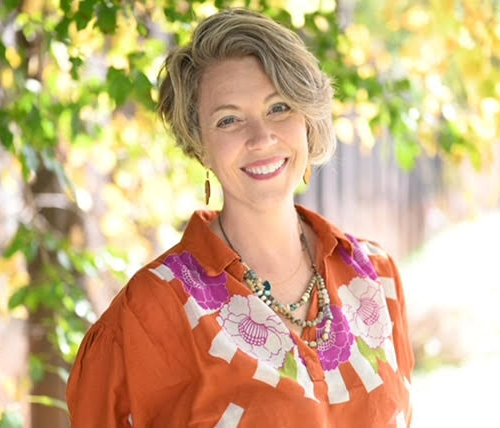
Staff InterviewerLeslie A. Lindsay is the author of Speaking of Apraxia: A Parents’ Guide to Childhood Apraxia of Speech (Woodbine House, 2021 and PRH Audio, 2022). She has contributed to the anthology, BECOMING REAL: Women Reclaim the Power of the Imagined Through Speculative Nonfiction (Pact Press/Regal House, October 2024).
Leslie’s essays, reviews, poetry, photography, and interviews have appeared in The Millions, DIAGRAM, The Rumpus, LitHub, and On the Seawall, among others. She holds a BSN from the University of Missouri-Columbia, is a former Mayo Clinic child/adolescent psychiatric R.N., an alumna of Kenyon Writer’s Workshop. Her work has been supported by Ragdale and Vermont Studio Center and nominated for Best American Short Fiction.

I can’t wait to read this book. Kim is a wonderful writer and her story is one that can help us all sort out our own stories that we want to pass on.
I cant wait for my book to arrive. This has made me ponder the stories behind the things I treasure. They bring back precious memories that I would like to pass on to my children and grandchildren. I am challenged to write them down. Thank you.
I can not wait to get this book and curl up with your heart and emotions in mind . We can all relate to loss of one kind or another. I am so proud of Kim for digging deep in her soul to share this with us !
Love this story! At any age, it’s a gift to be able to pass along the feelings and stories behind the objects we hold so dear.