

My dog is pulling too hard on his leash, and I’m half-walking, half-slipping along the park’s path, a vantage point from which you appear as a soft, yellow-jacketed blur against the oil-slicked snow, your black-and-pink striped backpack on the sidewalk next to you, and I think you might be waiting for the bus to take you to school. Except, I realize, it’s a Saturday. What are you doing here?
As you come into focus and I see you are seated on the ground, I believe you to be fixing a toy, broken from the careless play of children still learning the consequences of failing to care for what others have gifted them. Toy repair seems to be a volunteer vocation of many kids who frequent this intersection, like there is some micro-economy built around the toy market here. At least this is how it often appears in the months when the snow has melted in the brief mildness of spring and, in the field behind you, the city’s eternal project for family housing, mired in the purgatory of government-funded construction, is filled with the buzz of rotary saws and workers swarming like mayflies. But you don’t seem to have a toy in your hand, and there are no other children brave enough to go outside and roughhouse when it is so cold the ice has frozen a homeless woman’s grocery basket to the edge of the street and the snow has coated the basket until it is a barely legible bump in the minor, white dunes cascading the sidewalk. Here, right now, there is only desolation and ice.
As the path I am walking passes in front of you, I hear the high pitches of your sobbing. Slow. Laborious. The methodical, deep sobbing of someone who desires the world around them to listen not just in that moment but all moments. I wonder if this is the slow, staccato sobbing that often arises from a person seeking to escape a forced, involuntary invisibility. Maybe it is the sobbing of a child who has packed their bag and run from home only to realize in the first mile, maybe two, that they are not fleeing to anywhere in particular; there is only a situation from which they wish to break free.
Honestly, I don’t know if any of this is true in your case, if you really are a runaway or feeling abandoned by your family and friends. It’s just that there’s the familiar, scarred resonance of a mirror in your cries.
See, I bawl just like this, in this same tone, this same volume, this same rhythm, whenever I attempt to escape my own real and imagined traumas: homes I no longer feel welcome in, relationships that disintegrate into disrepair, careers that fall as flat as half my jokes. Any failure, really. Before the hard work of sobriety, I broke down and cried very frequently. And on occasion, as a treat, I still do.
And this is certainly how my cries sounded when I sat, surrendering, on my own abandoned intersection, the smell of roadkill and cow shit blowing through the heat, as a child at the tail end of my first escape from the wet lashes of my father’s belt, when we lived in the blister of Texas summers on dirt roads just outside town, far from the Pennsylvania winter currently threatening to coat our lungs in ice. I was ten, maybe eleven, and vaguely comprehended the crossroads of loose gravel that in one direction led back to College Station and in the other out to Millican or Anderson or some other town without streetlights or even a stop sign. The walk wasn’t particularly painful, even though my backpack was filled with Star Trek novels, some T-shirts and underwear, a single pair of blue jeans—perhaps not surprisingly, I forgot socks—and, as I inched further from my father’s street of decaying trailers, the landscape shifted into expansive, well-kept lawns hedging around three- and four-story white-painted houses.
There is a series of flaring memories of my father’s lectures on unconditional love, when I would be seated on the couch or the edge of a bed, both butt cheeks burning like needles from the punishment I’d just received, and he seemed to vacillate between convincing himself to love me or simply claiming his affection to be dependent on total obedience. Sometimes, he used a small whiteboard he kept in his bedroom and made shapes and charts I didn’t understand with a dry erase marker, usually a green one. The tears would still be falling from my punishment, and an unmelodious, arrhythmic sobbing would be lightly sputtering from my lips.
There was one lecture in particular that stuck out amongst the jumbled flow of awkward flashbacks. It had occurred a few weeks before my flight from home and the stripes on my ass were emotionally fresh if mostly, physically healed.
I had previously missed the bus home from school because I spent too much time in the library looking for a Star Trek novel to check out, which resulted in my father picking me up on his way home from work two hours after classes let out for the day. He’d moved to the administrative branch of the Fire Department after divorcing my mother with the claim that he couldn’t work twenty-four-hour shifts when he needed to be present for my sisters, who actually lived with my mother at the time, and me. The whipping I received that evening was standard fare, and the black leather of his belt carried the usual amount of zing and zip, but it came with an understanding that I would have to walk home if I missed the bus again, that he wouldn’t do with a call in the middle of his workday asking me to pick him up. And the next time I missed the bus, again after spending too much time in the library, when I walked home, four miles from the middle school to our dirt-road trailer, he beat me so hard I collapsed to the ground in the midst of it and was made to stand so I could receive further licks.
The following morning, I related the incident to the school counselor I’d been seeing in the aftermath of my parents’ divorce. The counselor called Child Protective Services, which accomplished nothing beyond another lashing paired with an explanation from my father of why this sort of punishment was not abuse but biblical and a reminder that he did this out of unconditional love, that my pain was proof he cared for me, even if he did not want to, even if rumors of his disciplinary methods and the school counselor’s report could cause him to lose out on a promotion to Assistant Chief one day. His love, he said with arms stretched open like a crucifix, had no conditions, but it might run out if I kept the route I was going, a pathway that invited further discontent. The sequence left me confused, but perhaps that was the point. Cruelty thrives on obfuscation.
Like I imagine of you, in this moment, at this intersection, I had no plan, no sense of where I could go. The recognition of my own insignificance, one borne from the view of the open Texas sky that, in its god-like expansiveness, drowned the brown brush and green grass and white, rural homes of people I assumed were richer than I would ever be, took root and I followed my tracks through the dirt roads home. That was the first time I noticed that backtracking always feels faster, always seems much easier than continuing on in a new direction.
When I returned to the family trailer, my father did not seem to notice that I’d been gone long enough for the small hand on the clock to shift its expression nearly a quarter of the way down. He looked up from the stained recliner where he was reading his Bible, eyes as hollow as the subflooring across which our steps echoed when we moved room to room. He said nothing and returned to his reading as though I were another creak from the wind blowing against the broad side of the trailer. I wondered if he’d even seen me or if my flight was immaterial in the context of my own invisibility.
Not that I’d ever been truly invisible. It’s that my attempts at visibility were punished violently. That inventiveness and literacy were challenges to my father’s Christian authority and he’d been raised to speak rarely and wield a closed fist. When he did acknowledge me, when I read my Star Trek novels or expressed my own creative narratives through the rubber motions of action figures or tried on a dress at age three—an early sign of queerness, maybe—or missed the bus home from school, it was reason to lose his temper and beat me until I could no longer stand, my sobs liquefying into desperate pleas for some degree of humane treatment that I am still, thirty years later, waiting on.
And it is a variation of this sobbing, this craving for some degree of compassion, I hear from you now.
There is the question of whether I should stop, tell you all this, trauma dump in solidarity. Let you know that I see you and, if it would ease your stress, you may pet the soft fur of the chocolate lab I am walking. I call him Jake Barnes, River Dog, and he is sometimes a menace, albeit a well-intentioned and friendly one. A perpetually hungry one. But I’m not sure. I mean, I share in your sadness, but there is a danger in the accusation of motive when I am a teacher and nonbinary and we live in a town where half the population voted Donald Trump for president. Empathy is punishable these days.
Perhaps my silence, my lack of public acknowledgement for your feelings of invisibility, will only make all this worse, really. It could further contribute to a disposition of neglect, and maybe that is for the best. Nobody stopped at my own intersection of perceived obscurity, and when my father did not recognize my absence after I made it home, that was more painful than the beating. But the spite from this, that smoldering heat still dwelling inside me, fuels my drive to become something better than my origins, better than my father’s orgins, dictate.
Maybe this, too, is part of childhood, some insanely lonely rite of passage all children must go through, and my own moment, my own experience, is not as unique as I would like to think. Maybe you need to feel temporarily faceless so you hold more dearly to your own sense of expression, your own feelings of individuality. Maybe you need to validate yourself independently, and maybe this isolated sidewalk is where you learn to do so. Much like that dirt road for me so long ago.
But I certainly do not wish to compound your pain. You did not remember to wear mittens, and I can tell from here that your tiny fingers, gripping the handle of your backpack, are broiling bright red in the cold. You will want to be somewhere warm soon.
Maybe, just maybe, whether I stop or not, this sob becomes a song, a painting, a poem, a story, a better essay than this one. I hope, selfishly perhaps, it becomes a career built on compassion or anything at all that demands a dying world to pay attention because you have so much to say. Like a social worker or something.
Or, if you’re lucky, this moment ends in comfort, in thawed snugness, seated on a cozy couch, quilt draped across your legs, in front of a fireplace’s flames, where your hands and cheeks may thaw before hypothermia sets in.
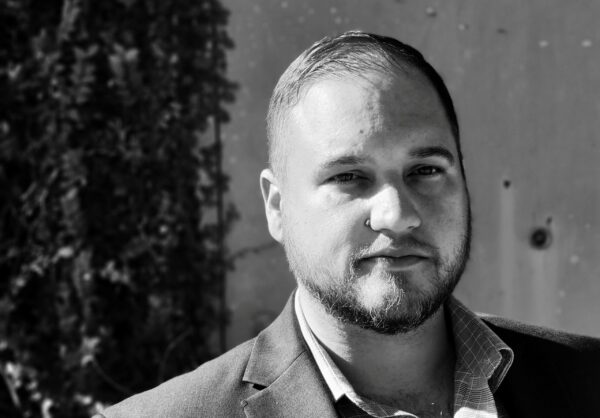 Clayton Bradshaw-Mittal (they/them) writes queer, working-class stories, essays, and poems. Their work has been supported by Community of Writers, MASS MoCA, Vermont Studio Center, Sundress Academy for the Arts, and Tin House. Winner of the Plaza Short Story Prize, their fiction can be found in Story, Third Coast, The Masters Review, Fairy Tale Review, F(r)iction, South Carolina Review, and elsewhere. Other writing appears in The Rumpus, Barrelhouse, New Ohio Review, and additional journals.
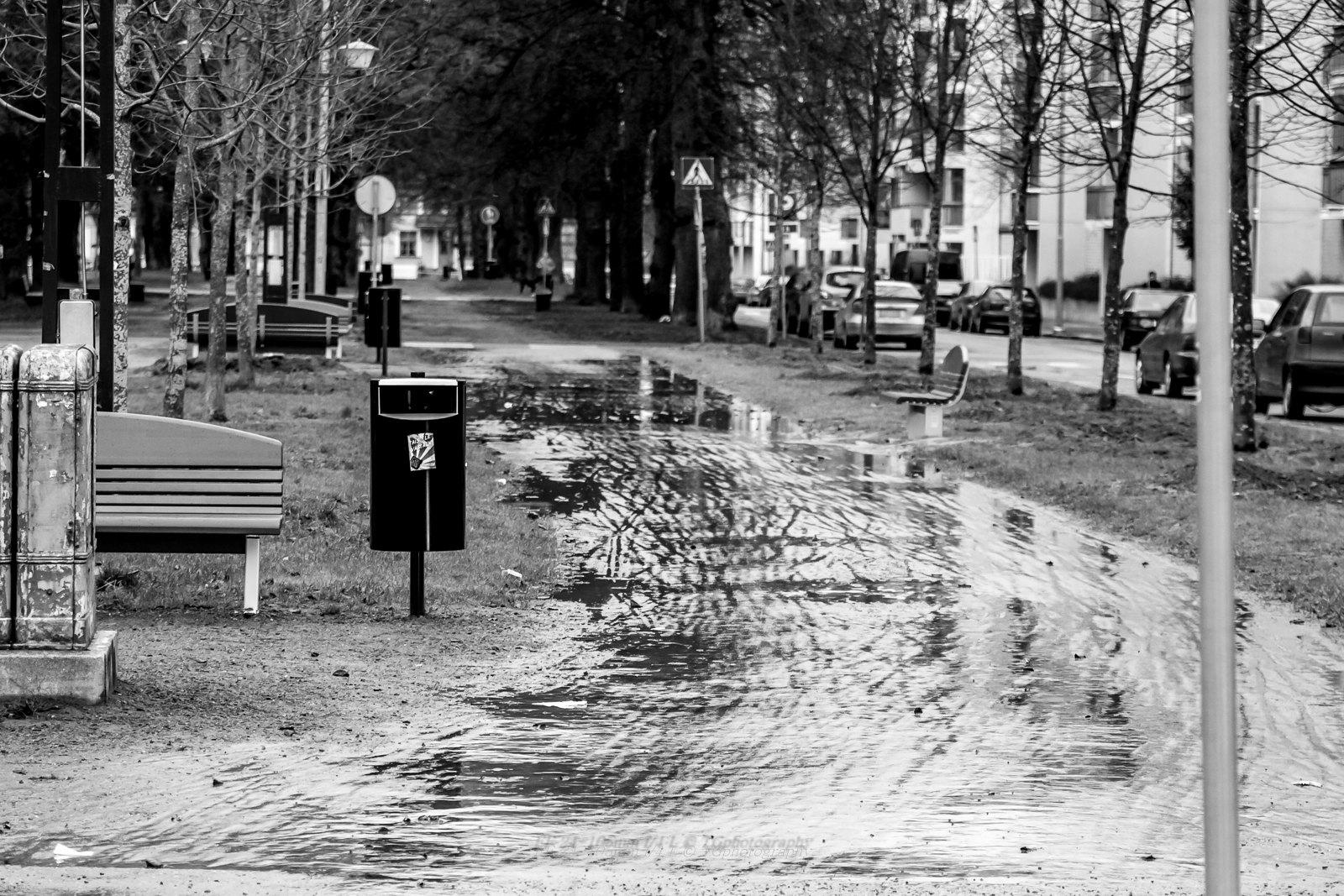
Image by gronman / gronmanphotos.com via Flickr Creative Commons
This is a beautiful piece!
A stunning essay. Thanks so much for sharing it with us.