Reviewed by Carolyn Roy-Bornstein

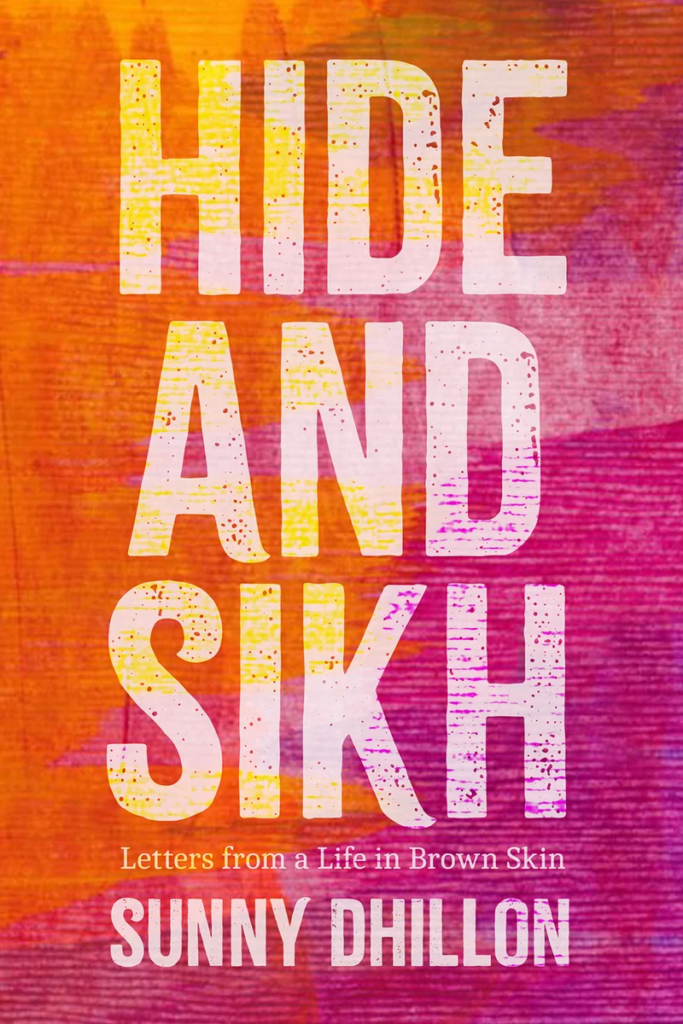 In Hide and Sikh: A Life in Brown Skin (Wolsak & Wynn Publishers; Nov. 2025), the hiding Sunny Dhillon speaks of in the title of his deceptively charming, but searingly frank memoir, begins right out of the gate, in the preface.
There, he recounts a time when his paternal grandmother, his Punjabi “Bibi”, picks him up from school when he is in first grade. She calls to him to hurry up. But she does so in Punjabi. Sunny freezes. His friends ask the inevitable. “What language is that?” At that moment, he somehow, confusedly, feels he must hide his roots, lest he open himself up to all manner of teasing. “French,” he finally lies.
His friends let the answer pass, but Dhillon is deeply ashamed of his disloyalty to his family, to his heritage. One thread of the rest of this book is an exploration of those roots. The language, the garb, the religious rituals, the family traditions. Which were nurtured and preserved; which were forsaken and lost. Lamenting the fact that he let his mastery of Punjabi whither to a few random phrases, he wonders, “How do you lose a language? …You neglect it, take it for granted along with so many aspects of your culture.”
The other thread Dhillon explores unflinchingly is racism. In the style of Ta-Nehisi Coates’s Between the World and Me, the book is structured as a letter to his young daughter and in the opening pages, he relates her first exposure to racism in a playground incident in which another dad begins espousing white replacement theory tropes. Dhillon’s instinct is to run (and hide) but this time also to protect. To protect his daughter from the cruelty and ugliness of words. It is a dispiriting moment for Dhillon — to realize that the world hasn’t changed very much in this regard since his own boyhood days of insults and taunts.
The racism Dhillon experiences as a journalist for 10 years at Canada’s The Globe and Mail hits him even harder. Plum assignments he is given are seen by some as DEI hires. A meeting Sunny calls for with a higher up in which he hopes to advocate for advancement goes south when he is wrongfully accused of mocking an idea for a piece when he was simply outlining the reasons he thinks the story had no merit. (Two white journalists had already refused it.) Over the years he considers quitting the “carefully calibrated system, one that has long put racialized people in a box and then promptly sealed it shut.”
In 2018, Dhillon resigns his post. It has become clear that as a journalist of color, he is not valued and will never advance. He blogs about his decision on the platform Medium in a piece called “Journalism While Brown and When to Walk Away.” It goes unexpectedly viral. Interview offers come in which he declines, unwilling to retraumatize himself: “I did the only thing I knew how to do — I hid.” When he does finally put himself back into the workplace, he is effectively black balled. No one wants to hire a whistle-blower.
Dhillon gives as his reason for publicizing his resignation the hope that “it will lead to meaningful reflection on the lack of diversity in Canadian journalism and the problems therein.” But his reasons for writing Hide and S ikh go even deeper than that. He wants to reconnect the tie to a heritage he had severed in his (relative) youth. He wishes that same connection for his daughter. He tells her, “You are Sikh. You are Punjabi. You are Indian. You are brown. You do not need to doubt these facts. They are true…Know who you are. Move with confidence…”
There will be as many “ways in” to this book as there are readers: something for everyone, so to speak. Some may relate to Dhillon’s experiences as a parent, or as a second generation American with roots that may be at times as foreign as the old country and at others a seamless part of our soul. Others may relate to his humor, his merry tone as he discusses weighty issues. I related to his work as a journalist, his collaboration with words, the sifting of ideas, the looking for that side door into each piece.
As a physician, too, I related to Dhillon’s discussion of professional identity. We don’t just work as doctors, we become them. Our identities develop over time as we absorb lessons from mentors, internalize the specific vocabulary of the vocation and weave our personal values into our professional codes of conduct. In medicine, we may belong to marginalized groups based on our skin color or gender identity. These various roles may at times feel in conflict with our role as a doctor, especially If the group we identify with is under-represented in the medical community.
This was true for Dhillon as well, where in climbing the career ladder, he lamented that he would never hear a mentor say, “You remind me of a younger version of me” because people of color in positions of power and authority are few and far between in Canadian journalism.
In bringing his story full circle, Dhillon revisits the initial act of racism his daughter is present for in the playground in the first pages of the book. He reminds us that sometimes we just need to show up. For each other. For our families. For ourselves. And not hide anymore.
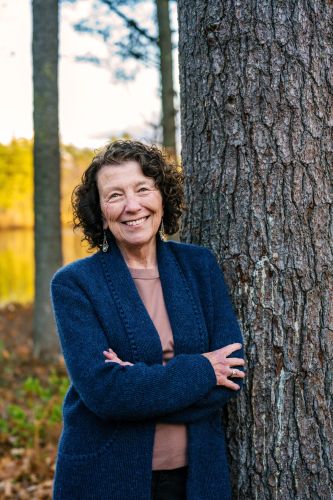 Carolyn Roy-Bornstein is a retired pediatrician and the writer-in-residence at a large family medicine residency program. Her work has appeared in The Washington Post, The New York Times, The Boston Globe, JAMA, Poets & Writers, The Writer magazine, and other venues. Her most recent book, A Prescription for Burnout: Restorative Writing forHealthcare Professionals is forthcoming with Johns Hopkins University Press in April 2026.