Reviewed by Dorothy Rowena Rice

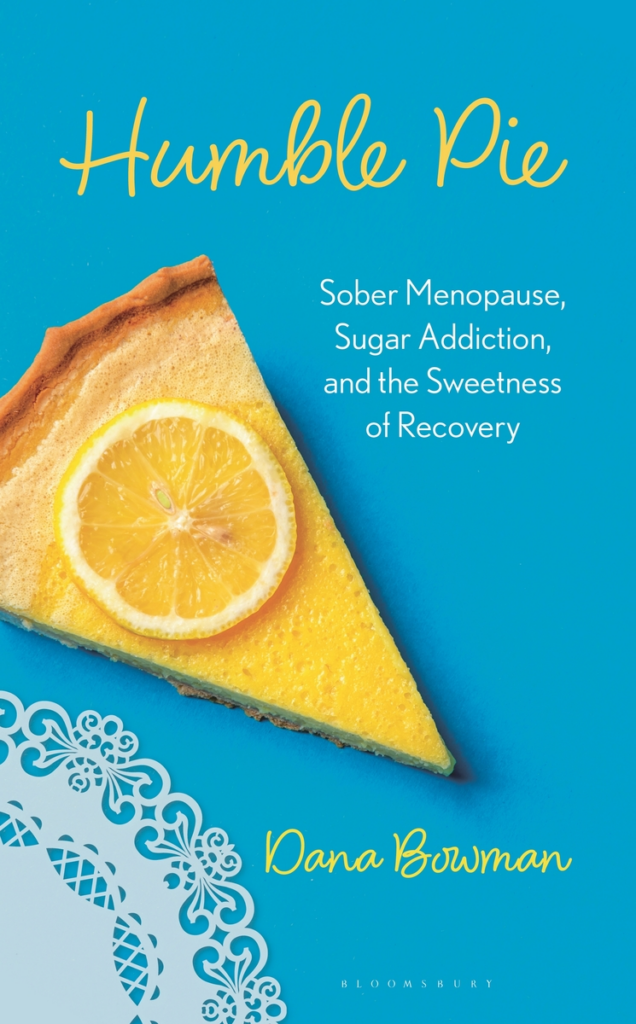 Humble Pie: Sober Menopause, Sugar Addiction, and the Sweetness of Recovery (Bloomsbury; Jan. 2026) is a memoir that is by turns laugh-out-loud funny, emotionally charged, and highly relatable across a wide spectrum of issues and ages.
A trifecta of themes provide the story’s spine. As the title states, Bowman (the author of two previous addiction and recovery memoirs) relates her ongoing sobriety journey, while simultaneously navigating the maddening unpredictability of menopause, and coming to terms with sugar and overeating as a new coping mechanism.
Told through in-the-trenches scenes of mothering teen boys, marriage and friendship — replete with set-backs, hiccups, side trips, surprises and “Ahas!” — Humble Pie is an engaging, entertaining read, one that imparts lessons learned and one woman’s perspective on staying on track and fully onboard life’s wagon, even, or perhaps especially when life doesn’t stop so you can catch your breath. Which, of course, it rarely does.
Published Bloomsbury’s academic imprint, Humble Pie is well-researched and indexed, for easy reference and finding that insightful, helpful or hilarious bit you want to read again or share with a friend. For further context and depth, each chapter ends with footnotes and a bibliography of sources. While the footnotes function in much the usual way (providing additional information or background without interrupting the flow of the story), they are often very funny. The footnotes, and even the bibliography, add another dimension to the memoir — informative and intriguing, never academic or dry, and all in the author’s voice-of-a-friend, a friend who’s “been there.”
Here’s an example of a footnoted passage:
“When I was about thirteen, somebody mentioned that I had a chubby chin, and since then, my chin is a buzzkill. Like my chin was responsible for broken relationships and possibly my entire single situation in my thirties after I’d been dumped. It’s all my chin’s fault.” ¹
¹ Thank you, Nora Ephron, for your book I Feel Bad About my Neck. I too feel bad about my neck.
Many of the footnotes are longer than this one, more detailed and twisty — drawing the reader into more anecdotes, side-bars and back alleys. While these tidbits are unique to the narrator’s experience, readers will likely find themselves nodding in recognition at many passages. I did.
The book is divided into three parts: Addiction and Menopause; Recovery; and Dessert. Within Part 1, are several chapters relating the author’s lifelong struggle with body image and insecurity, dieting and bingeing, and the associated guilt and shame. Being in recovery and menopause, consuming massive quantities of sugar — eating to fill the hole and quiet the noise — can assume the role once played by alcohol. Whether or not one is in recovery, or menopause, these issues will resonate for many.
Bowman terms the so-called behavioral addictions (where the addiction is arguably not to a substance, but rather to a behavior, such as gambling, shopping, or disordered eating) “sister addictions.” (A caveat might be made for sugar, which some studies show can be as addictive as cocaine.) Augmenting the author’s anecdotal experiences, the bibliography sections that follow each chapter include references and links to relevant studies and science. Readers who want to delve deeper into a given topic will appreciate the citations.
The middle portion of Humble Pie chronicles the phases of recovery — from the initial day-by-day struggle to stay the course, to permanent sobriety (which the author acknowledges requires daily acceptance, self-awareness and practice). Chapters chronicle the many and continuous challenges and stumbling blocks to sobriety — a number of which are chosen and treasured, yet often triggering, nonetheless. Children, for example. (The author’s sons are teens in this narrative, an age when even the most terrific kids can push our buttons; it’s what they do.) Add to that, clinical depression, food as a drug, menopause and aging, and, as a writer, anxiety and doubt when the words don’t come, and you fear that an essential part of you is gone for good.
On the plus side of the ledger are tools and antidotes, hard truths learned, and acceptance that just as there will always be triggers, that “life is triggering,” there are helping hands and the knowledge that this too will pass. A husband and friends who “get it,” who are there when you need them, and who listen and hear, are an important part of the equation for Bowman. On the value of time with her “mom friends,” she writes:
“We all air the pain and challenges of parenting on that back porch before sunrise. I don’t feel placated. I don’t feel misunderstood. If anything, I feel like the complexity of child-rearing is simplified with the ease of the “me too.” Friendship trains my brain to regulate emotions. It’s practiced and realistic optimism at its finest.”
“Dessert,” the final part of Humble Pie, chronicles the abundance, the sweetness — the fruits and gifts of recovery. Bowman tries stand-up comedy and, despite being terrified, finds she loves it. She achieves a long-time goal when she gives a TED talk about going gray. She works at learning and practicing self-forgiveness. She begins writing again.
“I realize this all sounds rather woo-woo, but I take my creativity very seriously. It has saved my life. Trying to explain this is a little like trying to explain faith. You can come off as a wee bit nut ball. But I think addicts really get creativity. We have too. We get sober and we get wrung out. There is nothing else. Creativity is all you have. It uncovers who you are, but gently.”
Which doesn’t sound at all woo-woo to this writer.
As a reward, at the very end there’s a delicious sounding recipe for a literal dessert, the author’s favorite lemon-meringue pie — an apt reminder that life is sweet and sour and it’s all about finding the balance that makes the tastiest pie, or life.
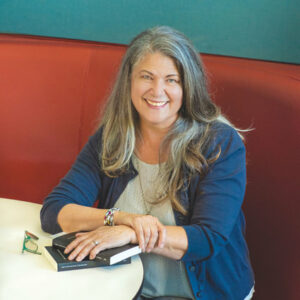 Dorothy Rowena Rice is a writer, freelance editor, managing editor of the nonfiction and arts journal Under the Gum Tree and a board member with the Sacramento area youth literacy nonprofit, 916 Ink. Her published books are The Reluctant Artist (Shanti Arts, 2015) and Gray Is the New Black (Otis Books, 2019). She is the editor of the anthology TWENTY TWENTY: 43 stories from a year like no other (2021, A Stories on Stage Sacramento Anthology).
At age sixty, after retiring from a thirty-five-year career in environmental protection and raising five children, Dorothy earned an MFA in creative writing, from UC Riverside, Palm Desert. Learn more and find links to many of her published stories, essays, reviews and interviews at www.dorothyriceauthor.com