Reviewed by Aurora D. Bonner

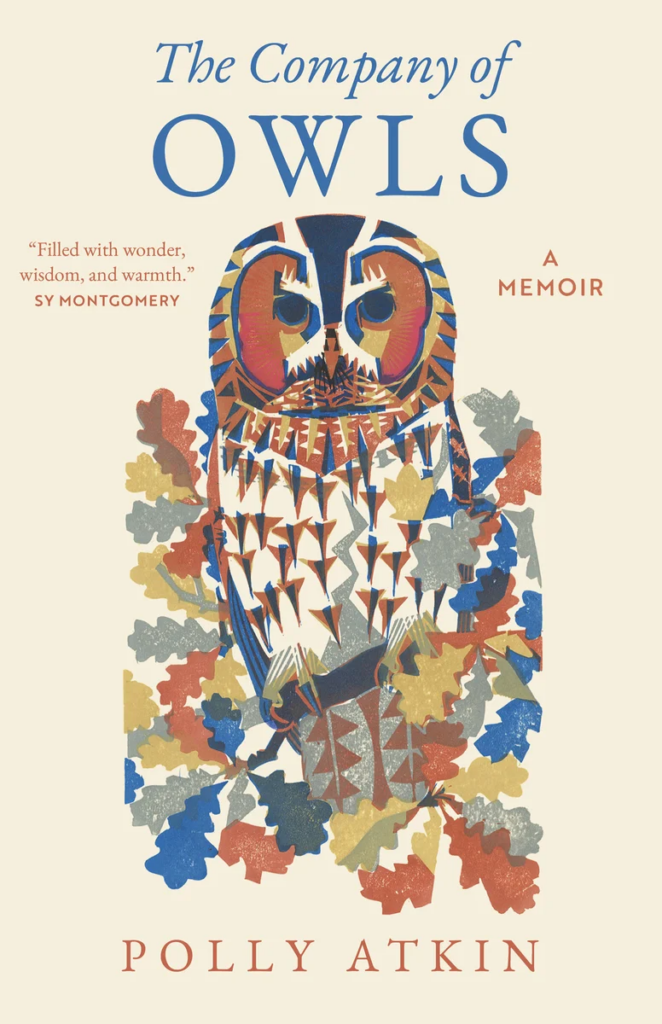 Written in short essays, The Company of Owls (Milkweed Editions; 2024) by Polly Atkin weaves together themes of isolation, chronic pain, and the restorative power of quiet observation. Part memoir and part nature writing set largely in England’s Lake District, the book reflects on how the natural world shapes us even as we shape it in return.
Isolation in The Company of Owls is multifaceted: the enforced solitude of the COVID-19 pandemic and the private isolation that accompanies chronic illness. Owls serve as both literal subjects and metaphorical touchstones throughout the book. In her opening essay, “Midsummer Owl,” Atkins compares the tawny owl she meets during a summer solstice walk as “a doorway opening,” and in many ways that parallel is true for the handling of this memoir. Throughout it, owls — her personal interactions with them, the ethology of owls, the history of owls — act as a threshold into deeper discussions of belonging.
Atkin writes with careful curiosity about the habits, histories, and mythologies of owls, tracing how humans have long projected meaning onto these nocturnal birds. In her essay “A Short History of Owls in Grasmere,” she cites mention of owls in the poems of William Wordsworth, who she suggests seemed to be reframing the narrative around owls from one of foreboding to one of joy.
Atkin herself writes about owls with joy, capturing the emotion of encountering them, the humility these birds inspire, and the effects of human presence on them. She draws subtle likenesses between owl and human lives, at times even comparing herself to owls. In “Onlihede,” she writes: “Sometimes I feel more like an owl than a human, or I feel more kinship with owls than other humans. There are few things more isolating than feeling alone when you are not alone. Feeling apart when you are together.”
One of the memoir’s most resonant threads is about living with chronic pain. Pain becomes another form of isolation. In “Uplokkid,” which Akin explains means “locked up, enclosed — but also implies protection, sanctuary,” she writes about her experience of living as an immunocompromised person during the pandemic. “Increasingly, it is easier to spend time with the owls than with people who are living such a different reality from mine.”
Atkin’s evocative prose in The Company of Owls offers readers an opportunity to slow down, to sit with difficulty, and to recognize connection even in solitude. Through the owls she observes, Atkin shows that nature holds memory and life beyond the human scale, which forces us to ask what it means to attend to nature now, amid the climate crisis.
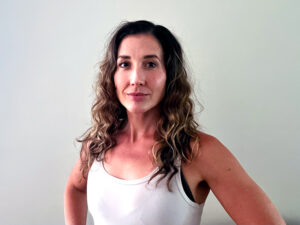 Aurora Bonner is a place-based writer of creative nonfiction and fiction who explores the relationship between identity and environment. Her writing has appeared in the anthologies Rivers, Ridges, and Valleys and DINE, as well as in HerStry, Impost, Under the Gum Tree, and other literary journals. She regularly reviews books for Colorado Review and Hippocampus Magazine. Aurora is a writing professor at McDaniel College in Maryland and leads workshops and retreats focused on nature, creativity, and personal narrative. She holds an MFA from Wilkes University.