
Music can be closely tied to our memories, and this can be a boon when we write about our past experiences.
I recently came across a new neuroscientific study which found that the brain is wired so that “music is deeply intertwined with our sense of identity and personal history.” One of the researchers remarks, “What we’re seeing is that nostalgic songs don’t just bring back memories—they activate the brain in ways that could support emotional well-being and cognitive function.” What this means for us, as writers, is not only that music can be a powerful tool for communicating our personal stories, but also that writing about our memories of music might be therapeutic for both the writer and the reader.
Music as Zeitgeist
It’s a cliché to say that music is the soundtrack to our lives, and yet—like many clichés—this statement resonates with truth. Hearing a song can take us back in time, whether to the first instance when we heard the song, or to a period when the song seemed to be everywhere.
Discussing a specific song can also be a way to invoke memories shared between us and our readers. Pete Crighton opens his memoir The Vinyl Diaries in what might seem like a very conventional way, noting the date of his birth. But then he makes the evocative move of invoking a song associated with that date:
“The number one record at the time was ‘Aquarius/Let the Sunshine In (The Flesh Failures)’ by the 5th Dimension — an appropriate, or perhaps fitting, record to see me into this world.”
Whether or not we, as readers, were alive in the late 1960s, we likely possess a shared cultural memory of the time period. The song allows Crighton to paint in a single brushstroke the historical backdrop against which he was raised. He also sets up suspense by leaving readers curious why this hit song was such a “fitting” starting point for his life.
Music as a Mirror for Identity
In memoir, we can use music as a lens for making sense of who we are—for ourselves and for our readers. For example, Desirée Martín, in her autobiographical essay “Half a Person,” grapples with the music of The Smiths to explore her own identity. She reflects:
“Though I have always loved The Smiths’ great song of queer teenaged heartache ‘Half a Person,’ it has never spoken to me as intensely as when I was going through an early- middle-age divorce with young children: the whole brutal yet banal package. The ambiguity and duality of the song deeply appeals to my conviction that I am also living the life of ‘half a person’ as a single mother of two young boys.”
The song allows her to tell us about herself and a personal crisis she faced. As the essay continues, she’ll broaden her discussion of The Smiths to consider the British band’s popularity in Chicanx communities and, in turn, her own identity. She finds that she’s “always had something of a split personality: American/Mexican, English/Spanish, introvert/wild card, virgen/puta.” The essay isn’t necessary about the music of The Smiths. It’s about how Martín comes to understand herself through her experience of that music.
Our Lives as Playlists
The music we invoke in our writing can reflect who we are, and multiple songs can offer a setlist that functions as a narrative thread for explaining our lives. And, music can do more than let us talk about who we are. It can allow us to comment on the culture that shaped us.
Kiese Laymon does this powerfully in his memoir Heavy, which features hip-hop not just as a soundtrack in the book, but as a lens through which to examine how his own identity has been shaped by the genre’s messages about Blackness, masculinity and political resistance. For Laymon, the inclusion of music allows him to go beyond talking about how music as a passive reflection of society to show readers how music actively shapes predominant cultural beliefs.
Music as Throughline
Songs play a central role in Hua Hsu’s Pulitzer Prize-winning memoir Stay True. In it, the author chronicles his own growth as he starts college by tracing the music he’s exposed to. The Beach Boys’ “God Only Knows” appears throughout Stay True, and Hsu’s changing feelings about the song signal his growth. At one point, Hsu’s friend, Ken (to whom the book is an extended elegy) orchestrates a sing-along in the car. Hsu had previously despised sing-a-longs, but this time:
“In the immediacy of the song, as its seconds tick away, you’re experiencing it as a community—as a vision of the world vibrating together. It tickles your ear, then the rest of your body, as your voice merges with everyone else’s. The violent dissonance when someone, and then another, slips off-key, and everyone ventures off toward their own ba-ba-baa solo. I finally felt in my body how music worked. A chorus of nonbelievers, channeling God.”
The moment does three different types of work in the book. First, readers know this particular song is important as it appears multiple times, so this functions as a call-back to key instances in the narrative. Second, we see Hsu’s increased comfort with his friends as he gives into the experience of singing in unison. And, finally, by remarking that it “became a noise that felt safe, possibly better than the original,” the song itself functions like the intimate safety of friendship, a major theme of the book.
Implications for Writing
In my own recent memoir, Red Hot + Blue, I showcase how the songs of Cole Porter helped me make sense of a time in my life when I was coming out as a gay person at the height of the AIDS epidemic. I approach Porter’s music in diverse ways: drawing upon short snippets of lyrics, the recurrence of titles in everyday speech, screenshots from music videos, interviews with artists covering Porter’s songs, and Porter’s own love letters. This array of approaches helps me tease out how the songs helped me make meaning in my life.
Here are some lessons learned that might help you integrate music into your memoir writing:
Free-write. If you’re at a loss about what song or songs you might feature in your writing, begin by making a list. What songs do you associate with particular periods of your life? If you don’t immediately remember key songs, you can research top songs from a particular period and jot down your associations with them, as Crighton does above.
Start with a single song. Where do you remember hearing the song? With whom did you listen to it? How have your interpretations changed over time? Maggie Nelson models the use of a single song brilliantly in “Darling Nikki,” an autobiographical essay about how both Prince’s music helped her understand her sexuality when she was a teenager.
Think about the artist. Does the personal history of the artist resonate with your lived experience? If not, can it throw your experience into relief for all the ways that your lives differ? Both Martín and Nelson do this elegantly in the essays linked above.
Look for places where a song can “show” rather than “tell.” Sometimes it can be challenging to portray the complex subtlety of emotions. Rather than writing, “I was devastated,” describe a heartbreak song playing on repeat. Instead of just saying, “I changed,” show us how your playlist evolved, or how your interpretation of a song altered. Marlon James’ essay “From Jamaica to Minnesota to Myself” does this elegantly when a song by the Velvet Underground clarifies his crisis of faith.
Play music as you write. Because music can help us unpack our feelings about a particular memory, integrate it into your writing practice. Describe not just the memory it evokes, but also the feelings in your body as you listen to it now. You could even create a “mixtape” of songs from a particular period in your life and play it while you write in order to both evoke past feelings and keep the mood consistent across your writing.
Coda
I should add one final note about using music in your autobiographical writing (or in any writing). Make sure you’ve educated yourself about copyright issues. If the song is not in the public domain, consider alternatives to quoting lyrics to invoke a song in your readers’ minds. The examples linked above model innovative approaches. To start with, you might reflect on the title of a song, the album cover art or the video. Or, you might choose a song most of your readers will know, or paraphrase the lyrics of the song as Dr. Frank Anderson does at the start of each chapter in To Be Loved: A Story of Truth, Trauma and Transformation.
Let music lead you into your past. You never know where it may take your writing in the future.
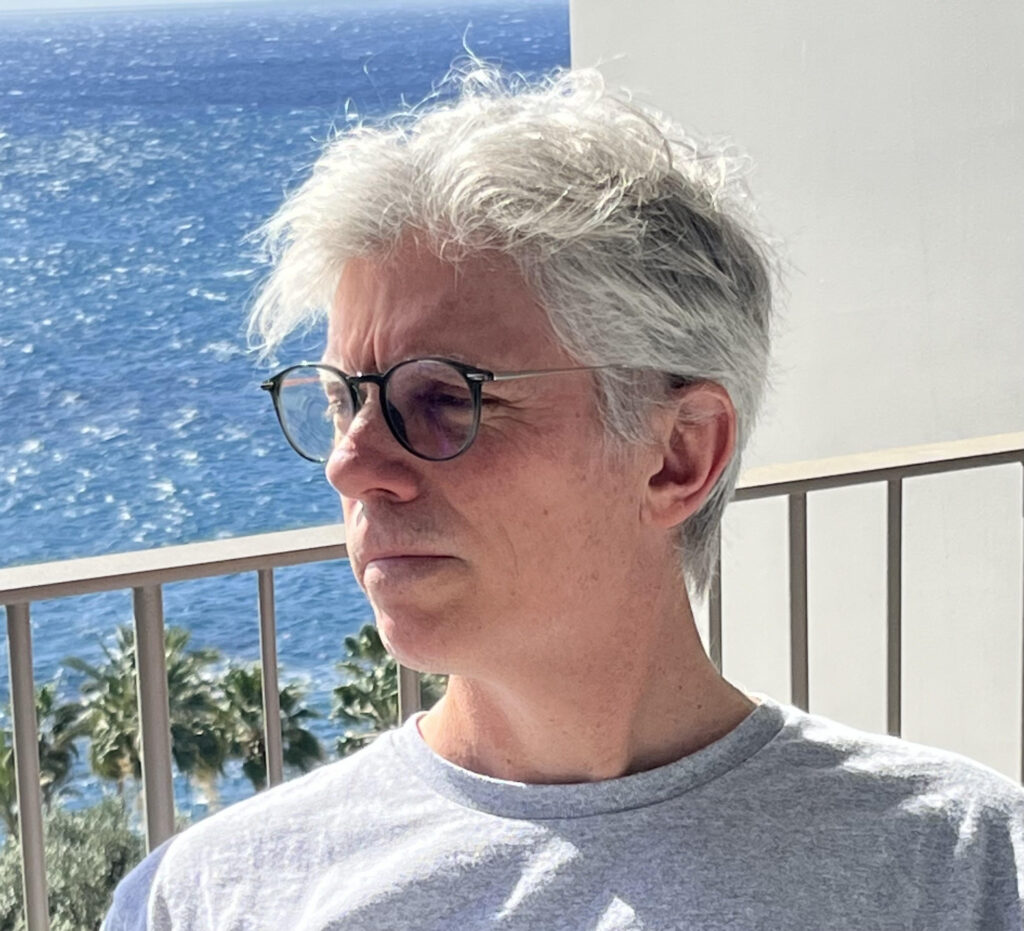 John S. Garrison is the author of seven books, including the recent memoir, “Red Hot + Blue.” His shorter work appears in The Atlantic, The Gay & Lesbian Review, LitHub, Public Books and elsewhere. In 2021, he was named a Guggenheim Fellow. To learn more, visit his website.