Interviewed by Leslie Lindsay

 When I was a teenager, everyone had an opinion about what I should do with my life. ‘Pediatrician. Mother. Architect. Journalist,’ they sang. More specifically, “A broadcast journalist!”
I went to nursing school. When I was just out of nursing school, living in the Midwest, I took a job at a behavioral research company. It was there, on that horrific morning, while reviewing data, when a plane—and then another—crashed into the Twin Towers in New York City.
Meanwhile, on the Eastern Seaboard, at the height of her career, CNN anchor Carol Lin, and author of When News Breaks: A Memoir of Love and War (Third Rail Press, December 2025), was the first network journalist to break the news of the 9/11 attacks. A month later, she found herself in the crosshairs of a Taliban sniper along Pakistan’s border with Afghanistan, a stark reminder of the sacrifices she made to succeed in a white-centric, male-dominated journalism career.
Carol Lin’s traditional Chinese mother warned her that reporting breaking news was ‘an adrenaline-fueled drug that will never love her back.’ But Lin persisted. She was determined. She did what she wanted—no, had—to do.
When devastating news broke her own life apart, Lin was forced to question a career that demanded everything—quick thinking, last-minute travel, the right ‘look,’ and so much more. Her marriage was challenged by infidelity, marked by cancer. All the sacrifices required to be a mother—and the daughter her mother required—took its toll.
Told with fierce wit and candor, and cameos from Peter Jennings, Dan Rather, Joan Lunden, Charlie Gibson, Lesley Stahl, and Connie Chung, When News Breaks, A Memoir of Love and War is about loss and growth, forgiveness and hope, and is beautifully and warmly written.
Please join me in conversation with Carol Lin.
Leslie Lindsay: Carol, thank you so much for taking the time to chat with me about When News Breaks. I always like to start with the beginning. What prompted you to write this story, now, twenty-five years after some of the pivotal moments in the book, 9/11, for one?
Carol Lin: I wanted to complete the book I started writing when I left CNN in 2008, but setting it aside has made it much richer, and frankly, a more candid narrative about what it was like as a female journalist defined by the gaze of others and the complicated love story that threads throughout the memoir. Time passing allowed me to interrogate myself and see clearly how a life of breaking the news almost broke me. September 11, 2001 was a turning point for my career, but also my marriage when my husband and I decided to have a child. His cancer diagnosis when we were six months pregnant was a master class in navigating what it meant to be a career woman, wife and soon-to-be mother.
However, I also wrote When News Breaks for my daughter, now age 22, and facing the same decisions that once shaped my life, for better or worse. You meet Chloe in the book, as a baby. I wanted my daughter to know everything about me, not just the curated resume of the woman she knows as “Mom,” but the woman who made mistakes and found resilience in the toughest times. Chloe deserves to have the whole story about her parents and see that imperfection can lead to a life of purpose and meaning.
L.L.: Your mother is a tertiary character in When News Breaks, but a pivotal one. There’s a section early on when you talk about her immigration to the U.S. when she was in college, “Quickly, you’re leaving tonight,” your grandmother told her. I really became connected to your mom. Can you take us into that moment, and tell us a little more about how she shaped the narrative?
C.L.: This is the scene where the breaking news of my mom’s Chinese homeland falling to the Communists sparked her perilous journey to the United States to marry my father, an older academic she had been promised to when she was only sixteen. Now, 22 years old, standing at her garden gate in southern China, she is saying goodbye to her mother, my grandmother, who presses a delicate bracelet of ten jade pieces into her hands.
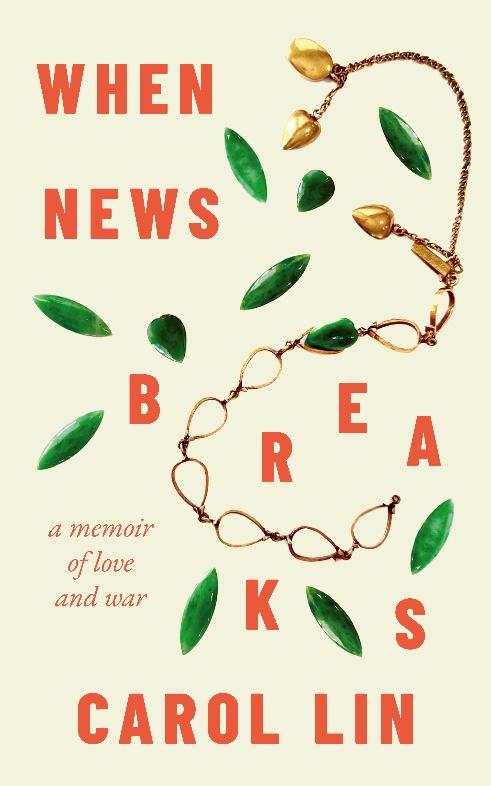
The story honors the Chinese tradition to gift jewelry to a bride, not for the sake of possessing something of value, rather, to own something she could sell for her security if necessary someday. No matter how much my mother might cherish this jade, she must be prepared to trade it to survive. Isn’t that the choice so many women face, the letting go of the things we value most? I chose the jade for the book cover for this reason. At first, my publisher was unsure of the connection between jewelry and journalism, but that scene is the subliminal backbone to my story; a woman’s love and loss, letting go, and doing what’s necessary for the future she could not yet imagine. This is the arc of the memoir.
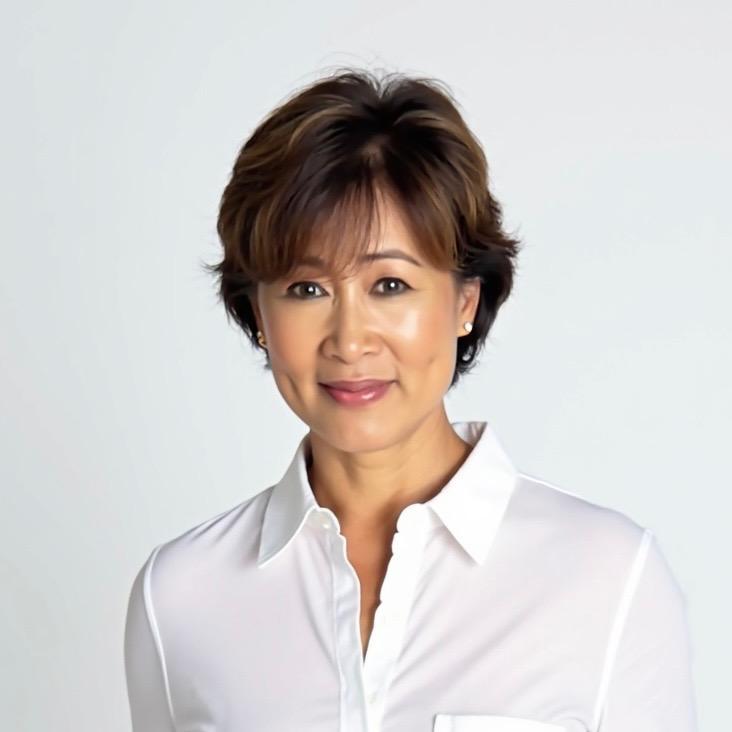
L.L.: Much of your mother’s assimilation leaked into your career. In a traditionally male-dominated career, you were one of few women, but not only that, you were Asian American. This was often a sticking point. People mistook you for Connie Chung. Can you give us a behind-the-scenes moment of navigating the chaotic newsroom as a woman (‘stressed vs sensitive,’) how you stood up for yourself—because you did—and where you think things are for women journalists now?
C.L.: To this day, many of us have Connie Chung to thank for pioneering our possibilities, but yes, for more than a decade, even when I was a national correspondent for ABC News’ Good Morning America, people mistook me for Connie. To claim my identity, I had to endure the looks of disappointment, that I was not who that person wanted me to be. To answer your question, it is similar to working in a male dominated, largely white, chaotic newsroom.
I write in When News Breaks that I learned from my immigrant parents to be nice, that how others saw us shaped our destiny, so I began my professional career as a “nice” girl but eventually learned I had to be steely to be taken seriously. I succeeded to the degree that when I was pregnant, producers joked that they feared for my child. While it was in good humor, it says a lot about how I, so different in my appearance, felt I had to telegraph invincibility. The chapter with the undercover gun buy in Pakistan is an example of the risks I took in my field reporting to, yes, cover the news, but also affirm I was not to be messed with. But when I needed people the most after my husband’s cancer diagnosis, my vulnerability was what saved me as a community formed to help me through widowhood and early motherhood.
Have things changed for women? Clearly not. A record number of women left the workforce in 2025, not due to the demands of caregiving or children, but due to burnout. Much is being written now about this, and there are consequences to our economy and society when half the workforce finds work culture untenable. I am fortunate that When News Breaks is represented by a women-led, mission driven publisher, Third Rail Press dedicated to sharing untold stories of women.
L.L.: Like you, I fell a little bit in love with Will, your husband. He was charming and smart and fiercely funny. He taught you a lot about the industry. You all bought a cute house, and Will even wrote a love letter to the sellers. Somehow, I find houses to be a type of love language. They require so much maintenance, like a relationship. Can you tell us a bit about that house, the strain it held?
C.L.: It was a 1948 ranch house, just a few doors from the sands of Manhattan Beach, California and stands as a metaphor for the state of Will’s and my marriage at the time. The old wood windows and rough stucco was proof of its resilience through the decades of salty erosion, but the view out the old windows was breathtaking and filled with promise. For Will and me, the house, which we had just purchased, was his sanctuary after he was involved in a sex scandal that threatened my career. Oh yes, you must read the book.
What happened begged the big question of why we love who we love, and when, if ever, is the right time to let go. But like the house which was built with love by its previous owner, and endured many a storm, Will and I were meant to last, which was made possible by my new job at ABC News that largely kept us apart. While he remained at home, I mostly lived on airplanes and reported all over the country. I questioned my memoir whether I loved him more at the airport curb than I might in a more ordinary everyday life. It is a twist on the adage that absence makes the heart grow fonder and yet, any therapist would warn that we needed to spend more time together, not less and the choice of advancing to network television would have more consequences in our relationship.
L.L.: I loved reliving some of the biggest news stories of the past forty years. It was strangely comforting to relive them in the pages of When News Breaks versus when they were actually happening. The 1989 San Francisco earthquake, the murder trial of O.J. Simpson, the mysterious murder of Jon Benet Ramsay…but not 9/11. That was chilling. Any theories on why the feeling was near comfort while gazing at these events from a longer lens?
C.L.: Interesting observation! I’d say when news breaks, we lack context. We only know what’s happening, but we don’t know why. Time offers context, analysis, public discourse and private conversations. That is the value of history, which unfortunately our country is not in agreement about as I write this in 2026. Without a common understanding of the six tenets of basic journalism. The Who, What, When, Where, Why and How, we find ourselves at odds. Debate is healthy but the propaganda of ‘alternative facts’ is not.
L.L.: Motherhood was always something in the sideview mirrors. You weren’t sure you wanted to be a mom, but Will desperately wanted children. I think many women feel this way. They want the exciting career, yet worry they might ‘lose themselves.’ You discovered unexpected freedoms of motherhood when Chloe was born. Can you talk about that a bit, please?
C.L.: I was not maternal. As mentioned earlier, 9/11 was a turning point for many of us to consider what is most meaningful. By the time I returned from my post 9/11 assignment along Afghanistan’s border, our nation was steeped in grief. This was the inflection point for Will and me. We felt urgency to create life after a career that covered so much death. However, once pregnant, I found myself losing control over the narrative of my career, including being denied an assignment to go to Northern Iraq to cover the pending war. Once CNN discovered I was pregnant, I appeared less qualified for the work that brought me so much satisfaction.
I was not thinking about CNN’s liability of sending a pregnant correspondent into a warzone or even the baby who was still amorphous to me. I had concluded Will would be the parent, I would just keep working. Yes, that is the voice of a woman who knows nothing about having children! When I discovered I was having a girl, she became more tangible. However, months later, after Will died, I had to learn that love can indeed, grow from grief.
L.L.: Loss and grief factor into the story, too. And while I don’t want to reveal any spoilers, how might you say the loss has given you hope?
C.L.: Loss ended up giving me hope because I, who had built a life based on the transactional relationships of a journalism career, was confronted by a devastating loss that finally allowed me to receive my baby’s unconditional love. To find such beauty in the midst of emotional ruin was a revelation.
L.L.: Carol, it’s been an utmost joy to talk with you about Breaking News. Is there anything I should have asked but may have forgotten?
C.L.: Please know my gratitude for your questions, and my utmost respect for readers of When News Breaks. It is everything to be part of a vibrant writing community and hear from readers, whether through direct messages, or on social media or written reviews on GoodReads, Amazon and elsewhere that readers see their own careers, marriages, choices and hopeful outcomes reflected in my book. I couldn’t ask for more. Thank you.
Leslie Lindsay
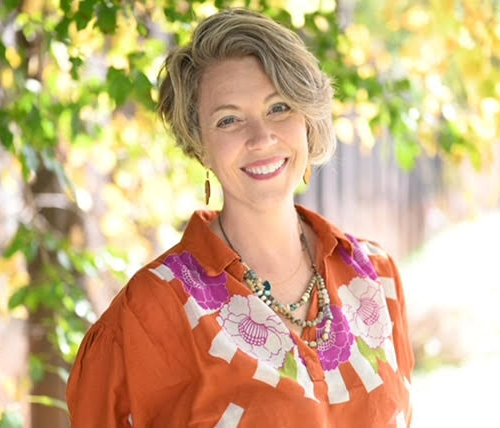
Staff InterviewerLeslie A. Lindsay is the author of Speaking of Apraxia: A Parents’ Guide to Childhood Apraxia of Speech (Woodbine House, 2021 and PRH Audio, 2022). She has contributed to the anthology, BECOMING REAL: Women Reclaim the Power of the Imagined Through Speculative Nonfiction (Pact Press/Regal House, October 2024).
Leslie’s essays, reviews, poetry, photography, and interviews have appeared in The Millions, DIAGRAM, The Rumpus, LitHub, and On the Seawall, among others. She holds a BSN from the University of Missouri-Columbia, is a former Mayo Clinic child/adolescent psychiatric R.N., an alumna of Kenyon Writer’s Workshop. Her work has been supported by Ragdale and Vermont Studio Center and nominated for Best American Short Fiction.