Interviewed By Nan J. Bauer

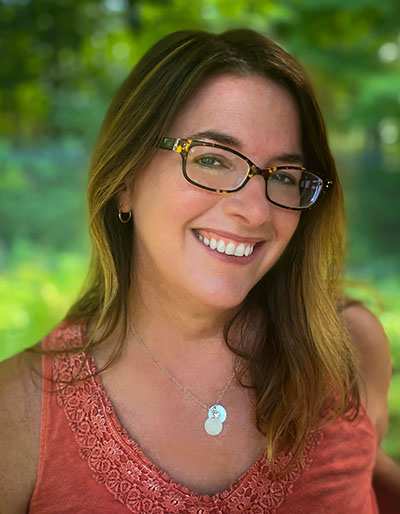
 There’s an essay in Jill Christman’s If This Were Fiction: A Love Story in Essays where she describes the time her daughter, four years old at the time, rammed a googly eye up her nose. Detecting and extracting the eye is harrowing business. It’s also hilarious. And it’s vintage Christman, a showcase for her razor-honed powers of observation, fearless honesty, and appreciation of the absurd.
Christman writes about hard things: the sexual abuse she endured as a child, the sudden death of her first great love when she was 19, the terrors of raising kids, of which the googly eye pales next to the omnipresence of predators and gun violence in the U.S. Yet no matter how dark her subject, she walks herself and her readers through it with compassion and a willingness to simply be in whatever moment she’s inviting us to share. Trauma is never a punchline. Yet I find myself smiling unexpectedly whenever I read her work.
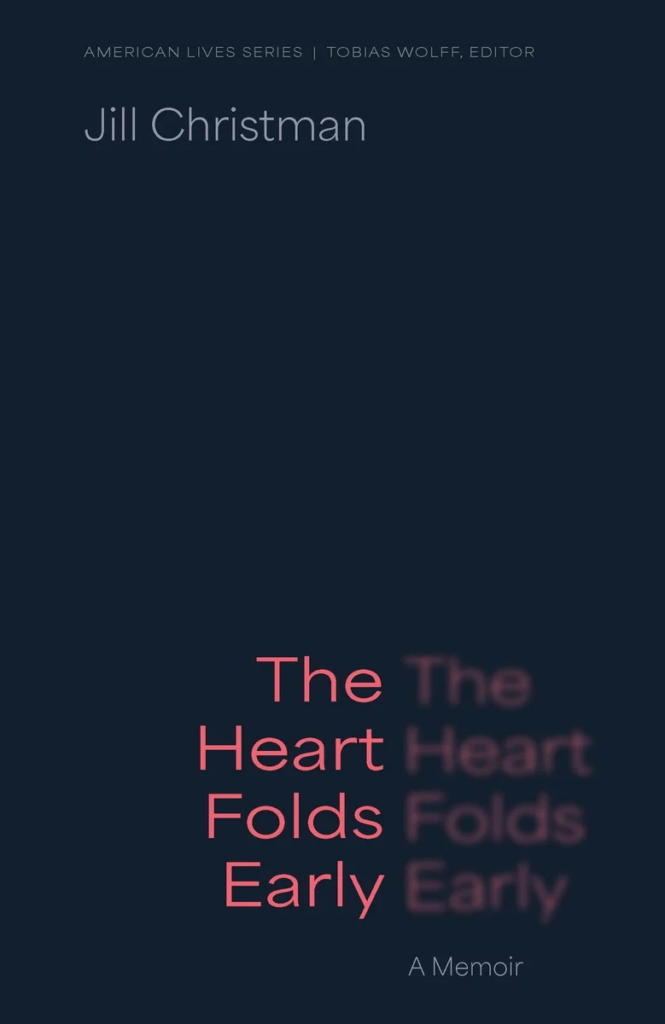
I can think of no better guide than Jill through the hard experience of a second trimester abortion, the subject of her new memoir, The Heart Folds Early: A Memoir (University of Nebraska Press; March 2026), which takes place before Roe v. Wade was overturned in the summer of 2022. Of course the book is heartbreaking. But it is also filled with joy, beauty, tension, conflict; it’s a great read. In December of 2025, we met over Zoom to talk about it.
Nan J. Bauer: Jill, thanks so much for taking the time to discuss The Heart Folds Early, a book we desperately need in this version of America. How did you keep going in telling such a tough story?
Jill Christman: I’m a serial memoirist, so I’m not fresh to writing the big stuff of my life; but, whew, this one was hard. Not because it was too painful for me. I mean, it was painful, but writing is how I make sense of the world, so even if publishing weren’t a thing, I would have tried to put language to the experience of losing this baby. What was hard about writing The Heart Folds Early is that publishing is a thing, and while I wanted to find the words to tell my own story, I didn’t want my telling to hurt anyone else. I didn’t want my story to apply pressure on somebody else’s story.
Our baby had a fatal heart anomaly. There was no fixing him, not in any permanent way, but there were other choices, other paths. To call what I chose a miscarriage or still birth — despite his diagnosis — wasn’t true. I wanted the story of my choice to be the truest story I could tell and didn’t want the specifics of my choice to cast judgement on another woman’s choice. I wanted to write a book where my choice could exist alongside someone else’s choice without those choices — or the people who made them — being at war, or even at odds, with one another.
We’ve been living so long inside a conversation that oversimplifies the language of abortion that I felt like whole areas of experience weren’t available to me. For example, could I think of my baby as a baby, could I call him “Baby Brother” and still choose to end his life in utero? Could I talk about our decision — mine and my husband’s, together, because we are a family? If I grieved my baby’s death, did that mean I regretted my choice? I wanted to crack open a space where I could tell the story of one baby in one woman’s body in one family at a specific time — and that was so hard.
And then, when I finally pulled off some version of that, and my then-agent sent the book out, the marketing teams in the big houses didn’t know how they’d sell it. Dying babies are too depressing, they said. We can’t sell this as a baby-shower gift, they said. And I agreed. It was depressing. So I put the book away, not sure I was going to publish it, which was hard because it’s potentially what I’ve spent the most time on in my life and I wrote the hell out of it.
NJB: And then June 24, 2022, happened.
JC: Right. Then June 24, 2022 happened, and even though we’d all seen that day coming, it was stunning, right? And I was like What the actual fuck? I was furious. I was heartbroken. I felt like someone was shaking me from behind to get the book out, and I knew I was going back in. I didn’t understand until that moment the urgency of telling this story, the reason why I’m doing what I am doing, which is writing a book about abortion. Moving forward does not mean never looking back.
NJB: In a lot of ways, it feels like we are moving backwards. In Michigan, where I live, we actually voted to keep abortion legal as part of our state constitution. But in Indiana, where you live, the ban is almost total. That’s so hard to fathom, and yet it’s the reality for women all over the country right now.
JC: Yes. Exactly. But you know, I had my abortion in 2006, when it was still legal here in Indiana, and even then it was really hard to find a provider. There was a clinic in Indianapolis that would do second trimester abortions, but offered only local anesthesia. That’s insane. On top of that, they demanded I pay in cash. It was like some weird back alley thing. I was, of course, reeling from the shock of the diagnosis, but I had every resource and advantage: I had good health insurance. I had a loving and supportive partner — my husband, Mark. I had the ability to travel, I knew the right kinds of questions to ask. And still, finding a provider was an incredibly difficult process after an incredibly difficult decision. After days of trying, I found a compassionate, wonderful doctor out of state. So even when abortion was legal in Indiana, I had to travel to Chicago.
There are so many women, now and then, for whom this wouldn’t have been an actual choice. These women would have been, as they are now, forced to carry a child with a severe birth defect, babies with a low or no chance of survival — babies who, if they do survive, will be born in incredible pain to a life of surgeries that may or may not help. That’s the reality for so many women, then and now.
NJB: Not all memoirs are page-turners, but I couldn’t put this one down. This is your third one. Was your writing process different for this one than the others?
JC: My path through a book is always messy. I’ve been writing memoir and essays for 30 years and I co-edit two magazines: River Teeth and Beautiful Things. I’ve had a lot of practice. You’d think I could be more efficient! But every project makes its own rules. It takes a lot of time and writing for me to know what an essay or a book is about. It’s excessive, but I think of it as using all parts of the animal when I’m drafting and revising. The Heart Folds Early spawned multiple essays and even a whole short book — Borrowed Babies — that I cut from the manuscript in revision. I pay attention to what wakes me up at night. I’m always looking for new connections, friction and energy.
Once I get to revision, I try to ask the Vivian Gornick question: What’s the situation — i.e., the subject matter — versus the story, as in what am I really here to say? So the situation is the abortion, and also everything leading up to it as well as the pregnancy that followed the abortion, where I was constantly freaking out that history would repeat itself.
But I think the real story of the book is waking up to what it’s like to hold both life and death inside our bodies. As women, we literally carry people inside of us — those we have birthed, those we’ve chosen not to birth. Literally — biologically — we contain multitudes. And then there are the moments that surprise me, things I didn’t even know were there. In the aftermath of a late-term abortion, how do you explain why you were pregnant but now you aren’t anymore? How do you handle it when your milk comes in? I don’t know that anyone takes that into consideration. I certainly didn’t.
NJB: I especially loved the way you expanded the idea of choice. At this point in time, when I hear the word, I automatically go to reproductive rights. The book reminds us that choice encompasses a huge spectrum of decisions, in your words, “the infinite number of choices we make every day and how way leads on to way, how we are crushed and rebuilt.”
JC: Yes, that surprised me, too. I had no idea I was going to go there, and then it became clear to me, there are all these different species of choice. Some are happy, some are tragic.
NJB: Are you nervous at all about how people will receive the book?
JC: I’m not scared so much of being judged; I am clear about my decision. I’m a little nervous of the folks who won’t read the book and will apply an ideology, instead of trying to understand my story.
I want this to be a conversation, and especially in states where we have total or near total bans, which is almost half of them. [Note: According to reproductiverights.org, abortion is illegal in 13 states, including Indiana, and in another 12, it is considered “hostile.”]
I hope people don’t think, Oh, that monster. I hope we can really look at what health care means, what choice means. I’m not making choices for anyone else. In the book, I’m talking about one decision for one woman and one baby and one life. I want a lot of readers, and I’m hoping for a lot of respectful, human conversations. It’s so incredibly sensitive and complicated, right? So we need to let these conversations be complicated and not flattened out and oversimplified, or we’ll never make any progress.
NJB: 100% with you on that. Jill, thanks for writing this courageous, amazing book.
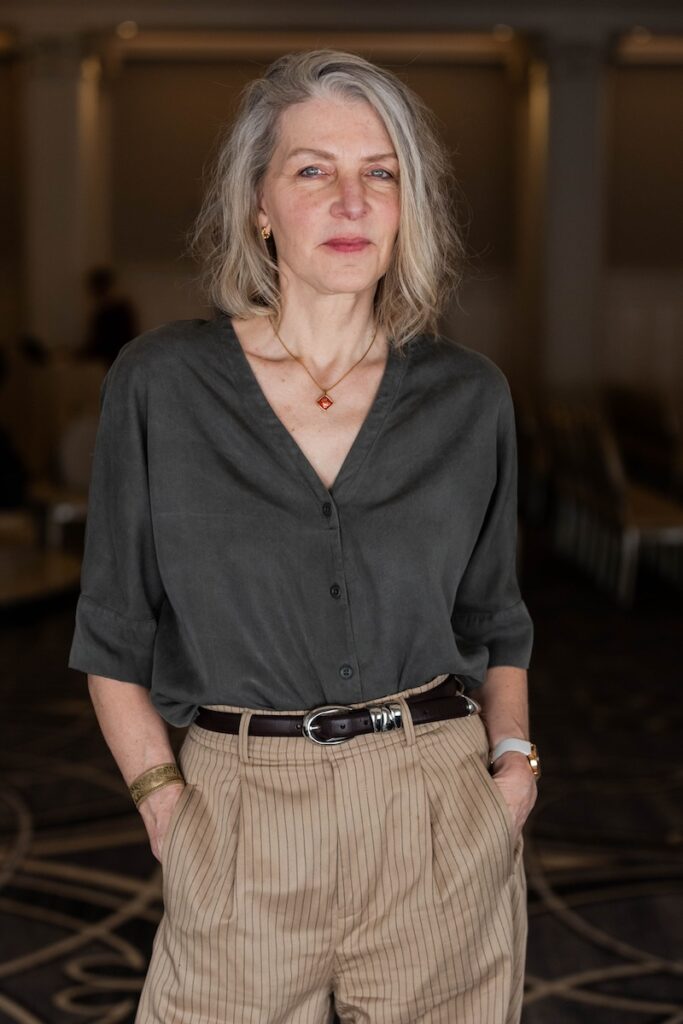 Nan Bauer is a writer currently based in Southeast Michigan, and is completing a memoir on life on the front lines of AIDS during the late 80s in New York and Key West. She has written about food and culture for Ann Arbor Current, Toledo City Paper, Edible WOW, and other regional publications. She is a decent cook and excellent at riding camels. Find out more at nanjbauer.com and/or follow her @nanjbauer.