Reviewed by Vicki Mayk

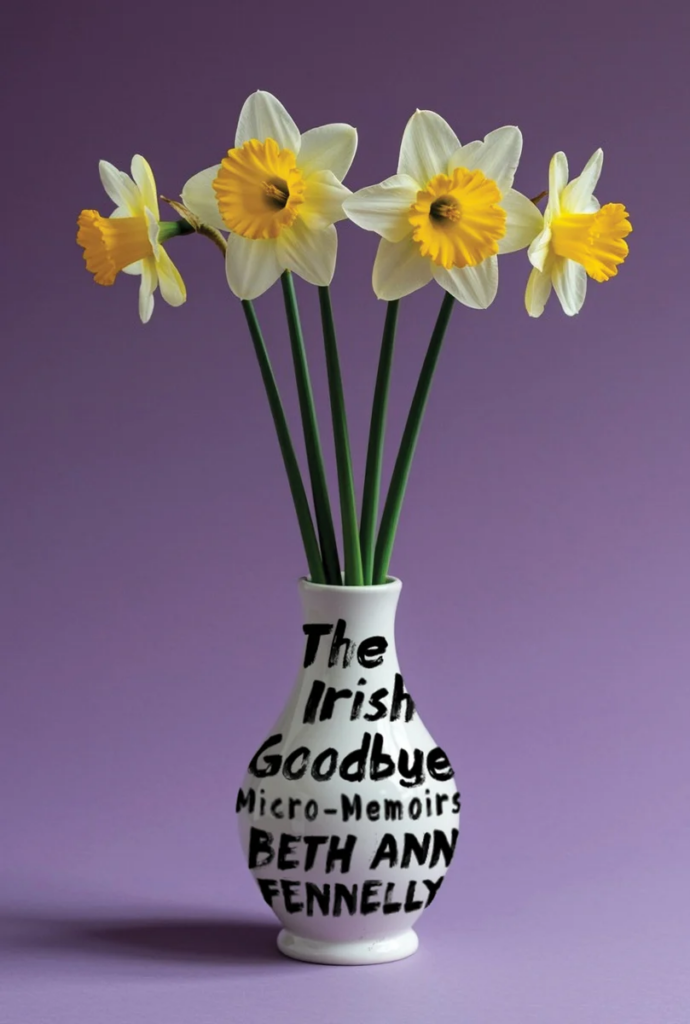 As someone who writes micro essays, I was eager to review Beth Ann Fennelly’s collection of micro memoirs, The Irish Goodbye: Micro-Memoirs (W.W. Norton, February 2026). I liked her first book, Heating and Cooling. And now that I’ve read the latest book by a writer whose name has become synonymous with the micro form, I’m reminded of what Mikhail Baryshnikov once said of Fred Astaire: “No dancer can watch him and not know that all the rest of us should be in a different business.”
Reading her work is both intimidating and inspiring. For those of us who aspire to write micro, Fennelly shows us how it’s done in a book that brilliantly leverages the shortest of forms to tell profound stories of grief, loss, humor, friendship, marriage and more. A poet first – she is a one-time poet laureate of Mississippi – she brings her poetic sensibility to her short prose, employing enviable economy of language and strong imagery.
An Irish goodbye, for those who don’t know, is the act of leaving a place or event quietly, with no notice. It’s an appropriate title for Fennelly’s book, which deals with the death of her sister – a sudden loss inspiring the book’s title. She captures this in the smallest of micros, a single sentence that is the book’s title essay: “How, without farewells, you slipped out the back door of the party of your life, O my sister.”
The essays about her sister are among the book’s best, capturing a sibling relationship through childhood and adolescence and later its loss in adulthood. Among the most powerful of these is a somewhat longer flash essay titled “Dad Gave Us Twenty Dollars, Which Was A Lot In 1979.” In it, Fennelly recalls a visit to a house of horrors when her sister was 10 and she was 8. Hearing frightening sounds while waiting in line, she has a meltdown, leading to her sister taking her outside and the loss of the $20 paid to see the attraction. She deftly flashes forward from that memory, writing:
“Such a stupid, stupid baby. I felt shame but knew that I’d done what I had to do to survive, which is what you should have done that cold Chicago night, October 2008, almost thirty years later, you should never have gone in there alone, you should never have entered the dark red umbilicus, the narrowing tunnel, and when you realized the horror you were being funneled toward, you should have whirled and fled.”
This is Fennelly’s great gift, this skillful creation of a scene, a captured memory, that in the end leads us to a moment of great emotional impact for readers. She does it again and again in this collection, both in the essays about her sister and those about her mother’s decline into dementia. In “A Scrap of Paper That Says Remember,” she writes about her late mother’s cognitive decline. While cleaning out her mother’s home, she finds notes on scraps of paper, including one that says simply “Remember.” The detail lands like a punch.
The collection also includes work in a lighter vein. Fennelly often is funny, and her humor appears in the same surprising way as her more serious images and phrases. My favorites are the pieces in a series titled “Married Love,” with my particular favorite, “Married Love: Sweet Music,” which states, “When, on our twenty-fifth anniversary, to present me a ring, he drops to one knee, it cracks.”
This same slightly tongue-in-cheek tone is present in other pieces, including “Me vs. Slugs: Pandemic Edition,” which chronicles her war against the slugs devouring her garden during lockdown. It ends with her son’s somewhat unflattering description of her, slightly drunk, overheard calling the slugs “little assholes,” and laughing as she kills them.
Although the title touts the collection’s micro memoirs, it also contains longer pieces, each employing the same economy of language and vivid imagery found in the shorter work. These include essays about her long friendship with college roommates, a piece about her return to Czechoslovakia, where she taught in her twenties, and one titled “Dear Viewer of My Naked Body,” about her experience of posing nude for a painter as a woman past 50 for a series of paintings called the Oxford 12. As a woman long past 50 myself, I admired her courage in doing this—and writing about it. (I mean, won’t this send some nosy folks on a hunt to find that painting?)
Fennelly ends this essay, the closing one in her book, with words that felt like they could be applied to all of us who write:
“Maybe perceiving each other’s humanity makes us human. Recognizing ourselves in each other. Acknowledging our collaboration in the great human experiment….I’m reminded that at all times—not just when confronting my portrait—I am nakedly human, flawed and alive. To prove it, I went on the record. For this one brief bright moment on planet Earth, framed in fluorescent pink, I was alive.”
She’s talking about her painting. But reading this collection left me with the same impression of Beth Ann Fennelly and her writing. It’s what makes her work worth reading.
Vicki Mayk
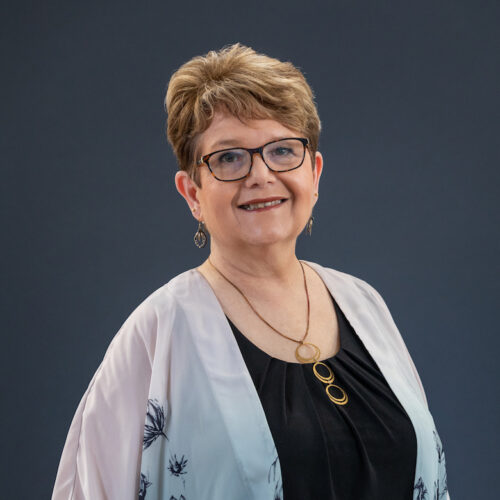
ReviewerVicki Mayk is a memoirist, nonfiction writer and magazine editor who has enjoyed a 40-year career in journalism and public relations. Her nonfiction book, Growing Up On the Gridiron: Football, Friendship, and the Tragic Life of Owen Thomas (Beacon Press) was published in September 2020. Her creative nonfiction has been published in Hippocampus Magazine, Literary Mama, The Manifest-Station and in the anthology Air, published by Books by Hippocampus. She’s been the editor of three university magazines, most recently at Wilkes University in Wilkes-Barre, Pa., and now freelances and teaches adult writing workshops. Vicki previously served as reviews editor at Hippocampus Magazine. Connect with her at vickimayk.com.