

I want to tell one thing, one perfect thing. I was a 12-year-old kid in the Garden of Eden.
At the center of the garden, a perfect natural spring boiled up from a deep subterranean source, its waters as clear as a glass of club soda. Fish flashed through the water silver and quick. Too quick to catch. Encircling the spring, camellias and azaleas formed walls of color amid the deep green leaves and bright green grass. Over the flowers, oak trees, like great prehistoric creatures, stretched massive yards-long limbs out and out, dipping, reaching up, making special rooms out of their shaded space. Spanish moss hung gray as old men’s beards, as witches’ hair. Above, the hot blue Florida summer stretched out as if it were one single piece. The thrash of water, people talking, laughing — shouts and squeals like bursts of loud orchestra music — saturated the air like warm breath.
Sanlando Springs — Eden — admission a dollar a head, the most beautiful place on earth and where I went whenever I could in the summer.
The spring stared up like a vast blue eye at the sky. The Little Wekiva River flowed away, a long clear thought in a blue-green shine. Paddling down it in a canoe with my little brother once, I watched schools of mullet rib the surface, jumping in the sun. Painted turtles slipped off logs, diving under the water, and three-foot-long rod-like alligator gar swam as confident as barracudas. A water moccasin’s sudden warning flashed amid the purple flowers of the water hyacinths, its wide-open mouth bright as fresh white paint. In the mud along the bank, a single alligator lay like a carving while in the water, peaked, leather-tough eye-bumps rose just above the surface of green duckweed watching, watching. And the temperature of the water — a constant seventy-two degrees year-round, winter and summer. Always the same thirst-quenching clear.
My special garden existed in a time and place before certain dangers were acknowledged, when all the bad things that can happen were kept hidden. And a broad and deep ignorance was still thought of as innocence.
In July’s thick heat, kids, teenagers, families with small children, we all gathered at it like some welcoming watering hole. A glinting metal waterslide towered over one side of the spring like an exclamation point, where the loudest shouts and yelps came from. Opposite, higher on the bank where the ground flattened out, was the open-air snack bar surrounded by the amber aroma of french fries. A concrete patio spread out in a broad circle where the high school girls twirled and danced together, practicing the Watusi, the Twist, the Hully Gully, stepping back and forth and sideways, swaying and shimmying. Their flashing smiles, sparkling teeth, and bright stiff hair lured the guys with the most confidence out onto the patio with them. Other guys ranged around the outside, eyeing the dancers and the girls lying on towels in the sun. Smoke from their cigarettes curled and dissolved in the heat.
Elvis Presley’s “Are You Lonesome Tonight” drifted through the air, blending with Frankie Avalon’s “Venus,” the Shirelles’ “Will You Love Me Tomorrow,” Chubby Checker’s “The Twist,” and the sweet soft sound of Richie Valens’ “Donna.” The songs flowed out of a jukebox of rainbow colors, three plays a quarter, the buttons filmy from suncream-buttered fingers.
That summer, the day it all changed, my friends and I had recently made the staggeringly wide leap from elementary school and were poised to land in the unknown waters of junior high school. Proximity and the passage of time had bonded the four of us: me, Keith, Ricky, and Marie, the one girl we had yet to grow uncomfortable around.
We were all hanging on the sides of Ricky’s long aqua blue air mattress in the clear water like we were hanging high in the air, though our feet touched the sandy bottom. We three boys were on one side of the vinyl float, Marie opposite, all of us leaning on it, poking dents into it with our elbows, our backs hot with sunlight like they were covered with heating pads, our bottom halves submerged. Water sounds, the chorus of voices, the thrum of music rained down around us.
We hung there in the water, talking, acting stupid, being ourselves. Laughing, taunting, making up secrets to share, showing off, being boys. Behind Marie the camellia bushes on the bank shone a wall of living color with big clutches of floppy-headed blooms like roses, only looser and lacking their fragrance. Beneath them, the ground lay polka dotted in petals.
Marie was telling a story. Something she was excited to tell us. Her long black hair, usually a tangle of curls, lay plastered dark against her white shoulders, her slender neck. With wide brown eyes, a short nose, and a gap between her teeth, she was pretty, though we’d decided early on not to notice.
She wore a bright yellow two-piece suit. The switch-over from one-piece suits to two was just happening. Though more pieces, there was less concealment, more skin. It felt weird, uncomfortable, though everyone acted like they were used to it, the vision of stomachs, the shock of bellybuttons, ribs glowing in the sun, the startling curve of hips.
Marie’s two-piece was bright banana yellow. Though I didn’t exactly look, the very top crescents of Marie’s recent breasts were slick with clear water and glossy with sunlight. In her excitement about the story she was telling — about someone we all knew but none of us liked — Marie bounced forward on the raft, brown eyes shining. The corner of her two-piece top snagged on the vinyl float. To our amazement a single breast plopped out. Revealed suddenly in the light, out in the open — the nipple a tight pink bud like a pencil’s eraser. It was as startling as if a bright green frog had leaped and landed right there in the middle of us. Our collective breaths caught in our throats.
Everything stopped still — the water splashing in the air, the music drifting down, the dazzle of flowers, the movement of our lives — all frozen. For that one instant, everything stood perfectly still, caught in solid air, the three of us statues, mouths open in silent Os, eyebrows climbing up our foreheads — my eyes opened wide.
Marie, who had been looking at each of us in turn, now looked down with us and without panic or hurry, as if she were suddenly some grownup woman, tucked her breast back inside her bright yellow suit. Just like that.
As if nothing had happened. As if the world hadn’t stopped, changed, rearranged itself.
Time resumed. Marie finished her story, her lips, at the corners, unable to help tracing a secret kind of smile. The sound of my heart roared in my ears.
Then our paralysis dissolved into the blue water. The three of us slapped waves of it at each other and kicked away from the float. We shouted and wrestled each other underwater. I didn’t look at Marie. I hoped she was looking at me. All at once, I tuned into the loud music surrounding us. I wanted to know what it would be like to dance with a girl on the patio in the sun. Dance with Marie.
For a moment I imagined leaping out of the water, racing to the ladder of the slide, and climbing up, up, then swooping down, flying over the glittering surface of water as if it had never been done before. As if I were the very first.
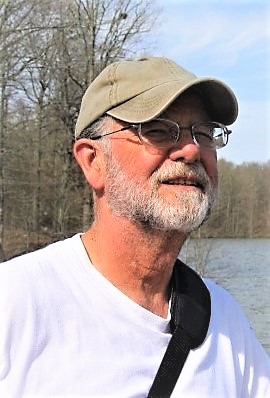 Michael has lived in New Hampshire, Ohio, Kansas, Arizona, Nevada, New York, Texas, Florida, and now calls Burlington, Vermont, home. At different times, he has worked as the Osceola County Bookmobile librarian, McDonald’s shift manager, factory worker in a rubber parts plant, prep cook, men’s dormitory janitor, purchasing agent, and IT guy — but writing is what he does. His work has appeared in the Alaska Quarterly Review, Glimmer Train, Iron Horse Review, and Porter House Review among others. Stories have been nominated for “Best of the Net” and the Pushcart Prize. He is currently working on a story collection.