

 I’m not exactly sure what it is about true crime that is so alluring, why everyone becomes an armchair detective when a big case breaks into national news, but they do.
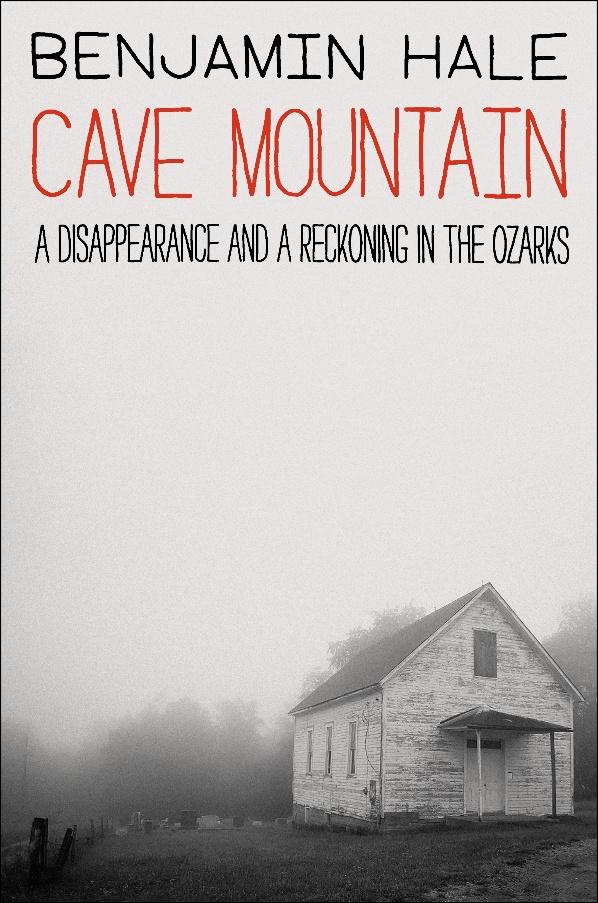
I read novelist Benjamin Hale’s forthcoming book, Cave Mountain: A Disappearance and a Reckoning in the Ozarks (Harper; March, 2026), before it was publicly available, while the search for Today Show’s host, Savannah Guthrie’s mother, Nancy, went on. Like many, I was glued to the media combing for clues, developing my own theories.
Cave Mountain blends true-crime, memoir, and cultural history in a highly atmospheric, lyrical, and well-researched account of two crimes, two little girls, who went missing in the same Arkansas Ozarks. The twist is that the cases were over twenty years apart, one in 1978, and the other in 2001. How were they connected? Were they connected?
No one can dispel the innocence of childhood. When a little girl goes missing, people take notice. When she is out with her grandparents, seasoned hikers, and mysteriously disappears, our hearts ache. I recall being a 6-year-old girl in the woods that surrounded my grandparent’s Southern Missouri cabin. Often alone, playing as kids did, the house — and my grandparents — a stone’s throw away. Like Haley, the missing 6-year-old Hale writes about — his first cousin — I also had an imaginary friend.
The tale grows darker, particularly because the 1978 story is darker, more bizarre, featuring a cult, a murder, apocalyptic visions from a 17-year-old ‘prophet,’ and brainwashing.
Cave Mountain falls under what I would call ‘literary Southern crime,’ and explores nature, religion versus skepticism, good versus evil, and place as character, including isolation.
Please join me in conversation with Benjamin Hale.
Leslie Lindsay: Ben, thank you so much for taking the time to talk with me about Cave Mountain, which is not just an ‘interesting case’ for you, but personal, too. You mention your cousin Haley was the first baby you recall holding. She was born when you were eleven years old, which would have put you at about the same age as the 17-year-old prophet (in the 1978 story) when Haley went missing in 2001. This must have greatly affected you, her disappearance. Can you talk a little about what that felt like for you, as a teenager?
Benjamin Hale: My family is from Arkansas, but I grew up in Colorado. We would visit Arkansas usually every winter during the holidays and often in the summers, too — so I feel I know the place, especially Northwest Arkansas, pretty well. I was a senior in high school when Haley went missing. She disappeared on a Sunday morning, and most of my extended family (along with many family friends and also many total strangers) were out helping to search for her by Sunday night, and more arrived on Monday. My father’s family was already pretty heartsore because my grandmother was nearing the end, and very sick with dementia — she would die four months later.
My parents felt awful about being too far away to just drop everything and go help with the search; they went to work that Monday, and in my memory, they got in the car and took off for Arkansas Monday night, and left me in charge of my two younger brothers (I would often look after them). My mother recently read the book, and told me that they actually left on Tuesday morning, and that they took my youngest brother, who would have been four years old, with them — I don’t remember it that way, but memory is fallible (and so is hers); now I’m not sure which of us is wrong. Also, Haley was found late in the day on Tuesday, so my parents just turned around and came right back.
All I remember about it at the time was feeling pretty sidelined from the event out in Colorado. Of course, I was terrified for Haley along with the rest of the family, but I had to go to school. My mother was a public-school teacher, and my brothers and I were definitely not kids whose parents let them skip a day of school for any reason other than illness — and even then, we had to be just about vomiting blood to get to stay home for a day. So ironically (because, many years later, I would get very close to this story), my brother(s?) and I were pretty much the only members of our family who didn’t get directly involved with the search.
I remember it being shocking and numbing — life feels so unreal to you when you’re a teenager, the intrusion of serious, consequential reality feels a bit two-dimensional. I wish I could remember more specifically. I remember, for some reason, feeling confident that she would be found and she would be okay. If she had died or, perhaps worse, remained lost forever, it would have been a cataclysmic tragedy in my family that would have changed everything forever. It did change everything forever, even with the story ending the best possible way it could have.
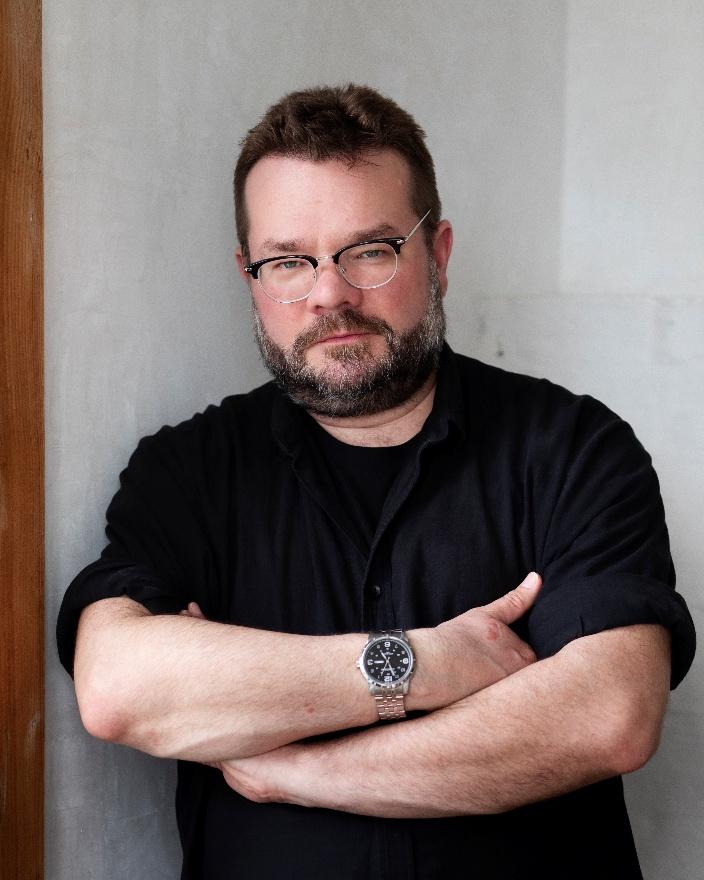
LL: I’m always curious about the origins of a particular story. What was calling to you about this one? What was the ‘why now’ moment? Was the crime or disappearance the most important moment, or was it something else? Did you have false starts for Cave Mountain that you scrapped?
BH: Many years ago, I had the idea to fictionalize the story as a novel. I probably wrote about fifteen pages of that novel before losing interest (I have many first-fifteen-pages of abandoned novels in old notebooks and hard drives, as I’m sure most fiction writers do). I’m glad I didn’t do that, because the story is so weird it would never be believed as a novel—truth is stranger than fiction because fiction has to make sense; only nonfiction would do it justice.
The why-now moment was because I badly needed to revive my career. I spent ten years under contract at Simon & Schuster writing what became a 450,000-word novel, which the publisher ultimately rejected. I hadn’t published anything in seven years and I was seriously thinking about quitting writing and starting a painting company (I painted houses for a while in my twenties, and it’s pretty much my only other marketable skill), or perhaps jumping off a bridge, or (worst of all) maybe going to law school.
Instead, I got in touch with Chris Beha, who was then the editor of Harper’s, and pitched a few ideas for articles. One of them was this story. The Harper’s piece was published in their August 2023 issue, and by the time it hit the stands I was already working on expanding it into this book. I had considered writing about it before, but from about 2011-2021 I was primarily occupied with writing what I hoped would be my magnum opus. (During that dark life-nadir between that failure and the beginnings of this book, I felt like I’d basically spent all that time digging a hole in the ground with a blindfold on and earplugs in, at the end of which I’d unearthed no treasure and had only succeeded in digging a very deep and useless hole; but since then I’ve signed a contract to publish that novel with a very good and very small arthouse publisher—it will see the light.)
And Haley’s story and the story of the cult and the crime were equally important to me. When I told the story verbally at a party or something, in the years before I started working on the article/book, I loved the look on people’s faces when the wild turn in the middle comes, after Haley is found alive and safe, when I would say, “And then—” and they would say, “What? It’s not over?” Oh, no. I honestly really wish I had started working on it five years earlier, because some of the key players in the cult murder story from 1978 died right before I started researching and writing it.
LL: Cave Mountain is so deeply researched and rooted in place, that it felt as if I was in that Jeep with you, along the mountainside, hanging out in Panera talking with folks about the crime. I’m curious about your process, the timing, your sources. Who — or what — were the sources you trusted most? Any you were skeptical of? Maybe a detail you may have initially overlooked that later changed the case?
BH: As to the last question, I do have a specific answer. To fully explain this might be getting into the weeds of the story a bit too much, but let’s give it a shot. In 1978, there were five people who were arrested; they weren’t charged with murder at first, because they didn’t have a body yet — just a disappeared child they strongly suspected was dead. One of the five was given immunity from prosecution in order to testify against the others. When I first started looking into it, no one knew why. The two others who were convicted of the murder who are still alive were both still baffled by it. The person who was granted immunity bore at least as much guilt for the murder as the others, and in my opinion, more.
I still didn’t know why when I wrote the Harper’s article. Later, I found out why, and I think this revelation is probably the only original piece of detective-work I contributed to the case. It came out in the middle of a conversation with retired Newton County Sheriff Ray Watkins. Ray had been a Sheriff’s deputy at the time (he later served as Sheriff), and was one of the officers who arrested them. They were arrested in Newton County, but they were wanted for another crime in Benton County, so they were taken to Benton County and booked there. The next day, the defendant who was granted immunity was given that immunity in exchange for telling the Benton County cops about the murder and agreeing to show them where the body was buried.
But, a logical problem that had been a mystery for forty-five years: the Newton County Sheriff had already found the body himself a few hours after the arrests the previous day (i.e., making the immunity deal unnecessary and pointless). At some point I said to Ray, “Wait—did you or the Sheriff tell the cops in Benton County that you’d found the body?” Awkward silence. Boom — there’s the answer to the mystery. The thought clearly hadn’t occurred to him in forty-five years.
Anyway — my research process was basically just talking to people; which is a lot of fun, especially after years toiling in isolation in the fiction mines: putting on my journalist-hat, driving out to Jasper, Arkansas, finding people like Ray (who is nearly ninety, and works at the hardware store in Jasper), and having long, fascinating conversations with them. I love that kind of research—getting out into the wide and real world.
As to who to trust? Even in Haley’s story, which happened twenty-five years ago, people’s memories were fuzzy, and some people remembered things in ways that directly contradicted others’ accounts. That effect was ten times as pronounced for the part of the story that happened in 1978. As to who to trust, I admitted that I couldn’t fully trust anyone, generally went with my gut, and noted the irreconcilable factual disagreements that arose (there are many).
LL: I’m definitely intrigued by Haley’s imaginary friend, whom she described as a 4-year-old little girl with dark pigtails, white shoes, and a flashlight. The imaginary friend played pat-a-cake with her, helped her find shelter, and more. Haley was even able to draw a picture of her. Some believed the imaginary friend was a paranormal being, a ghost, an angel, something along those lines. But you dismissed that. Later, in the book, you talk with a party from the 1978 case, who pointedly asked, “Why write a story you don’t believe?” I think this speaks to story in general. It’s not up to us, the writer, to believe it, but to convince the reader that it happened. Is that not what a good storyteller does?
BH: The ghost story at the heart of it is crucial because some people (not me) believing it is really the only thing that connects the two stories, and it bothers me because it is the most narratively tantalizing element of the book — I know it’s a major selling point, from the editor considering acquiring the manuscript all the way down, years later, to the bookstore customer perusing the jacket copy (and of course the former is thinking about the latter) — but at the same time I don’t believe it, I never have, I don’t want anyone to think I believe it, and I am certainly not trying to make anyone else believe it.
Maintaining an attitude of healthy skepticism is deeply important to me. There is an oddball legacy of people I greatly admire, stage magicians with side-careers as outspoken skeptics, bullshit-debunkers: James Randi, Penn Jillette, Ricky Jay — and the OG example, Harry Houdini. They know bullshit when they see it because they themselves are skilled professional practitioners of it. A magician who wants his audience to truly believe his tricks are magic isn’t an entertainer, he’s a very dangerous person. And that’s someone I have absolutely no desire to be. But people are so primed to believe in magic, even when you slowly, demonstratively let the audience see you put the rabbit in the hat, they all still gasp when you pull it out.
LL: Ironically, Cave Mountain began with a disappearance, but in the end, it revealed everything, unraveling the prior 1978 religious cult, a murder, secrets, lies, and more. Was there a moment in researching or writing in which you felt personally conflicted? And what emotional toll did the story take on you?
BH: Yes, there were a couple of them. One I just described in my answer to your last question: the fact that I knew from the outset that the juiciest narrative morsel at the heart of the story was something I adamantly do not believe in, but that teasing people’s desire to believe it was exactly what would sell the story. That made me feel a little bit of the moral ickiness that I presume a drug dealer feels (or should feel), but this one is even worse: Haley’s story became connected to the cult murder story only because my Aunt Joyce (Haley’s grandmother) reached out to Lucy Clark (a pseudonym), the mother of the girl who was murdered in 1978 and one of the people convicted of her murder, and became long-distance friends with her; my connection to Lucy via Joyce is the reason why I was able to have a few long phone conversations with her, which proved absolutely invaluable to the project.
Lucy is a very private person — her husband knows about her past, but most of the people in her general everyday social orbit do not. She got freaked out by this project soon after those conversations, and completely pulled away from me. She does not, to say the least, want any attention for any of this after all these years.
The project became deeper, wider, and more complicated after that, she became a somewhat less central character, and I went full-steam ahead with it after she withdrew her blessing. I hope that one of the effects of this book in the mind of the reader will be to largely exonerate her of guilt, but I still feel treacherous and guilty about it. In the end the project went beyond the puerile magic-trick stage of the skepticism vs. belief issue and into much more meaningful and uncomfortable territory: religious faith, sin, and redemption. The conflict with Lucy seriously eats at my soul; because of that the book itself is a sin, but I am hoping that if the reader makes it to the end, it will also be my redemption.
LL: I resonated, in some ways, with this statement in Cave Mountain: “To make art at all is to commit the sin of pride. A work of art is a volley in the artist’s war against death, and any attempt to vanquish death other than through the way into Heaven offered by faith is war against God.” I make art. I write. I consider myself a creative person, but not a prideful person. And I feel that these creative gifts are just that — something bestowed onto me from a higher being. So is it pride? Or something else?
BH: That’s a profound question about a subject that fascinates me, and about which there is surely a lot of disagreement amongst artists. I can only speak for myself, and my heart is always with William Blake here: “Note. — The reason Milton wrote in fetters when he wrote of Angels & God, and at liberty when of Devils & Hell, is because he was a true poet, and of the Devil’s party without knowing it.” (I also quote that right before the quote in your question.)
There is, for me, something a little Satanic about artistic creation. After all, Plato bans poets from the Republic. One of my favorite incidental byproducts of this book in my life so far: in that same chapter I also quote a poem, “Late Self-Portrait by Rembrandt,” by a poet and essayist I have been a tremendous admirer of for a long time, Jane Hirshfield; HarperCollins’ legal department made me get her permission to use it, and so I had to email her to ask — and not only did she give her permission to use it, that email began a really beautiful and long correspondence with her.
At one point, after she’d read the book, Jane basically made the exact same argument against that provocation that you just made. And she made it so eloquently I can’t help but quote her email here (and I’ll probably have to ask her permission again to include this in Hippocampus — boy, is this getting meta!): “A child left in a room with crayons will draw, whether or not the drawing is going to be looked at by anyone else. When I wrote as a child, I hid the poems under the mattress and showed them to no one — not family, not teachers, not friends. And so I will say that art can be made out of wanting to see, to feel, to work through, to find… not only of wanting to be seen. I will guess that this is one of those introvert/extrovert distinctions — the extrovert artists do want their work to be in dialogue with someone else; for the introverts, that isn’t the primary thing.”
Jane might be more of an introvert, and I — well, admitting one is an extrovert is kind of like being a Yankees fan (in the ’90s-’00s, less so now) — but I used to act in theater, unlike many writers I know I actually like giving readings and flatter myself that I’m good at it, I love teaching, I love telling stories at parties; perhaps Jane (and you!) has(/have) an introvert’s relationship with art, and I have an extrovert’s, hence my Satanic sympathies. Jane is a Buddhist, and she meditates: her work has a serenity to it, a sense of divine cosmic balance, a certain patience and calm and inner peace. I’m a bit calmer than I used to be, but my soul still snaps and thrashes in confusion, rage, and torment like a wounded snake.
LL: After all your research, what is the most important thing people still misunderstand about these cases? What might you tell them?
BH: The main thing that I hope that this book will not make people do is further blame or morally admonish or demonize the two people who were convicted of the murder who are still alive, Lucy Clark and Mark Harris.
For one thing, of the five people implicated, the three others — those who are now dead: the one who escaped prosecution, the one who died in prison, and the one who served a long sentence before his release — were far more culpable for the crime. For another, even though Lucy and Mark do share some of the culpability, they deserve redemption and forgiveness. One only served two and a half years in prison, but she has been tortured with guilt ever since, and the other has been tortured with guilt and spent most of his life (forty years) in prison, and was forced to begin his free life (not even quite free — he will probably be on parole for the rest of his life, and can’t leave the state of Georgia) at the age of fifty-seven. Forgive them.
One of the dominant cultural currents of these recent horrible years has been a childish, nasty obsession with vengeance and punishment for supposed moral transgressions great and small. I am not a Christian, but the Christian value I most admire is mercy. Many years ago, I read a story about some idiot teenage boys who were chucking cinderblocks off a highway overpass for no fucking reason, and one of them happened to hit a Catholic priest, who was severely injured, suffered major brain damage and had to have many surgeries; and he forgave them. I don’t know if I would do that, but I admire it immensely; the story stuck with me, moved me profoundly, perhaps came closer than anything else to making me want to be a Christian. Have mercy.
LL: What would you like readers to do with the knowledge Cave Mountain gives them? Do you think it’s a study in human behavior? Redemption? Community? Family? All of the above? And is there anything else you’d like to share, that maybe I forgot to ask?
BH: As always, my aim first and foremost is to tell a good story. For me, human behavior, redemption, community, family — also, skepticism and faith, God, art, the really big questions — are all a part of that. It’s not like a fable, in which the story points to some abstract lesson outside of itself; there are no lessons, there is nothing I want to teach anyone. I don’t have any answers, for myself or anyone else. I just hope that people will derive some pleasure and maybe even some bliss wrestling with the angel on the riverbank till the break of dawn along with me.
Leslie Lindsay
Staff InterviewerLeslie A. Lindsay is the author of Speaking of Apraxia: A Parents’ Guide to Childhood Apraxia of Speech (Woodbine House, 2021 and PRH Audio, 2022). She has contributed to the anthology, BECOMING REAL: Women Reclaim the Power of the Imagined Through Speculative Nonfiction (Pact Press/Regal House, October 2024).
Leslie’s essays, reviews, poetry, photography, and interviews have appeared in The Millions, DIAGRAM, The Rumpus, LitHub, and On the Seawall, among others. She holds a BSN from the University of Missouri-Columbia, is a former Mayo Clinic child/adolescent psychiatric R.N., an alumna of Kenyon Writer’s Workshop. Her work has been supported by Ragdale and Vermont Studio Center and nominated for Best American Short Fiction.