

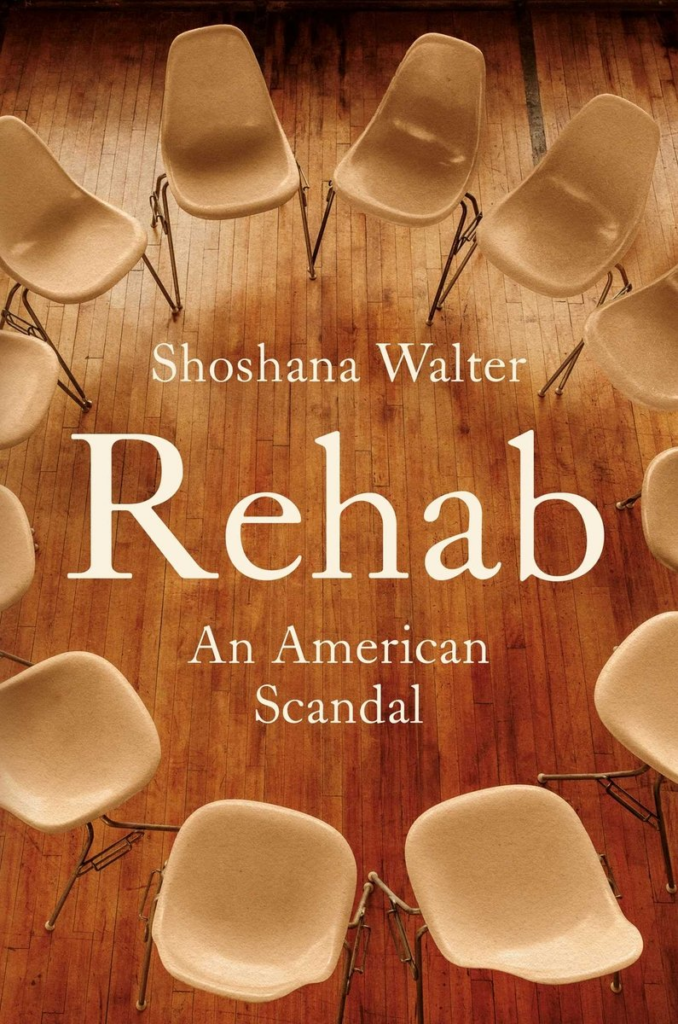
 Rehab: An American Scandal (Simon & Schuster; Aug. 2025) by Shoshana Walter is a harrowing examination of the for-profit rehab industry in the United States. Like most other industries, private equity and predatory business models have corrupted an industry where the most vulnerable are looking for help. This has, predictably, led to greater suffering and trauma for people looking to recover from drug addiction.
The book is an infuriating read because at so many turns, people who are genuinely looking to help are stymied by profit driven businessmen, judgmental law enforcement officers, the DEA or a government who refuses to step in and regulate the industry. Many of the rehab facilities profiled are not following medical best practices, and most are not even staffed by medical professionals, and their employees end up doing real harm. The book documents abuses that involve the actions of non-medical providers, people who have no business dispensing medication or advice.
More sociological study than memoir, the book examines the U.S. model of addiction recovery through four people. Alternating chapters combine their personal stories with both the legal and medical frameworks prevalent at the time. Examples of other people who endured similar treatments and who succeeded (or failed) are highlighted to underscore the systemic problems plaguing the industry. Rehab primarily occurs in the early 2010s, focuses solely on US based rehab practices, and highlights how they different than peer nations’ programs in efficacy. France in particular is highlighted.
Profit is at the heart of many of the treatment centers featured in the book, especially Cenikor. (Walter’s previous reporting on Cenikor in Louisiana and Texas was expanded upon to create this book.) Cenikor specifically is horrendous to read about as their practices are inhumane. They denied residents medical care, made them work in unsafe conditions, and generally devalued their lives to the point that multiple people died. They were frequently cited for the lack of medical and psychiatric care provided to residents. With Cenikor as one example, the whole rehab industry in the US appears to be undergirded by the notion that (until recently!) people addicted to drugs were subhuman and not worthy of basic respect and care. This is also compounded by Walters’ examination of the crack epidemic in the 80s, and the difference in treatment along racial lines. These very real stigmas have hampered the care that many patients receive.
While not explicitly about drug addiction and abuse, Rehab does talk quite frankly about drug use, its aftermath and its consequences. Those who do not want to read about that should skip this, but those who can stomach it will find a damning indictment of an industry that should be helping people. Heavily researched (there’s over 50 pages of notes and an index), Rehab clearly shows Walters’s journalistic background and passion for the topic. Her analysis combines reporting, interviews, and investigation into the structural barriers that continue to plague treatment for drug addiction in America. The clear prose makes it obvious how widespread the problem is, and why readers should care.
I learned a lot from the book, as I previously had little insight into the world of rehab other than the common cultural depictions. However, it was a book I had to read piecemeal, as I found myself angry about the continued oversight and mistreatments patients experienced. It left me feeling helpless at times as Rehab is more exposé than roadmap. The book does offer a few suggestions as to what quality rehab care should include, like the widespread use of Suboxone and continued support after a person leaves rehab.
For anyone familiar with rehab or addiction, the book’s content might not be new. Rehab doesn’t so much look to offer solutions as to expose what is wrong. If you’ve gone through rehab or addiction and do not want to be reminded, then this book is not for you and I’d skip it. Otherwise, readers may feel validated and seen if they’ve experienced anything similar. For anyone who wants to learn more about how rehab currently works or to understand a family member’s or loved one’s experience, then this can be a helpful read.
If the book has an agenda, it is to show a fundamentally broken rehab system in America, and how those who mean well and want to effectuate change are hamstrung by dated laws and practices. And those who are looking for help frequently don’t get it.
 Marissa Gallerani is a queer and disabled writer and teacher living in Providence, Rhode Island. She received her MFA from The Newport MFA at Salve Regina, and has taught at multiple institutions of higher education including the New England Institute of Technology, Salve Regina University, and Write or Die. She has been published in The Harvard Review Online, the public’s radio, and The Financial Diet, among others. Marissa’s Substack, The Chaotic Reader, details her wide-ranging reading adventures. A life-long SFF fan, Marissa is currently at work on a science fantasy novel.