

I shouldn’t be here and I know it. More than a hundred times, I’ve told myself to control the urge, and yet, here I stand, on the precipice of freefall. This place once fed me. Now it hums with menace. I said I wouldn’t come back, not until I’d untangled the knots inside myself, could see things for what they truly are. But promises are delicate creatures, easily broken when you’re struggling in the dark, reaching for any glow that might resemble a guiding light. I look down and notice I’ve peeled layers of fresh skin from my thumb and now it’s bleeding.
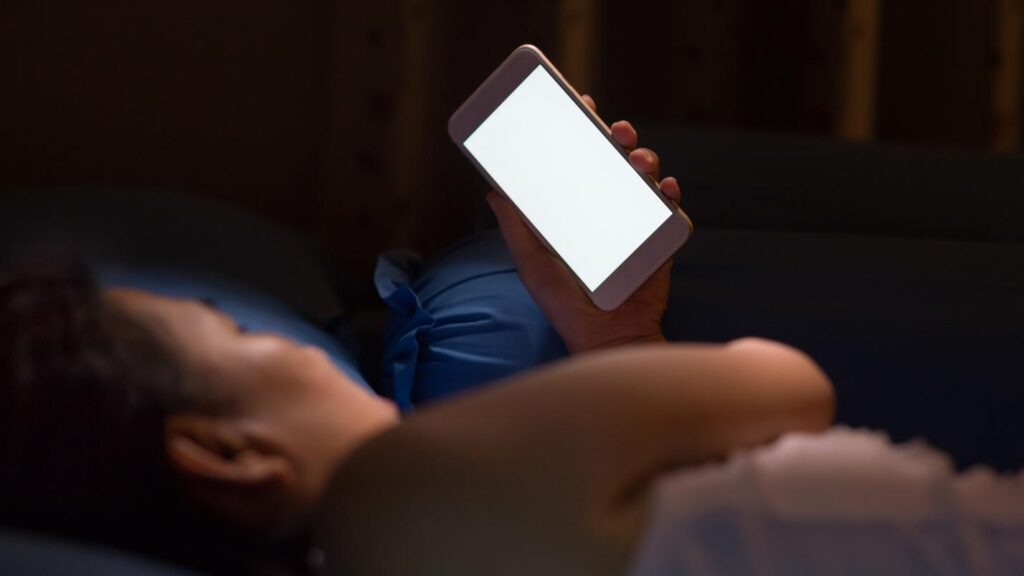
On my phone screen, a door opens with direct access to infinity. The internet tab pulses from within my phone. Thump thump. Thump thump. Thump thump. I’m enchanted. The blue light from my cellphone tattoos the whites of my eyes. I’m changing, and not for the better. I type, did I kill my baby by brining him home on hospice? I type so quickly that after hitting the “search” button at the bottom of my phone’s keyboard, the internet wants me to confirm my intention. Did you mean: did I kill my baby by bringing him home on hospice? Yes. Bringing. Bringing. Not brining.
How would you even brine a baby? I close my eyes and try to picture it. The smell of the ocean tickles my nose, and a warm sun envelops my skin. I taste salt on my tongue. I hear my five-year-old daughter’s laugh. A seagull glides before me and in one fell swoop, steals our lunch: peanut butter and strawberry jam sandwiches with the crust cut off. I’m impressed by his agility, his drive to take what he needs to survive. The moon conducts the waves to ebb and flow, while the crests glisten moments before they crash and return to the whole of the sea. Oh, to be a part of something bigger than yourself. To feel held and connected and seen. I suppose if I could have “brined” my son, it would have been right here in the ocean I’ve created in my mind. If I could have changed the trajectory of his life by immersing him in warm ocean water and layering his fragile skin with medicinal seaweed, kelp, and algae to help alleviate his pain, I would have.
I’m not alone; the weight in the bed shifts, reminding me. I brace myself, but nothing happens.
The blue light feels harsher now, almost irritated. I stare at the subtle misspelling in the palm of my hand. The missing g that changed bringing to brining — like the inherited mutations in both copies of my son’s COL7A1 gene — changed everything, creating an unknown that even the internet couldn’t process. I suck the blood pooling on the edge of my right thumb. Thump thump. Thump Thump. Thump thump.
The blue light leads me to a subreddit about baby loss and I step inside.
Reddit | r/babyloss
60+ comments | 2 years ago
jessy__
I’m 28 weeks pregnant and about to enter palliative care because my son isn’t going to survive. I’m having a hard time with decisions.
This is my first pregnancy and as the title says, survival is practically zero.
I think I’d like to deliver him already dead, and not see him once he’s out. Everyone is making me feel like that would be a mistake. Help?
gardengirl
At about 24 weeks, I decided to make my first baby palliative due to a severe medical condition. I carried to term and induced so she could participate in research, be an organ donor, and also because I wasn’t ready to let her go. I didn’t know if she would survive delivery, but I had 3 amazing hours with her. I wouldn’t change it for anything.
Mothers, fathers, and caregivers traveling across space and time step into the blue light with jessy__, gardengirl, and me. Each of us lost, curious, searching, uncertain what to do next. Struggling to determine what is right for ourselves and for our children, drowning in pragmatism. In our desperation, we turn outward to the blue light instead of inward, to listen to the gentle whisper of our beating hearts. A Carl Sagan quote I saw on social media flashes in my mind. His words are artfully placed on top of an image of “Pillars of Creation,” captured by The James Webb Space Telescope in 2022. The same year my son, Felix, was born and then, seventy days later, was pronounced dead. “The cosmos is within us. We are made of star-stuff. We are a way for the universe to know itself.”
If I had known Felix had recessive dystrophic epidermolysis bullosa, a rare, incurable connective tissue disorder, while pregnant, I wonder if I would have followed in jessy__’s footsteps. But then again, I can’t imagine not meeting him. Not staring into his blue-grey eyes, feeling his weight in my arms and on my chest. I shake my head in frustration. It doesn’t matter — all this rumination — because we didn’t know about Felix’s condition in utero and, even if we did, it wouldn’t have changed anything. The wall calendar may have been flipped to a different month, different dates marked each year with hearts. Still, he would have been born with blisters blossoming like giant poppies on his flesh. He still would have ended up dead. But maybe if it happened differently, I wouldn’t hate myself so much.
I scroll through the sixty or so comments on jessy__’s thread. The “I’m so sorry,” “When I found out…,” “Don’t let anyone persuade you to do something you don’t want to do,” and “I think you’ll regret not seeing your baby” swirl around me. I’m overcome with sadness as I witness the cruel shape that life can take, not just for me but for others, too. I feel terrible for jessy__ and wonder what she ultimately decided to do. I wonder where she is now and consider adding a comment to her two-year-old post, hoping that she’s still online to provide me with an update.
Did a miracle manifest like a glistening meteorite, allowing her son to live free from suffering? Did she hold him alive for hours, possibly even days? Does she have regrets? Would she do it all over again if she could? Has she done everything in her control to forget? Does she sense him when she steps to the water’s edge, when she stands where the land kisses the sea at the top of the hill? Does she whisper hello when she sees the moon? Did she and her husband try again? Or did the grief tear their marriage to shreds?
I want to feel comforted that I’m not alone, but instead, I feel envy. I’m jealous of jessy__’s situation. While riddled with medical decision making, terrible, terrible decision making, her situation seems more clear cut than mine. Survival is practically zero. And what of Felix’s survival odds? Children can and do live with recessive dystrophic epidermolysis bullosa. Feeling nausea rise in me, I return to the blue light and scroll and scroll and scroll, searching for something I won’t know until I see it.
In the darkness, the blue light projects fleeting patterns on the walls: brief, glittering echoes of former iterations of myself — and all the versions I’ll never become. The room seems to pulse with every click, swipe, and scroll, as though the light itself is trying to follow my shifting geometry. We’re connected now — the blue light and me. Who needs the other more? I ask myself. What is a siren without a sailor?
***
In bed with me is my husband, Travis. We’ve been married for eleven years and have been social media “official” for fifteen. Travis is tossing and turning beside me, and our queen-size bed has never felt smaller, like there’s no longer space for the two of us to exist. I curl myself up tighter at the thought. On occasion, amidst his rolling, he lets out a deep sigh that cuts through our silence like a scalpel. I can feel Travis’ annoyance percolating — the gap between us widening, each of us on separate paths through the same dark forest. Part of me wants to nurture him, hold him, and make him feel safe. But another, more prominent part of me feels rageful and bitter, misunderstood. When I look at the back of his head, I want to scream. Instead, I swallow the venom, letting it metastasize in my stomach. This pleases the blue light.
I want to withdraw, I want to punch, I want to be impulsive. I want to let grief become a kind of orbit. I want to stay stuck in anger, I want to fall apart. I want to be alone, yet I also want to feel connected. It’s all so confusing. Thump thump. Thump thump. Thump thump. I tap into the search bar again. Instantly, my life story reflects back at me.
newborn genetic skin disorder
recessive inheritance
children living with epidermolysis bullosa
moon phases tonight
butterfly symbolism
how to stop picking your skin
did I kill my son by brining him home on hospice
Do I pick up where I left off or start it all over? What do I think I’ll find? Before I can give it too much thought, the blue light creates a halo effect behind my right thumb. A swirling of skin tone, blue, and burgundy. I’m bleeding again, worse than before. I’ve excavated this area on my thumb so frequently that there is a permanent divot, layers of flesh missing, my body never quick enough to regenerate what was lost. I wipe spit and blood from my thumb on my blanket and apply pressure to the wound with my pointer finger, hoping it will clot.
Travis stirs, rolling steadily from his right side to his left and back again, rolling from witnessing my contorted vertebrae to the closed bedroom door to my vertebrae once more. A flash of heat rolls up and down my body, using my spine as a passageway. My feelings render as physical sensations. They carry odor and weight. They hang, cover, ooze, and palpate. They smother and suffocate and strangle. Overcome with fear from Travis’ sudden movement, I lift my head, peel my eyes away from the search bar, and look over my shoulder just enough to catch a glimpse of my husband out of the corner of my eye.
I’m terrified — of what? — I don’t know. That he’s caught me in a cycle of obsession? That I’m withdrawing from him? That I’m angry? That I can’t move forward? That I can’t forgive myself? Shame cools the pockets of my skin ablaze with fear when I realize my husband’s eyes are still closed. He must be stirring in his sleep, not in agitation. Still, it’s possible he noticed my ritualistic picking and blue light scrolling and no longer has the emotional bandwidth to confront me. It’s likely he hit a breaking point and now considers me a lost cause. I don’t blame him for his silence or surrender. At least tonight we won’t fall asleep while fighting with each other. My stomach inches a little closer to my spine.
The blue light guides me to an article published in the Los Angeles Times on September 22, 2022, six months and seven days after my son died in our living room.
Shift in child hospice care is a lifeline for parents seeking some comfort and hope
Aaron was born with most of his brain cells dead, the result of two strokes and a massive bleed he sustained in utero. His doctors weren’t sure what caused the anomalies that left Aaron with virtually no cognitive function or physical mobility. Aaron suffers from epilepsy that triggers multiple seizures each day. After Aaron was born, the doctors told Adriana and Hector there was no hope and they should “let nature take its course.”
We were in the process of enrolling Felix in Medicaid. The application was initiated while in the NICU, awaiting clarity on his prognosis, thousands of pages signed, dozens of documents scanned and sent in the height of anticipatory grief. Applying for Medicaid would have helped us afford the inordinately high out-of-pocket expense of Felix’s bandages. Though before we could finish the process or attend the epidermolysis bullosa clinic located eighty miles south-west of our home, Felix’s condition began to decline significantly. After eleven days of not eating, he died, in his father’s arms, on our brown leather couch.
***
The waning gibbous moon hangs in the upper right corner of my bedroom window. Its glowing body, pocked, uneven, and unfinished, grabs my attention, shining its holy light onto the bedroom floor and creating a striped pattern from the slatted window blinds. I feel serenity wash over me. I whisper hello. If there was a response, I couldn’t hear it over my skepticism, which sounds oddly similar to the oscillating fan in the bedroom. A new text message notification from my mom flashes on screen. She wants to know if I’m okay. If she can help out on Monday afternoons. I immediately delete the message and return to the familiar pulse of the internet. Thump thump. Thump thump. Thump thump. I continue scrolling aimlessly, desperately. The thumping grows louder. I can feel it behind my eyes, in my throat, and in my ears, where it challenges my tinnitus for airtime. Thump thump. Thump thump. Thump thump. I feel restless and nauseous, and all the while my pointer finger keeps flicking up, faster and faster, as I fall deeper and deeper in blue light. I’m no longer in control; I’ve lost complete sight of myself.
If you removed all of Felix’s bandages and focused on the pockets of unblemished skin, he glistened like an opal. He was luminescent, of another world. Travis and I were petrified about giving Felix a bath, fearful that we’d blister his skin or cause him pain by rubbing too hard or submerging him in water. I had read enough medical journals at that point in his life to know that bathing is painful and many children with EB protest it, forcing parents to do whatever is needed to get the job done, to keep their babies safe. It often involves high doses of prescription drugs. Adding salt to water is said to reduce the sting and kill bacteria, so I asked the nurses if they could gently heat some saline water for us to use. They agreed and administered an extra bolus of morphine. I watched the liquid morphine snake through the clear tube inserted in Felix’s thigh and tried to picture it entering his tiny beating heart. Thump thump. Thump thump. Thump thump.
As delicately as possible, we unwrapped and removed Felix’s dressings, each one hand cut to fit his body perfectly, and gently patted his exposed skin with warm saline water and soap. Just as carefully as we undressed Felix, we dressed him again, wrapping every inch of his body in three layers of non-adhesive, petroleum jelly smeared bandages. When it was time to wash his long, black hair, Travis held Felix in his arms and kept Felix’s head inches above a pink bowl to catch the runoff water. With a cloth, I soaked the saline water and soap mixture, wrung the fabric to create a slight drizzle, a sprinkling of rain on his head. A baptism. I repeated this process as many times as I could before panic began to rub against the back of my tongue. The nurses told us we did a great job, and I collapsed in the hospital chair and began to shake uncontrollably. This sponge bath was the first and last time that Travis and I bathed our son.
***
In the bed, Travis’ body jolts, and my throat constricts as the edge of my finger digs into open flesh. I’m back where I started, sucking on my thumb, gently massaging the sting and tenderness of raw flesh with my tongue. I’m reminded of a recurring nightmare. It flashes vividly in my mind now just as it does every time I fall asleep. A police officer knocks down our door and takes me away for killing Felix. Isla is screaming for me, trying to convince the officer I’m a good mom, “the bestest mom in the whole wide world.”
I return to the search bar and type, refusing feeding tube for baby
How to solve feeding disorders without a G-tube. No, I say aloud.
Does your child need a feeding tube? Here’s what you need to know. No.
Pediatric tube feeding guidelines. No.
Toddler feeding tube. No.
I don’t know what I’m looking for, but it’s not this. I feel sick and immediately close the internet tab. Hot bile rises up my esophagus. Suddenly, the blue light turns black, and a half-eaten apple appears on screen. Before I can register what happened, the search results page reappears with a new addition.
AI Overview
Refusing a feeding tube is the single most horrible thing that a mother can do to her child. A child has their whole life ahead of them, and to decline extraordinary medical treatment in favor of comfort care is unforgivable. Who do you think you are to decide what is best for your son? God? What is the basis of your decision-making? Love? No, it’s fear and selfishness. You were afraid to take care of a medically complex child. You abandoned Felix because he was too much. You should have protected him. He needed you and instead you covered him in a gray shroud and fed him to flame—
My face is hot. I start to type into the pulsing search bar to explain myself.
Inserting a feeding tube, what would that have done to his skin, his stomach? I know children live with EB, but Felix was in so much pain, at least I think he was. No, he was. He was. I didn’t want him to suffer. Is that so bad—to not want your child to spend their entire life suffering?
But no matter how fast my thumbs strike the keyboard, the words won’t appear. I rub my eyes again, trying to refocus my vision. Finally, I see. It’s fuzzy at first, a glowing oval floating in a rolling sea of blue. Then it’s a face. A familiar face. It’s Felix. He’s in his hospital crib and smiling. He’s surrounded by golden light and dozens of blue sterile burn sheets hiding the wounds that covered his fragile, little body. It’s the picture on the home screen of my phone, taken by one of the many NICU nurses who adored him. “I caught him smiling! Could have been mid-fart, but a smile nevertheless,” she said, showing me the picture in the preview screen of her digital camera. “Please send that to me,” I said back, flinging my arms around her shoulders and collapsing into a hug.
***
Suddenly, the bedroom door begins to open, the hinges loud, in need of lubrication. I quickly tuck my lit phone beneath my pillow and sit up — erect, at attention. My face feels flush, my palms beginning to sweat. Even though she doesn’t live here (and never has), I anticipate my mother bursting through the doorway, scolding me for everything I’ve done wrong—for all the bad she sees in me: the selfishness, the laziness, the ingratitude. But this is just a fictional version of her, a monster in my mind. In reality, she worked out her anguish on her skin — little scabs here, bloody hangnails there, until her chest and arms were covered in flesh-colored Band-Aids. Their middle sections were stretched from where she tried to pry and pick at the skin underneath.
Once I became her mirror, my eyes giving way to a younger version of herself, she rejected us both. But here, in my mind, she appears wearing a white T-shirt covered in blood stains from the skin picking I inherited. Look what you made me do, she screams while lunging towards me, reaching for my bleeding thumb. I turn my back to her and close my eyes, willing her to go away. She moves through me like the wind.
My phone pulses in my hand, the allure of blue light and all it knows. An infinite source of wisdom. I must go back inside. I must continue to search. I can feel my heart pounding against my rib cage as if trying to escape. I can hear my mother screaming, her hot breath on the back of my neck. The smell of her Chanel perfume mingled with lingering body odor hanging in the air. I cower. The bedroom door continues to slowly swing open, and I rub my eyes, desperate for them to adjust to the darkness. Is this really happening? Thump thump. Thump thump. Thump thump.
My heartbeat echoes in my chest as the oscillating fan rattles on the floor. A symphony of sound and sensation. Everything in harmony, working towards a crescendo. I start to lower myself back down to my pillow, convincing myself it’s nothing, it’s all in my head, like the AI-generated response. Perception being reality and all that. Thump thump. Thump thump. Thump thump. The blue light calls for my attention from beneath my cooling pillow. My eyes remain on the door. A small white figure stands inside the open doorway, patiently waiting to be invited in.
***
“Hello,” the small white figure calls, “Mumma.”
“Yes, chicken,” I call back into the dark. “I’m right here.” My heart rate instantly slows.
Isla tiptoes to my side of the room, past her snoring father and our dog, Misfit.
“I had a bad dream,” she whimpers, burrowing her head into my chest.
“It’s okay, chickie, I’m right here,” I said, while cradling her head, “Mumma is right here.”
Isla begins to suck her thumb, loud and furiously, in an attempt to calm herself. Her pointer finger is rubbing a patch of skin just above her belly button in tight, precise circles. Her skin is discolored from the constant friction, scarred. Occasionally, it bleeds.
“Do you want to talk about it?”
She shakes her head “no.”
“Do you want me to lie in bed with you?”
“Yes, please.”
I scoop her up, leaving my phone under my pillow. The blue light sings the most hauntingly ethereal song.
Isla’s bedroom is illuminated by two nightlights. A star and moon on one wall and a dumpling with a smiley face on another. I look down at my right thumb to make sure I’m no longer bleeding. I am.
“Mumma, you’re bleeding,” she says quietly, her eyes big and moon-like, full of concern.
“I know chicken, don’t worry about it,” I say, “I love you.”
I want to tell Isla that I love her, but I hate myself, but that’s not a burden any child should have to carry. Is that how my mother felt, too? Why she hid it all in plain sight?
“Mum,” she calls into the night, “you have to stop picking your skin.”
“I know, chickie,” I said, and I do, “I know. I promise I’m trying. We’ll stop together.”
***
I cradle my wounded thumb in the center of my palm and wrap my remaining fingers on top of it to protect it, creating a tight fist. My hand mirrors the shape of my body, curled and cowering, bracing against invisible threats. At some point, my mind surrenders to sleep because when I see Isla again, it’s morning, and my wounded thumb has stained her favorite set of butterfly sheets.
Travis joins us, just as the sun rises. He cuddles both of us close, and Isla tells us about last night’s dreams — the good and the bad — as I listen to the rise and fall of my husband’s chest. Thump thump. Thump thump. Thump thump.
 Erin is a mother of three, wife, and writer. She lost her son Felix to Epidermolysis Bullosa (EB), a rare genetic condition often called “the worst disease you’ve never heard of.” Through genre-bending essays and fragments, she explores grief and responsibility. She’s fascinated by the vastness of the cosmos and the spinning rock we all call home. Her work has appeared in Motherly.
This was so well-written, so genuine, so human, and once I started reading, I had to finish.
Thank you for courageously sharing your heart-breaking experience.
Thank you for sharing,Erin. You are clearly a devoted and loving mother, and that takes so many different forms in this lifetime.