
Runner-up, 2026 Contest for Flash CNF

EDITORS’ NOTE: This lyric essay offers one unique and authentic perspective that explores the author’s own self-doubt. It spurred debate and discussion among our readers and members of the adoptee community. Visit this page to read an expanded statement about those concerns from our editorial team.
Maybe those petty people are just being catty when they say adopt a cat instead, but you tell them you’ve already filled out the paperwork for a kid — an eleven-year-old boy with a file thick as a phone book, a single-spaced list of diagnoses you can’t pronounce. They say aren’t you brave. They say bless you. You smirk, shrug, because what do they know.
Then you study the medical histories, the photos of a boy’s smile bracing for rejection, and you make the hard choice. You say no to the cat, yes to the boy. Maybe the boy is wild — climbing curtains, pouncing and pacing. Those rubberneckers love your wreckage. They feed you I told you so’s like catnip. They become voices in your head: in the grocery line when he melts down in aisle seven, in Sunday School when he refuses to sit, in the school office when the principal says again.
You tell yourself you are bigger than adversity, stronger than trauma, above regret — until one night he asks if this is his forever home, and your mouth opens too slowly.
What if they were right? Maybe adopting a cat would have been in your wheelhouse. A cat could be fixed with hypoallergenic litter and laser toys. A cat wouldn’t ask impossible questions. Maybe wishing for easy is itself a betrayal.
What do they know about a child who hisses and scratches? Public scrutiny? Private doubt? What do they know about loving something you can’t return?
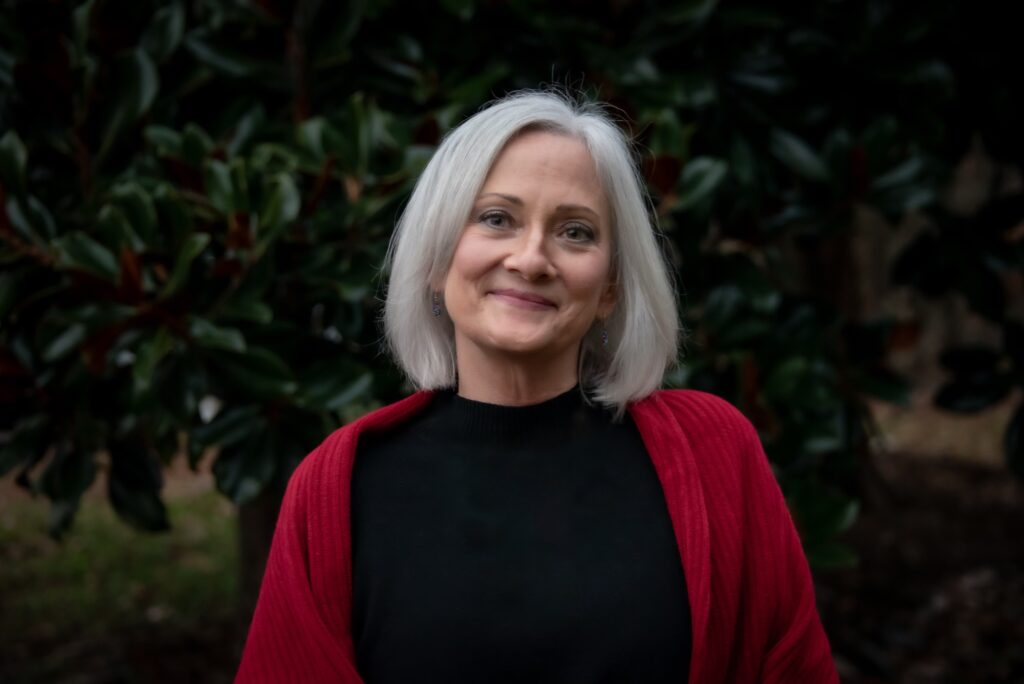 Tracie Adams is an adoptee and adoptive parent whose writing has been nominated for the Pushcart Prize, Best of the Net, and Best Microfiction. Her second book, Not Finished Yet, was chosen as a finalist for the 2025 BookLife Prize in Memoir for its unique form and voice. Her essays and short fiction have appeared in more than 100 literary magazines, including Hippocampus, Cleaver, Pithead Chapel, Stanchion, Fictive Dream, and others. Connect with her at tracieadamswrites.com and on X at @1funnyfarmAdams.
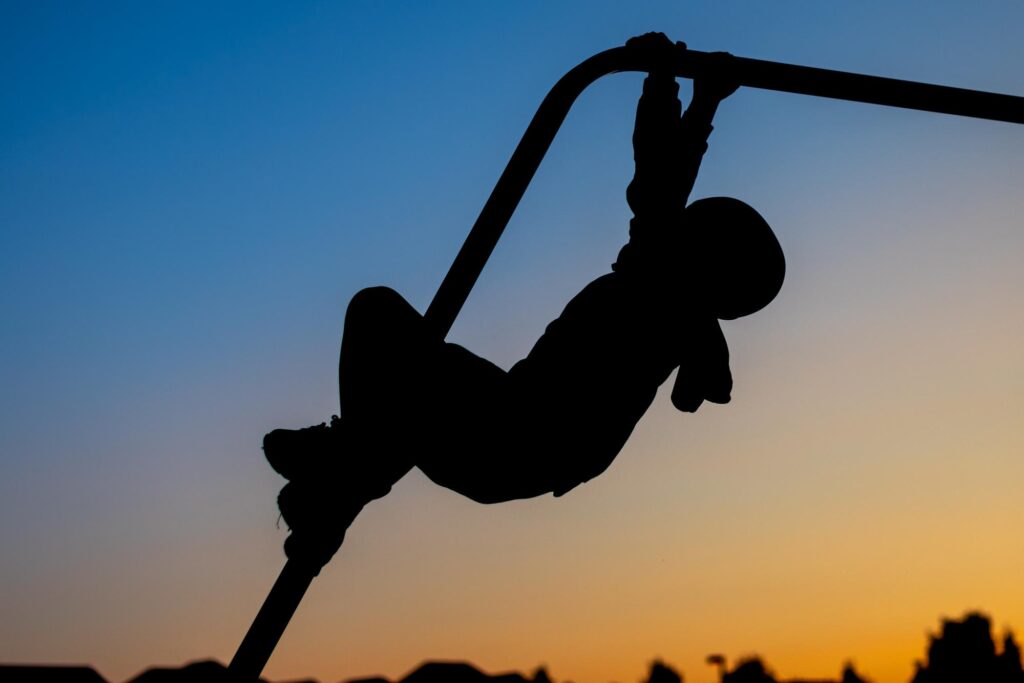
Image Credit: Flickr Creative Commons/Enoch Leung
Author bio was updated 6/14/2026.
I’m always amazed at the sheer bravery it takes to publish your opinions under “anonymous”.
As the adoptive mother of a young man with many, many issues (now 26) I feel like I deeply understand what Tracie is saying. I know the moments of thinking, what have we done? I know the heart break of emotional trauma that my son brought into our family and the beautiful ways that our other kids comforted him with.
Why be so harsh with your words anonymous? Do you know the end of the story? Certainly not.
In a day and age when hate seems to rule, you fit right in.
Try finding compassion and understanding .
A short story is just that. It sparks something inside of to say, wow I wonder how that worked out. Or, maybe we could pray for people in positions that seem difficult or hard to understand.
Let’s be better than the world expects, kinder than is expected and generous to know that we don’t know everything.
Super flippant way to write about an incredibly complicated and sensitive topic. And the lack of support toward the adoptees and other readers in the comments is another indicator of the lack of concern and care for what you are writing, Tracie. This is not the kind of story that should have a spotlight in 2026. It is a tired old bitching session about how hard it is to foster and adopt children who are traumatized by a 25.5 billion dollar industry. You don’t win awards for participating in it, and you aren’t guarunteed good children that will thank you and be utterly grateful. In fact, the actual truth is that children and babies separated from their families will carry the biggest burden. It will be a lifetime of it. And they will be the target of the ignorance and disregard that comes with society’s insistence that they should be grateful for their trauma. Until our world begins to understand the damage done to children separated, torn apart, and yes, even stolen from families of origins- until our world understands what it might mean for people to be separated from their ancestors and roots- we will never get this right. We will never understand those of us who have been through it. We need much better journalism around it- and thankfully, many adults who have gone through this kind of life are writing and sharing and educating. We just need the world to catch up to us.
What a cutsey take on adoption. I suppose if I hadn’t lived my life with people taking cutesy takes on my lived experience of being an actual living, breathing adoptee, I’d find this entertaining. I mean, not in 2026 when we know better, but maybe back in the mean-spirited 1990s.
Here’s what’s not funny. People DO rehome their adoptive children. It happens on private FB groups. It happens illegally. It happens in the United States. This is NOT my experience, but it happens and IS happening still.
You know who isn’t “stronger than trauma?” Well, probably no one, because trauma isn’t something you are too weak for. It is something you work through. But unfortunately, adoptees as a population are more statistically at risk for anxiety, depression, disordered eating, substance abuse, and suicide attempts.
Adoptive and foster parents can be amazing, wonderful people but this savior/rescue narrative is harmful to our community at large.
I would encourage Hippocampus to employ a sensitivity reader.
For the record I have a great sense of humor, but, I like, many adoptees, am tired of being spoken about and spoken over.
We are people, not your perpetual plot devices and tropes.
Wow. So much no.
I read the final sentence with the love I think the author intended. She cannot give up a child she loves. She just can’t, not because the rules don’t allow it, but because once a child enters your heart, the heart doesn’t allow it. As a striving author, I understand the struggle to find the right word to convey emotions and thoughts, and whether to overexplain or leave some things unsaid. I’m interpreting “the mouth opening too slowly” as a turning point, how to form the meaningful words, but not enough right then for a kid seeking reassurance. The author is self-reflective on herself as every parent should. My children threw themselves down in grocery aisles, hissed frustration at me; I wondered and doubted. We grew together. Some of the reactions to this piece are angered, and I think the author is the recipient of their history like her child.
Let’s be clear that the reactions to this piece are not directed at the author, who is an eloquent writer, nor her altruistic and loving intentions, although it does bear reconsidering underlying intentions about what she exactly she was hoping to convey by centering her own experience and likening the process to animal adoption.
These reactions are about the harms and impact that words have. Let’s unpack a few. The glibness of “You Can Rehome a Cat but Not a Kid.” Using the word “something” in the last sentence instead of someone. A boy diminished to a procedural application and described as having a thick file, multiple diagnoses, and words like wild, wreckage, adversity, trauma, regret, a pleading for a forever home, not easy, a refusal to sit in Sunday school, who has a meltdown in grocery aisles, and who hisses and scratches.
Read this piece through the eyes of the boy and then read it again through the eyes of the man he will become and think again, friend of Tracie. :/
So beautifully written. “Those rubberneckers love your wreckage” hits especially hard.
I think this is a poignant and hard-hitting piece, Tracie!
Ohmigod, the heading alone wouldn’t have made it past a sensitivity reader. But an entire Flash CNF editorial team of editors and readers who went on to not only accept this piece but nominate it as a contest runner-up winner? Wow.
This is exactly the kind of harmful narrative that’s been centered for way too long. The thinly veiled saviorism and virtue signaling couched as cynicism for the “petty people.” Heck, I think the only thing this piece stopped short of was throwing in a blue plaid animal collar and talk of euthanasia after “the boy’s” meltdown in aisle seven.
And then to come full circle from that title to that closing line of “loving ‘something’ you can’t return” at the end?! Oh my. It’s no wonder we adoptees grow up to hiss and scratch when we read stuff like this. Ugh.
But at least now when people ask me why I write, I can point them here.
PLUS, the choice of photo at the top and author’s photo at the end solidifies the race/racial aspects suggested in this piece. Hippocampus, not sure you care but fwiw: you’re announcing to everyone who has ears to hear that you are NOT a safe space. AT ALL. You are actively doing damage!
Wonderful! Love the title, love hot it pulled at my heart.
As an adoptee, I found the title possibly the most offensive headline I have ever seen. Comparing a child to an animal is a choice, but wow, certainly not a choice an educated and attuned adoptive parent would make. My heart aches for this child.
This is but are the most tone deaf article I have read anywhere possibly ever. First, comparing children to animals is loathsome. Second, your final paragraph tells a lot about who you are: the “it” that’s can’t be returned is a person without agency, options, or, clearly, a decent parental figure.
This is an absolute disgrace.
I’m embarrassed by my rage typos (never use a phone when reactive), but I’m not the only one who should be embarrassed. Hippocampus had NO readers who flagged this for what it is?
“You tell yourself you are bigger than adversity, stronger than trauma, above regret — until one night he asks if this is his forever home, and your mouth opens too slowly.” This is looking in a mirror and seeing nothing.
Adoption is not a “gift,” it is not a “good deed,” and it is especially not centered on the adults who choose to adopt. Being adopted means you lost everything, literally, and then had a random stranger take you in. You don’t get to choose who that random stranger is. If the stranger then centers themself in the narrative, you, as the adoptee, are not being seen.
Adoptees are not “lucky” that they were adopted. Adoptees are placed in the worst situation imaginable, and then perhaps offered a decent alternative. But so often, not a decent one at all.
This is not to say being the adoptive parent of a PERSON (not a cat-adjacent option) can’t be very tough. It can. I am the adoptive mother of two sons.
But the language of this piece shows such an utter lack of awareness that it literally took my breath away – and not in a good way.
If you can’t pronounce the diagnoses then learn them. Educate yourself. If you answer “too slowly ” when asked by a child in pain if you’re their “forever home,” then what work have you been doing on yourself to answer that question well ahead of time? This is dereliction of parenting, which this child has had more than enough of already. This possibly difficult, sad, abandoned, in pain child. This “something you can’t return.”
There are ample resources for adoptive parents who struggle, and many more resources provided by adoptees who can attest to the experience from a first-hand point of view. I hope the author takes advantage of all of them. I hope this child is OK.
I hope they never read this piece.
Actually you can rehome a kid, and many adoptees have been. Some more than once. We lose in the comparison to rescue animals, however, because most kittens and puppies get to stay with mom for 6-8 weeks instead of less than 24 hours. Happy to connect you to adoptee spaces if you want to learn more.
Your story cuts to the core.
Thank you for writing this, Tracie.
Thank you for reading! ♥️
Beautiful, Tracie!
I appreciate you!🙏🏼