


When I first learned that pain could look like love, it arrived in the form of a man who sent roses and left bruises.
Ben was both tenderness and ferocity, a man who could hold me like porcelain one moment and crush me the next. We had been together only a few months when he left town for work. Four weeks apart, four hours away. When he said, come visit me, I drove through spring air with the windows down, music loud, convinced that this—this longing—was romance itself.
He’d rented me a hotel room next door to his. A key waited at the front desk, and when I opened the door, the air was heavy with roses. A bouquet on the table. A note tucked inside: To my Jane, whom I adore.
Beside it, a jewelry box held a thin gold chain with a small piece of jade circled in filigree. On the bed: white lace lingerie, thigh-highs with the word slut stitched across the band. I laughed through tears, holding the necklace in my hands. He had taken an extra day off to make this scene for me. To make me seen.
If anyone has ever done such a thing for you, you’ll know the rush—that shimmering moment when you recognize your own worth reflected in someone’s eyes. The phoenix that rises, slightly singed, from disbelief into joy.
Over time, I came to see that the level of romance that Ben meted out usually reflected the level of abuse he ended up exacting. I am not sure if it was conscious planning on his part or a measure of the passion he felt—perhaps both. Later, when Ben created these displays of romance for me, some sliver of trepidation would wiggle into the euphoria.
But in this moment, I was not troubled by the deeper waters of experience and only kicked my feet happily in the kiddie pool of blissful ignorance.
He came through the door like a storm—no hello, no I missed you. He pushed me onto the bed and stripped me bare. Then he hit me.
Not lightly. Not playfully. A closed fist, one cheek, then the other. And then he took me—a blur of fury and need, until the hurricane passed and we lay tangled in silence. In the morning, two round bruises bloomed high on my cheekbones, perfect as coins. “They look beautiful,” he said, stroking them.
He meant it. That stunned me.
After he left for work, I sat at the desk and typed “bruise fetish” into Google. I read about marking kinks, about ownership and possession, about love leaving proof. The language was clinical, but something in me recognized it.
I looked at myself in the mirror—at the faint outline of violence mapped onto my skin—and felt an odd sense of pride. As if I’d been chosen. Claimed. I thought of fairy tales, of the townspeople’s fear of the beast, of the moment the monster kneels before the girl. I believed I was the one who tamed him.
People say that violence in a relationship is a clear signal to leave—but what if you crave the spark that burns just as much as it warms? What if the danger feels like devotion? The bruises faded in a few days, but the idea remained: that love should ache to feel real, that tenderness alone wasn’t proof enough.
Ben left more marks over the months. He became a meticulous artist, and I, his canvas. Each time I told myself the same story—that the pain was a kind of devotion, that I was strong enough to bear it, that it was ours alone, sacred and secret.
Violence—no one tells you this—is a drug. The first hit shocks the body, but the next one hums with craving. Over time, its chemistry changes, even as the habit remains.
At times, I considered leaving. Instead, I stayed. We talked. We worked in the dark and learned the language of what lived there. I came to understand what this love was made of, and maybe that’s the bravest thing of all—not leaving the fire, nor pretending it doesn’t burn, but learning its temperature, its boundaries, its light—and who we are inside it.
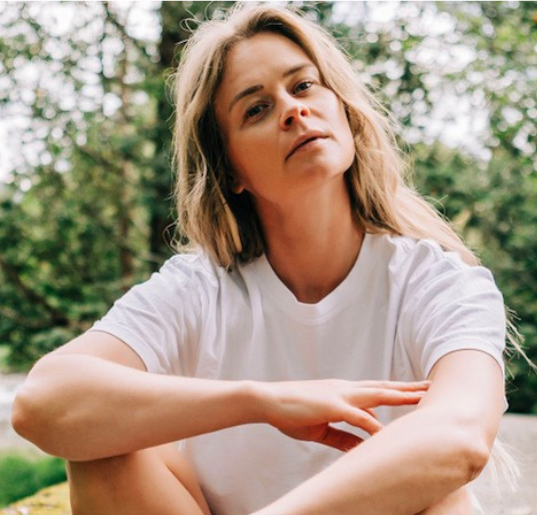 Jane Wren writes about intimacy, power, and the price of being known. This is her first work of creative nonfiction.
Image Credit: Flickr Creative Commons/persistentillusions
I can’t believe I’m the first person leaving a comment on this amazing piece of writing. I’m someone who understands violence and pain as the grammar and vocabulary of a love language, but what you achieve here is opening the cover to that book, taking the top off that puzzle box, and making that language available to people who perhaps never considered it. As you go through your own levels of understanding and accepting it you lead others along the same path. Intellectually, not physically, as you experienced it. But it creates a desire to experience it, as you did.
This is so true, on both sides of the equation> “Violence—no one tells you this—is a drug.”
Now you have told us.