Interviewed by Leslie-Ann Murray

 I have a Jayne Anne story to tell you, even though she might say, “all stories are fiction.” It was the spring of 2011, and we were sitting in our final graduate writing workshop at Rutgers Newark. We were all gathered around a large oak table, discussing a student’s work, and Jayne Anne took out a black lace folding fan, flipped it open like a contestant on RuPaul’s Drag Race, and started fanning herself. This move was so cinematic, so effortless, and mysterious that it scrubbed the chatter from the room. It did not help that she looked like a gothic debutante with her signature long, flowy black dress, juxtaposed with her lush black hair and swarthy complexion. We were amused by her antics, and Jayne Anne was unaware that she was the subject of our pleasure.
For over fifteen years, Jayne Anne has been an icon in my writing life. In our graduate writing workshops, she taught us how to leave readers hungry by slicing away the fat from our sentences. She impressed upon us that the writing process is very slow, and we have to be persistent and truthful to the narrative voice, characters, and storytelling. Even when my life became busy, and my writing became more and more distant from my core identity, I’ve held on closely to Jayne Anne’s words.
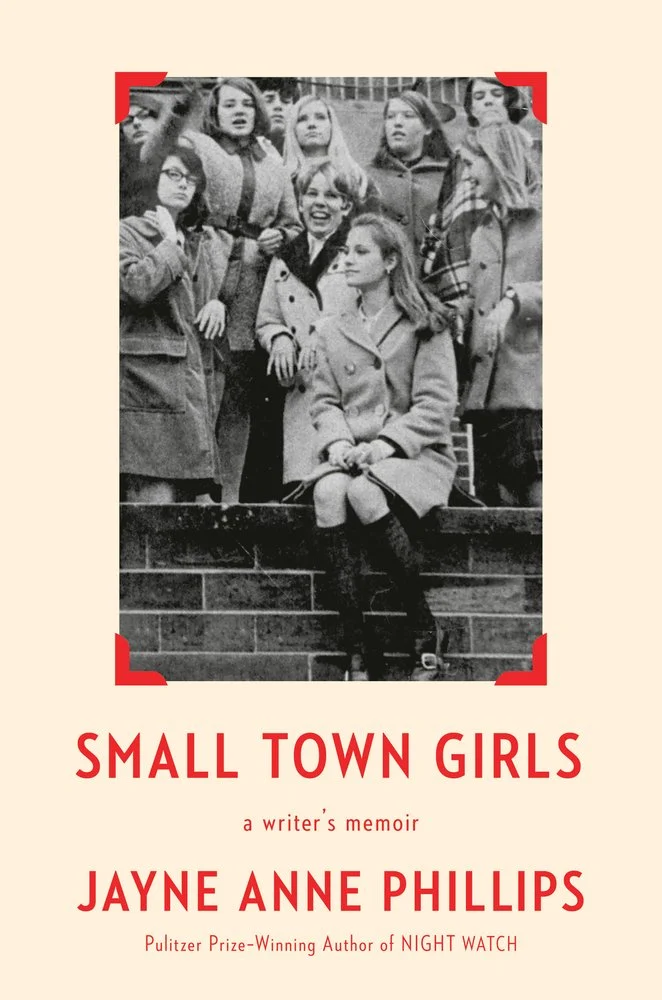
I recently interviewed Jayne Anne via Zoom about her latest book, Small Town Girls: A Writer’s Memoir (Knopf; April 2026), and like a good writing professor, she provided me with more literary lessons without being prompted. When we came to the topic of sustaining a writing practice, she said, “People always have this saying, ‘Well, it’s not brain surgery,’ but writing is brain surgery. It’s very complex and evolves over a long period of time. It can become very subterranean, where the writer really has no sense of where they are in space.”
In Small Town Girls, Jayne Anne takes readers on a political, cultural, and artistic journey from her small town life in West Virginia to Iowa to Boston and to a suburb in New Jersey. The essay collection is pure Jayne Anne magic—where time ebbs and flows throughout her essays, her sentences are haunting and evocative, and while this is a nonfiction collection, we are informed that nothing is what it seems because “all stories are fiction.”
What anchors this essay collection is Jayne Anne’s lush celebration and praise for her hometown in West Virginia, but her criticism of the myriad ways capitalism and greedy politicians have devastated West Virginia and its people. She reminds us that with intense love comes critique. After reading Small Town Girls, I realized the reason my classmates were struck by Jayne Ann’s audacity when she whipped out her hand-held fan was that she was acting on her own accord. She was acting like a woman who had crafted the life she wanted, honored her passion, dreams, and future on a deep-rooted level.

Leslie-Ann Murray: Do you think Small Town Girls are underestimated or misread?
Jayne Ann Phillips: Small towns in America are very different from the suburbs or from urban life. It’s isolated, and in the case of West Virginia, its isolation is really intense because of the deeply forested hills, a sense of fecundity and nature that is both magnificent and exploited. Being raised in a small town, especially in West Virginia, you are raised with this intense sense of nature, and you are also isolated from the larger towns, but also from politics and a roaring economy, so you access your identity within these contrasts.
As for the question of small-town girls, they are underestimated. In fact, all women are underestimated and misread, and this is very intentional. I mean, the very phrase ‘small-town girl’ is supposed to imply someone who is sort of unsophisticated, inexperienced, and someone who can be dismissed. The book’s title is ironic in a way because small-town girls are very special people, and many of them come to maturity with a deep sense of self because they encounter a multitude of realities.
LAM: In the essay “On Not Having A Daughter,” you said, “After all, a woman with no mother or daughter is a woman alone on earth.” This is such beautiful and haunting imagery, and it speaks to your matrilineal lineage. Can you talk about the powerful connection you’ve had with your mother, and the one she’s had with her own mother?
JAP: I think that we all go back, whether it’s positive or negative, to that infancy with our mothers, when we are not a separate identity, we are a kind of melded identity. As a result, my mother is a big figure in the book. Do I feel alone? Not exactly, but I do miss living with her constant presence in my life. Whenever my mother spoke about her mother, her eyes always moistened because throughout her life, she felt that absence and that loss. Through your relationship with your mother and sisters, you understand how to show up in the world and exist. There’s this depth in having these close relationships — it makes you feel rooted. It makes you feel rooted, and it makes you look for that kind of depth and intensity in your relationships with others. It makes you a little uninterested in superficial relationships because you want someone who’s really going to show up and be able to talk and process things.
LAM: In your essays, you highlighted that throughout history, West Virginia has been plundered by greedy capitalists and politicians, and the ramifications of these actions continue to haunt the state. After reading these essays, I felt an immense sense of injustice and anger for West Virginians.
JAP: Good, I’m glad that happened for you because that’s what I was trying to do. I had a writer friend who would get me to read his manuscript before he submitted it to his agent, and when I was ready to speak to him about his book, he’d ask, “Where did your eyes get wet?” I thought that it was such an amazing thing to ask. Of course, that kind of emotional response is based also on the intellect and on a kind of piling up of images and thoughts, and the feeling is different for every reader, but this emotion is an important dilation for every reader. For me, even the saddest book has a kind of triumph to it because there’s this kind of strength in the fact that people can write it down.
LAM: There’s a sharp awareness of class running through the book, but it’s never announced — it’s felt in gestures, spaces, silences. What do you want us to learn about class in small towns?
JAP: I remember finding my parents’ tax returns at some point, maybe twenty years ago, and I saw that their combined income was $10,000. Of course, it was the 1960s and amounts are so incredibly small compared to today, but small towns were a place where you could live well with not much money. Class always existed and created some division, but for every West Virginian, our towns and resources have been exploited by corporations, and yet, these towns thrive because of the human beings in them and their incredibly intricate connections to one another.
LAM: Some of the essays feel almost dreamlike in how memory moves—details sharpen while other things blur. Some of the essays contain all of the literary elements of a fictional work, yet these are stories about your life. How did you arrive at that kind of immersive, fluid experience on the page?
JAP: Someone said to me long ago, “When I read your fiction, I feel as though I’m inside it.” This was very pleasing to me because that’s what I want to prepare for the reader. I want them to be able to really slip inside the narrative and to feel the experience of the character. We’ve all had that experience of a book that really influences us, as if the characters in that book feel real. They’re not simply “paper” constructs that we leave behind when we finish the book — they stay with us, and it’s just amazing that a writer can create a reality like that.
To get there, in writing, we have to leave room for what we don’t know, and in these essays, I was doing that as well. I used to tell my students that writing is comparable to that space movie where the astronaut gets shoved off the ship, wearing the silver suit, with a long tube connecting him to it—and then the tube comes off somehow, and he just drifts out into space forever. For me, that’s what writing can feel like: very subterranean, where the writer has no real sense of where they are in space or where they are in the narrative.
LAM: In the essays “Premature Burial” and “On Not Having A Daughter,” the conclusions feel more lyrical, mysterious, and abstract—almost reaching beyond the concrete. Can you talk about what draws you to that kind of ending, or what you’re trying to access there?
JAP: If I have a religion, then it would be to have a sense of presence in the world and cosmos. There have been times in my life when I have felt a very strong sense of presence. Once, in New York City, I was going to cross the street, and I heard my name from the other side of the road. But it was not really like a voice calling out, and I looked, and nobody was there. Who was calling me? I think our present, future, and past are always rubbing against each other. I think the core of being and the core of consciousness is that it really travels on all those circuits at once, and I hope that comes through in these essays and the fiction that I write.
LAM: In Small Town Girls, we see how art, particularly the cinema, has influenced you as a writer and thinker. Can you talk more about the importance of art in your life?
JAP: I feel like writing and art are so important right now because we need a sense of connection, a sense of hope, and a sense of awe. If you read about the Russian Revolution, or the Depression, or other times in history, like the Civil War, you realize that people have gone through tough times and they have always survived. We will survive these difficult times, too, and one way to keep our resistance and stories alive is by bringing art into our lives. We need to feel awe-inspired. We need to be able to look up at something and feel, “Wow.”
LAM: Does art help you to connect to your own writing?
JAP: Yes. When you sit down to write, you spend a long time just sitting there, at least I do. But you’re staying inside a kind of frame of mind that’s like a reverse meditation. As a writer, you don’t meditate to clear your mind; you meditate to get inside the material that you’re working with. There are moments where you really connect, and you’re almost not connecting with your personality; you’re connecting through the work of art itself, which is a sort of connection with something bigger than ourselves. It’s really an indescribable thing.
I think anyone who tries to write is very fortunate, no matter if anyone else reads their work or not, because they’re putting themselves in that position. This is really true for me, and I would wager it’s true for every writer.
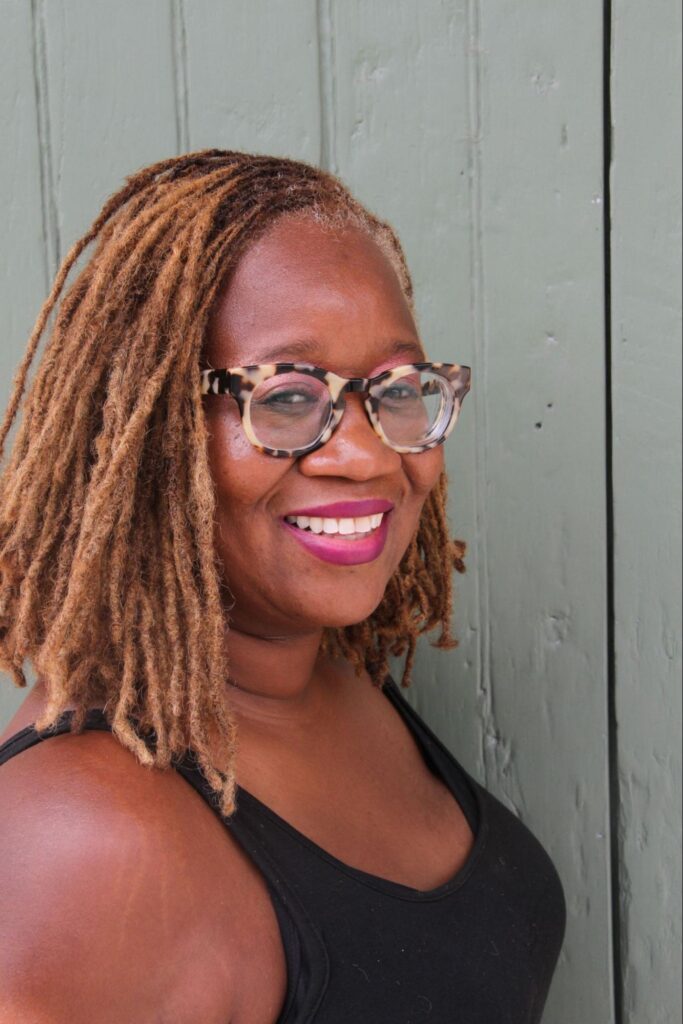 Leslie-Ann Murray is a fiction writer from Trinidad & Tobago, and a citizen of East Flatbush, Brooklyn. She created Brown Girl Book Lover, a social media platform where she interviews diverse writers and reviews books that should be at the forefront of our imagination. Leslie-Ann is working on her first nonfiction essay collection, “This Has Made Us Beautiful” about incarceration, race, immigration, education, and the overwhelming impact of these political forces on herself, the boys and men in her life, and the women in her community. She has been published in Poets & Writers, Zone 3, Ploughshares, Blackbird Journal, Adroit Journal, and Salamander Literary Magazine.