

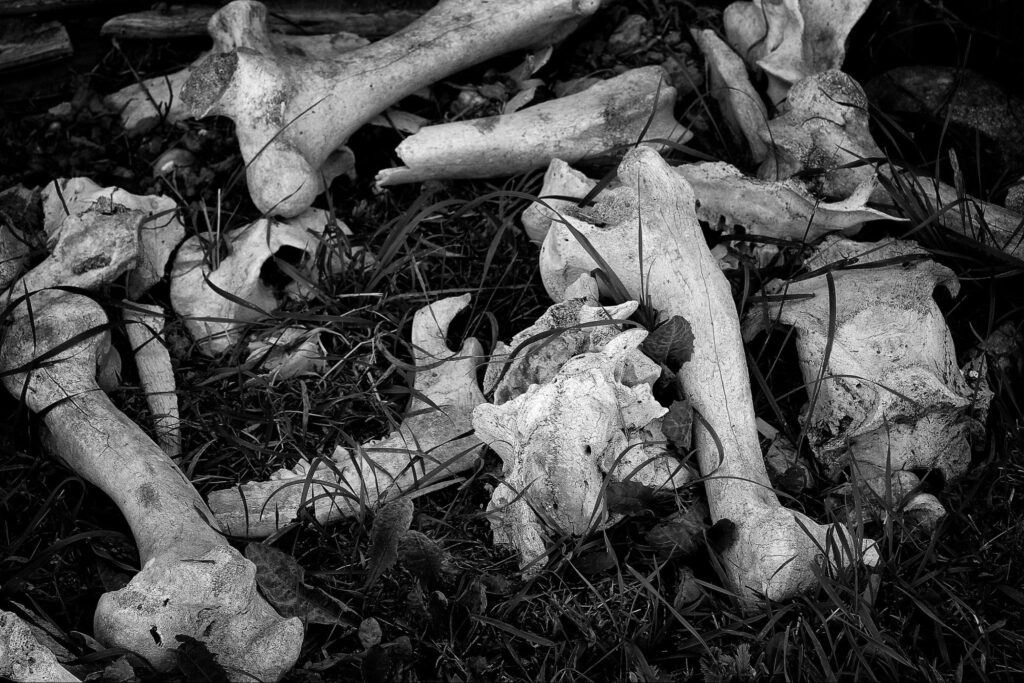
There’s an island in the middle of Lake Superior that’s home to moose and wolves. I spent a week there once, after a breakup, looking for moose bones. It was a research project; I was a volunteer. For seven days, whenever one of the five strangers I was with spotted a bone, we’d spread out like a search party and sink our trowels into the flesh of that island. There were answers inside, the researchers said, reasons why some years the moose thrived, why others they faltered. They said a single spiral of vertebra, even a tooth, could tell the story, the downfall of a single life. I’m no scientist, but I was heartbroken, and I thought that if I went to the most remote place I knew, if I stared my loneliness straight in the eye, it might cure me of it forever.
Not long before that expedition, I fell in love with a cowboy, a ten-gallon-hat-wearing man who introduced me to a beer called Moose Drool. We stayed up late, clinking bottles covered in dew, and when the rest of the dude ranch fell asleep, I rode his horse bareback, my hands wrapped around the company of his torso. I felt what it feels to wake up in a man’s arms, the heat of his hands, the comfort of his gaze.
Like deer and elk, sheep and goldfish, the word “moose” doesn’t change when more than one are gathered. Single or plural, alone or in a crowd, the sentiment stays the same.
One day on the island, we found a kill that was fresher than the others. No sunken bones, just moose parts left by the island pack. I was handed a saw and a metatarsal still hooved and asked to clean it so it wouldn’t stink up our camp. It’s hard work, separating hide from bone, slow going, but finally I had enough so that I could grab the hide with the heel of my hand and pull. It came down clean, like a sock. Later, after I had smiled at the other volunteers and waved goodnight, I sat alone in my tent, exhausted and bruised by the endless search. I thought of the cowboy, of all the loves that had come and gone, and ran fingertips mooned with soil over the cuts and scrapes that marked my body. Every night the landscape changed.
Unlike other members of the deer family, moose don’t travel in herds. They need so much they can’t afford to share, so they forage alone. A full-grown, healthy moose can outrun the island pack, out-swim it, too. Moose can kick in all directions. They just don’t have an instinct for staying together.
After we broke up, after I moved away, the cowboy visited once, arriving at O’Hare, a spectacle in that hat. Although it was me who told him he couldn’t stay — I believed, back then, that there was strength in solitude, that I needed to wean myself of all traces of togetherness — I pressed my body against his and foraged for the things I wanted to do without. In terminal two, as the crowd parted around us, I inhaled leather and dust, the hot hair of his horse, and the stars of the big sky he carried with him. Deep in the fibers of his wool shirt: the scent of not being alone.
Scientists say that if the moose of that island were left to their own devices, if the wolves stopped picking them off, the moose would eat the island bare. They’d strip it of balsam fir until there was nothing left. They’d starve. But I can’t blame them for trying, for being unable to stop. It’s been years since that expedition — I no longer remember the cowboy’s face — but I can still feel the weight of those bones. Once coursed with blood, wrapped in muscle, I can hear them rattling, like firewood in my tired arms.
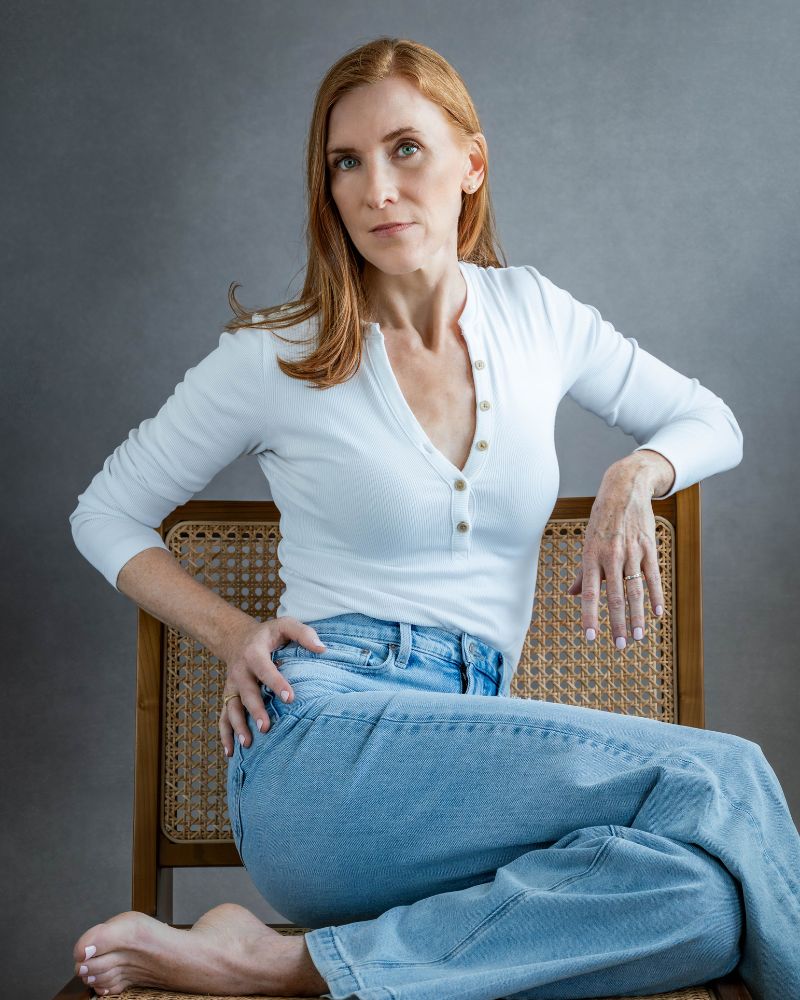 Sandra Carlson Khalil grew up in Minnesota, but has called the Middle East her home for over a decade. Her stories have appeared in SmokeLong Quarterly, The Forge, Flash Frog, and The Citron Review. She is a 2026 Best of the Net and Pushcart Prize Nominee for her creative nonfiction. You can find her work at www.sandracarlsonkhalil.com.
Image Credit: Flickr Creative Commons/arbyreed

exhilarating read. Also, learned a thing or two about moose, their need to eat…and to be eaton. I yearn to learn to be alone.