
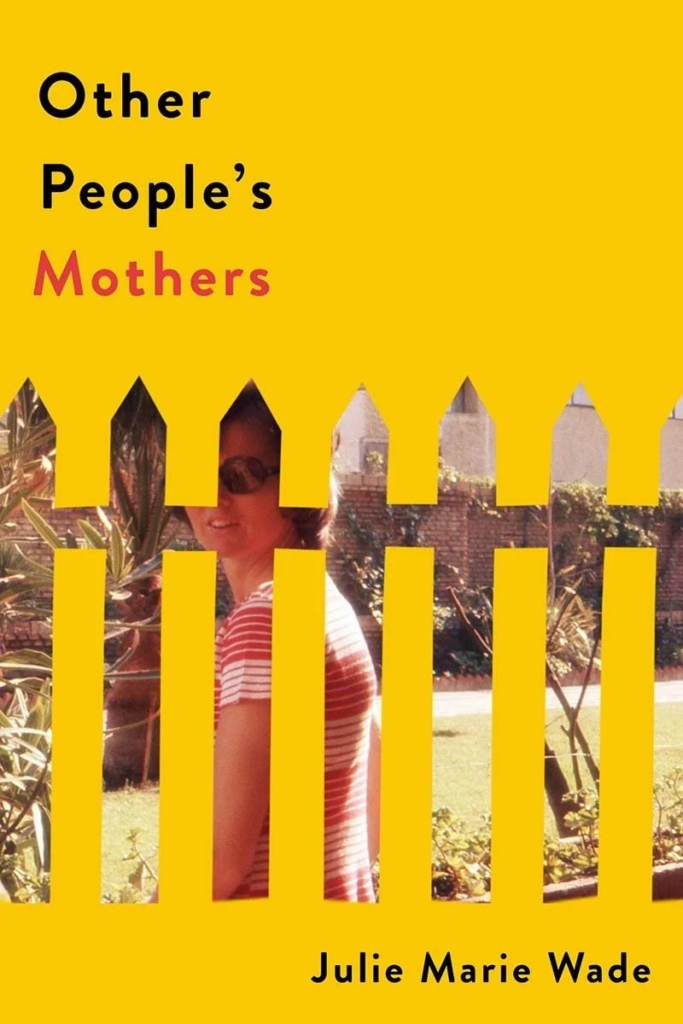
 Recent years have offered an abundance of exquisitely written memoirs of matrescence. With Other People’s Mothers (University of Florida Press; Sept. 2025), Julie Marie Wade turns this form inside out. Through this series of essays about mothers Wade encountered in her conservative West Seattle childhood, she invites the reader into the experiences that forged her early resolve to never become a mother herself.
Wade, a contributor to Hippocampus Magazine, is the author and collaborator on more than a dozen books of poetry and prose, including Telephone, reviewed by Tyler Barton in 2021. She excels at developing simple frames that generate abundant content, and this skill is on full display in Other People’s Mothers.
These nine essays stand like identical houses on identical lots: the magic is in each interior. Each one is named for a mother who made some indelible impression on the author as a child, with a subtitle teasing the theme: “Mrs. Lennox [Or a Study of Change as Crisis or Caricature],” and “Mrs. Arlington [Or a Study of Apocalypse as After-School Special].” The experience of reading these essays in sequence felt somewhat like trick-or-treating; but rather than getting a mere glimpse into a foyer, I got to sit at each kitchen table, learn family recipes and family secrets, and leave each home with a head full of questions and a racing heart.
We meet characters like Mrs. Saunders, whom young Wade quickly identifies as one of the “born-to-be-mothers,” and is the “best kind of mother: expecting.” We meet Mrs. Lennox, who “stood in the kitchen talking on the phone, the long cord curled around her fingers as she watched us, her expression sullen, her lips never turned up in a smile.” Wade’s close character studies remind us that even in the stiffest, most starched Pleasantville where “Dockered dads make chit chat in their awkward semi-circles on the lawn,” there is indeed a village of sorts. That young girls see around them, in their own mothers, aunts, their teachers, and in each of their friends’ mothers, an example of how a woman might live her life.
In the first essay, “Mrs. Mann [Or a Study of the Fates of Different Drummers],” Wade deftly introduces major themes and the stakes of the work: gender identity, sexual orientation, and reactionary politics — themes which animate her body of work.
Here, Wade learns that her and first-grade classmate Steven Mann’s imaginative games with My Little Ponies pose a big problem for both their families. Steven excels at piano and is lousy at sports and longs to dress as Florence Nightingale for Halloween. His parents insist he be He-Man for Halloween, a rather unsubtle contrast. In a memorable scene, Mrs. Mann walks Julie into her decorous bedroom, where, “twisting the fat diamond on her finger and growing red around her ears,” she dresses Julie down for suggesting to Steven that boys and girls aren’t the only kind of people in the world. Mood is projected onto setting: driving home from the Mann’s house, the narrator describes “evergreens like spears,” expounding, “just because people string lights through the branches this time of year doesn’t mean the subtle hint of violence disappears.” This subtle hint of violence threads through the text, at times erupting.
Wade writes closely from the perspective of her young self. From these earliest observations of how girls and boys must behave the themes mature along with the narrator. As the essays proceed, we accompany her through dawning realizations about how families form — it’s not the stork — and how they shatter. After an unsatisfying inquiry into whether angels are real, the narrator reveals her central endeavor:
“My heart cannot be plumbed, let alone parsed into language… But inside my mind, which I can picture like a long hallway that leads to a messy dressing room, I set about the task of sorting my thoughts into piles — what I’ve been told versus what I believe, what I doubt versus what I know for sure.”
Wade’s writing is hyper-detailed in a way that involves little “perhapsing” and requires a leap of faith on the part of the reader that indeed even “the toes peeking out from [Mrs. Fischer’s] dark huaraches were painted to match her pants,” a leap that this reader was glad to make into the thoroughly elaborated and sharply specific world the author constructs. I was moved by the clarity Wade voices in her acknowledgments section:
“Other People’s Mothers is an honest account of my coming of age. As with all literary translations of lived experiences, memory and craft have been mobilized in service of story.”
Reading Other People’s Mothers called to mind the dazzling experience of reading Rachel Cusk’s Outline trilogy. Wade’s approach differs, yes, in presenting a child’s view, more interiority, and clearer delineation than Cusk’s writing. But like Cusk’s fiction, it reminds us that we construct a self not only through our most intimate relationships but also through our random and sometimes fleeting encounters with fellow travelers.
Reading Other People’s Mothers of course sent me back, to the Dodge Caravans I crowded into as a kid, the low pile carpets in the finished basements where I unrolled my cold, shiny sleeping bag at the end of a row, the slatted lounge chairs where tan moms with lustrous pink lipstick gathered at the pool, and the theories I developed for why my own mother sat apart. It’s the kind of reading experience that makes one not only wish to keep reading, but also, start writing.
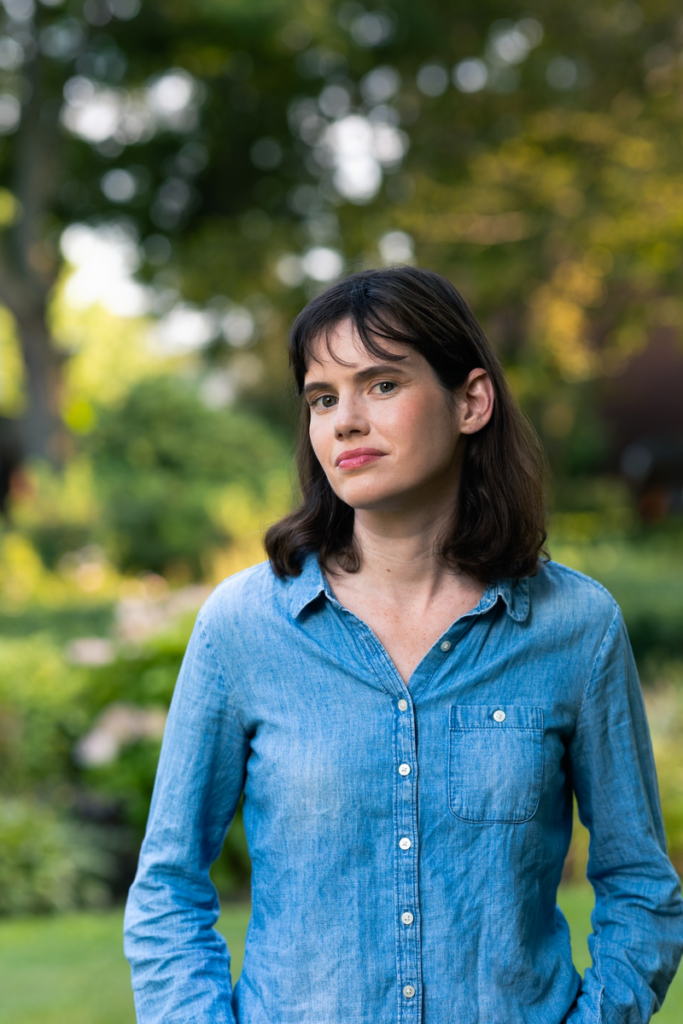 Amy Wise Rothschild is a poet and essayist living in Cambridge, Massachusetts. Her writing has appeared in outlets such as Tupelo Quarterly and The Bellevue Literary Review (poetry), McSweeney’s Internet Tendency (humor), and The Atlantic (reported essays). Amy is working on a memoir that examines the historical roots and changing nature of the teaching profession, drawing on her years teaching preschool and kindergarten.