

Two years ago, the phone rang, the number unlisted. Hesitant, I answered. A sheriff’s detective in Texas came on the line.
“Is this a relative of Nathan Porter?”
I glanced at my daughter, Pearl. She was toying with her iPad on the other hotel bed. It was the final day of a mommy-daughter beach trip to Florida. Earlier, I had plucked a plumeria blossom and put it behind her ear, which now sat on the nightstand between us, its fragrance lingering.
“Yes. My brother.”
My daughter whipped her head up at the mention of her uncle, a person she had not seen since she was in kindergarten, a person she long ago stopped asking about. Had I known what was coming, I would have left the room. Instead, she heard it all, largely through the look on my face.
Nathan had left a hospital against medical advice, the detective explained. His blood sugar and blood alcohol content were both far above safe levels, which I’d later learn was alcoholic ketoacidosis, a life-threatening medical emergency. These were stunning facts to take in: Nathan was hospitalized? Nathan was struggling with alcohol?
I still don’t know how the sheriff’s office got my number. It was the first of many emotional shocks to come.
“His boss is very worried about him,” the detective said. “Is he with you?”
With me?
With me?
With me?
“Sorry, I haven’t seen him.” I did the math in my head, baffled at the passage of time. “It’s been almost five years.”
As soon as we hung up, I texted him. “Nathan, WTF? Are you OK?”
No response, per usual.
***
Before the phone call, as far as I knew, Nathan was still a strict vegan, a long-distance runner, a multi-instrument musical virtuoso. Growing up, he could be aloof, but never to a degree that I worried about him. And he always made time for his niece — like on her fifth birthday, when he patiently let her trace his hands over and over on a giant piece of paper, blue Magic Marker staining his skin.
But several years ago, Nathan had grown increasingly silent. When I texted, he’d make excuses for why he couldn’t hang out, often blaming a new software project at work. He sounded normal, so my suspicions weren’t raised, just my temper. Once or twice, I lashed out at him for what I perceived as inexplicable emotional distance, demanding to know how work could possibly be so all-encompassing. My daughter often asked about him, and I had to make up bullshit reasons for Uncle Nathan’s distance.
My provocations were pointless: Bit by bit, he disappeared from our lives.
Confused and hurt, I soul-searched for reasons, eventually deciding I would never know why, assuming it most likely had to do with him wanting to cut ties with his family for reasons I couldn’t fully understand. I accepted that this was how our relationship was going to be: estranged. I even grieved the ambiguous loss in therapy, trying to put it behind me.
With that phone call, it all changed: Now my daughter is eleven, and Nathan is possibly dying?
***
After flying back to Austin the next day, I dropped Pearl off with my husband Carter and drove straight to Nathan’s house, about an hour away from ours. I was relieved to see his car in the opened garage. The lawn was mowed, the landscaping tidy. But as I looked closer, I noticed cobwebs forming around the car’s tires, and bags of trash piled on the other side of the car.
I walked to the front door. I knocked. I rang the doorbell. I shouted his name. I knocked again. I stared into his video doorbell, wondering if he could see me. No answer. I tried the doorknob. Locked. I went into his garage and knocked on the door inside, stepping around the trash. No answer.
Out of ideas, I walked to a neighbor’s house and asked if they’d seen him recently. Yes… but maybe no? The neighbor wasn’t sure, really.
I wasn’t going to let him avoid me this time. I went back to his door. I couldn’t stop knocking. If I had any sisterly intuition left in me after these years of not speaking, it was to keep knocking.
Eventually, I heard sobbing. Someone was inside.
“Nathan? I AM NOT LEAVING!”
And then he was there, the memory of him opening the door seared into my brain for the rest of my life. It was my brother, but not the one I knew. His hair and beard were unwashed and askew, his shirt stained, his toenails long and scraggly. He had gained at least a hundred pounds. He smelled. The house smelled. This was bad. Very bad.
And it had been bad for a long time.
***
I don’t know who reached out for the hug first, but it lasted several minutes.
“I’m so ashamed.” He slurred it in between sobs. He caught his breath, only to fall apart again as he hugged me harder. “I’m a drunk. I live in squalor.”
“It’s OK, baby,” I said, my mind reflexively answering as if he were my daughter and I needed to comfort her. My entire body shook: What the hell had happened?
After the long, terrifying hug, I asked to come inside. There was no clean or open place to sit. The living room couch was blanketed in cat hair, but I tried to sweep some of it away and sat down. A live bird-feeder camera streamed on the TV.
“Is that for your cats?”
“No. Me,” he said, his breathing raspy. He looked at the screen. “I like birds. That’s a pine siskin.” I smiled, until I noticed he had started crying again, the kind of crying where no sound comes out because the pain is so intense. Eventually, he explained he had lost his older cat Roger to cancer a month or so earlier. On the drive home from the vet after Roger was euthanized, Nathan had plowed into the garage door, damaging it while he battled withdrawal tremors. The garage door was now stuck open, and only his other cat, Harold, was around to keep him company.
***
While Nathan tried to catch his breath, I turned to look around for Harold. I hadn’t yet detected much direct evidence of alcoholism, but now I panicked. Empty beer, whiskey, and wine bottles covered every kitchen counter surface, including the stove and microwave. The fridge door was broken, the sink obviously clogged and molded over. Stacks and stacks of old cat food bags spilled out of pantry shelves. What looked like dried vomit — or maybe blood? — coated the floor in places. His dining room had no furniture. Instead, it looked like a recycling dumpster, full to the ceiling with cardboard boxes from the constant home delivery of alcohol, food, candy, computer equipment, and whatever else he impulsively ordered while intoxicated.
At the sight of this, I wanted to leave — to bolt, to never look back. My brain struggled to comprehend what I was experiencing, and it told me to run, that my safety was at risk. The squalid house and the adrenaline coursing through me were so disorienting, I questioned my reality: Was this really happening?
It would become the first of many times I would wrestle with fight or flight. This was my baby brother, my closest living relative. I loved him dearly, missed him dearly. But it was as if he had been infected with an illness, and it was spreading throughout his house.
I wasn’t yet capable of deliberating the trade-offs, how when it comes to addiction, loved ones often pay a high price. Instead, I thought: What would I want Nathan to do for me? It felt like a selfish way to look at the situation, but it also gave me the strength to see through the panic.
So I stayed. I listened. I told myself I would do whatever it took.
***
From what I pieced together that night, his life abruptly worsened around the start of the pandemic, after a bad breakup with his girlfriend. A leg injury put a stop to his running. Drinking apparently became a cheap, legal way to numb himself, and this search for numbness quickly overtook his life. Diagnosed with ADHD since childhood, he said he knew the alcohol was winning when his daily medication routine did nothing to stem the impulsivity. As he got worse, he kept telling himself he’d reach out to me and our parents once he got better, once he was no longer ashamed.
I asked if he wanted help. He said yes, absolutely. His emphatic answer turned my fear into blind determination: I was not going to let him fucking die, not on my watch.
But before we could make concrete plans, he got lightheaded. He excused himself and went upstairs. I heard a bathroom fan circulating. I naively thought he was showering or brushing his teeth. But I’d later realize he was vomiting right onto the floor, a bleak ritual that subsumes the end-stage alcoholic’s life. He then passed out on a stained, bare mattress, another part of the ritual, red-flag behaviors that get filed under “self-neglect from severe alcohol addiction.” At that point, he had money. He didn’t have to live this way. And yet, he did.
Terrified at his sudden silence, I ran upstairs and sat down on his bed to jostle him awake. I felt my denim shorts soak through with something that I’d later learn was urine. More panic. He grabbed my arm.
“Call 911,” he whispered.
If I hadn’t ran upstairs, I’m almost certain he would have died that night.
***
He spent a week in the ICU. Most days, I sat dazed in the corner of his room, the Texas sun scorching my back through the small window, hoping my presence kept the staff from writing him off as just another lonely drunk.
From the cafeteria, I called his job’s HR department, trying to convey how ill he was without explaining the whole addiction part, fearful they would fire him. I also found an inpatient rehab where Nathan could go after the ICU, and when Nathan heard this, he cried — from relief. But then the rehab asked for his hospital charts and turned him away for being too “medically fragile.”
What? He couldn’t go to rehab? He couldn’t go to rehab. What was I supposed to do with him? Let him go back to his squalid home? The hospital’s social worker had no answers. Faced with no other choice, I took a leave of absence from work and set about helping him rebuild his life at an apartment, one close to us.
He had twelve weeks to get back on his feet, a small safety net.
When he said he hated alcohol and would never order it on DoorDash again, I believed him.
I know he believed it, too.
***
On that first night in the hospital, before he had been intubated, Nathan asked if I could take care of Harold, his surviving cat. Carter and I went to Nathan’s house the next day to search for the big orange tabby. We found him, but he was terrified and took off running throughout the house, which meant exploring every room, calling out for Harold while finding one haunting scene after another.
“You can just feel how much Nathan hated himself,” Carter said as we entered the guest bathroom and stared, stupefied, at used tissues piled up nearly to the ceiling. When I opened the other bathroom door down the hallway, I retched and nearly passed out; the fumes were excruciating. I slammed it shut, never to open it again. This room was clearly the center of the trauma, the illness, the depression, the slow death.
When I can’t sleep at night, or wake in a cold panic, it is usually this room that I am trapped in.
***
After finding Nathan, I was plagued by the thought: What, if anything, do I tell our parents?
In healthier families, this decision would be a no-brainer: Of course they needed to know. But my family was not healthy. Our mother in particular was volatile, prone to self-harm, likely due to undiagnosed borderline personality disorder. Nathan and I had long ago decided she had the emotional capacity of a young teenager. Our father was more stable, at least in his old age. When we were kids, he had lost his temper at times and hit Nathan on more than one occasion. In recent years, though, he had shed the anger, even becoming our mother’s caretaker as her mental health declined.
During Nathan’s years-long silence, they would ask me about him, hoping I had an update. It wasn’t until I banged on Nathan’s door that I realized how fucked up this was: Why hadn’t they checked on him? Why was this left to me? And: If they had been more proactive—more caring—would Nathan have been spared from end-stage addiction?
If there was any lesson to be learned from this, it was to never accept prolonged and inexplicable silence from anyone I loved.
Ultimately, I chose not to tell them anything. For weeks, I did not speak to them at all. I was too tired to manage their feelings, too.
***
He stayed sober right up until he went back to work, and then it all fell apart again. The relapse hit him hard and fast. He threw red wine bottles at the wall at 3 a.m. out of rage toward his illness. He also called my father, finally revealing his addiction. This was a relief—now I could at least talk openly to my father about it, too. And I could leave it up to him to decide what to share with our mother, who had a history of suicide attempts and bouts of psychosis. But beyond that, not much changed between my father and me, perhaps because we now had two family members with severe mental illness, which limited our time and energy to have emotional discussions. By the time the practical discussions were out of the way, we were both ready to collapse.
Still, this was far better than him not knowing, and me not sharing.
***
In those early days, I walked around in emotional shock, a phrase that felt bland and overused. To say “I have emotional shock from finding my brother nearly dead from alcoholism and squalor” didn’t even begin to explain what I was going through. It meant exhaustion, poor sleep, intrusive memories, blanking out in the middle of a task, short-term memory loss, decision fatigue, weepiness, anger, a racing heartbeat, bouts of fear for no immediate reason, a bitterly pulsing migraine, snapping at others for minor quibbles… an endless cycle of this, all while having to keep it together in front of my coworkers, in front of Pearl, in front of everyone.
My brain could only handle so much of the stress, and sometimes my efforts at containment failed.
One time, while picking up groceries, the curbside pickup associate, a young woman who was aggressively adorable and chipper and absolutely oblivious, asked for my ID. “Oh, I love your name! Joooooy! It’s so pretty!”
“Thank you,” I said. “It’s….” She waited for my answer, a placid look on her face, not rushing me. “It’s hard to live up to sometimes.”
She tilted her head, her smile drooping as her chin puckered. “Noooooo, don’t say that. That can’t be true?”
The rush of concern made me feel seen, which was rare. I had tried to talk to friends and family about Nathan, but these discussions always left me feeling invisible — everyone seemed to think they knew what alcoholism was, yet they had never rescued someone from dying on a urine-soaked mattress. If they did seem willing to listen, I inevitably felt like I was “trauma dumping” on them, and had nothing to offer in return. So I withdrew from most of my friendships, too tired to try.
Now, perhaps sensing it was safe to do so, my sorrow exploded out. I started sobbing. I lifted my phone as if to indicate I was in the middle of a stressful conversation. “I’m so sorry. It’s my brother. He’s sick. He keeps drinking. He… nearly died. He…wants to die.”
She reached across the car window to touch my shoulder, surely violating some sort of company policy. “It’s OK. Both of my parents, they…they did stuff like that too. It’s such a helpless feeling. I don’t talk to them much anymore, but it’s still so sad for me.”
Somehow, this stranger had breached the part of me I had tried to wall off. While it was comforting to have a rare moment where I could be honest, it also was scary: Despite my best efforts to be contained, I had completely lost it. In a parking lot. With a random person.
And then there was Pearl. Nathan had not seen her yet — at his request, he avoided her, stating he was too embarrassed by his appearance. But she remembered the phone call and could see my ongoing exhaustion and stress. This meant his name became less like a person and more like a symbol. I’d just have to say it, and she knew: I wasn’t doing well.
One day after picking her up from school, I spaced out on her as she asked for a strawberry milkshake, which had become her favorite treat. I didn’t answer her, so she asked again. And again.
I finally snapped out of my mental cloud. “NO,” I answered in a stern voice. “Please stop asking me; this is driving me NUTS!”
“WHAT? Why?”
“We just can’t. Not today.”
“That’s not fair. That’s not an answer.”
Lately, as her mind shifted developmentally from kid to tween, “an answer” meant not just yes or no, but also the rationale. Her sense of justice was impressive, but exhausting.
“Why are you so mad at me?” she asked when I had no response.
I felt guilty at her rush to blame herself. “No no no no, it’s not that. It’s not about you. I am so tired. I can barely drive. I just want to get home.”
“Oh, it’s Uncle Nathan, isn’t it? Is he drinking?” She sounded slightly sneery, like he was a bit pathetic to her. She didn’t know what “drinking” meant, but she knew it was exasperating for me, whatever it was. I didn’t want her to hate Nathan, though it was understandable. He was draining me, though not because he wanted to.
So I explained yes, he had relapsed, which meant he was drinking alcohol again, because he was addicted. And when this happened, it was all he did, all day long, not even eating or showering or sleeping, and now I was pleading with him to go to the hospital so he could stop safely.
“He needs a hospital for that?”
“Yes. When a person’s addiction is really bad, they need doctors and special medicine. You may have heard people joke about ‘screentime addiction’ or being a ‘chocoholic,’ but for a lot of people, drinking alcohol is very scary and serious. They need a lot of help.”
She sat silent for a minute. “Will he be OK?”
“I don’t know,” I answered. The odds were not in his favor. “He could die. He’s very sick.”
“If he does, will you be OK?”
I didn’t want to scare her. I didn’t want to scare myself. I didn’t want to do what I did in front of the curbside lady. So I did my best to disassociate, and I pretended I was on a TV show talking to my TV daughter.
“Yes, I’ll be OK!”
She saw right through my chipper tone.
“Be honest, Mom!”
***
After months of this, I fell into an existential depression: What did any of it matter? My day job as a website editor felt especially tedious and pointless (and a lot of it was). But my love for creative writing began to feel that way, too. Before I had found Nathan, I had been revising a memoir draft about the impact of our mother’s mental illness on my own mental health. The manuscript had won two awards and seemed to stand a good chance of being published. But in the weeks after the phone call, I had to shelve it — not just because I was exhausted, but because I felt stupid. In the book, I had written an egregiously presumptuous chapter about Nathan, deciding he had “chosen” estrangement as a way to cope with our mother. What if I had let that get published?
To cope, I started to see a therapist who specialized in acceptance and commitment therapy, which asks that clients accept the hardships of life and commit to navigating them with a personal value system. Right away, I prioritized compassion as my top value — for myself, and for Nathan.
I also started reading the Al-Anon forum on Reddit, where I finally saw stories that echoed my own, stories of people devastated by the brutality of their loved one’s affliction. Through this forum, I began to understand the value of detachment, though it was far more difficult to put into action. For me, “detachment” was adjacent to abandonment, a word I used to describe how I felt after my mother’s first suicide attempt. At the time, I was in my thirties, and Nathan was in his twenties. She had survived, but I was forever changed, forever scarred. My mother had wanted to leave the world, regardless of how it would affect her children.
It took years of therapy, but I eventually found ways to harden myself against her, which was important to do because she remained suicidal for years, attempting suicide several more times. I had to learn to “mother” myself through each of these crises, which meant talking to myself kindly and compassionately, which my mother was never capable of, not with me, nor with herself.
***
That was another layer to Nathan’s story that made detachment so hard. Unlike our mother, Nathan makes it a point to treat other people compassionately, going out of his way to do things like thank his nurses and doctors whenever he is hospitalized.
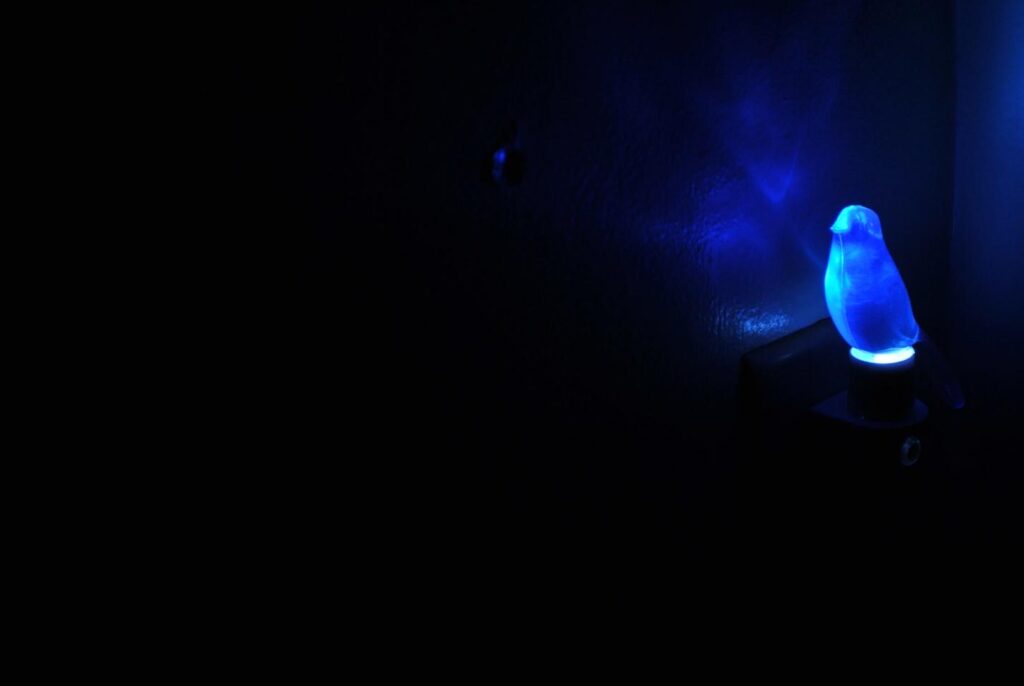
Because of this, a few months into the crisis, I was determined to find something positive to latch onto to fight the compassion fatigue, to remind me of his humanity before his addiction. That’s when I remembered the blue canary nightlight.
I found it when cleaning out the squalor during one of his relapses. He had plugged it into his bathroom outlet, above a pile of crumpled tissues. The nightlight was beautiful but out of place, like a rare wildflower sprouting through pavement.
Out of context, a nightlight didn’t mean much. But weeks earlier, he had texted me a photo of it, along with lyrics from his favorite song, a quirky one told from the perspective of a blue canary nightlight that stands watch and offers encouragement.
“The song is called ‘Birdhouse in Your Soul,’” he messaged. “It’s by They Might Be Giants.”
At the time, I wasn’t sure if he had been drinking, because he was being chatty and nostalgic. The next day, though, I received two messages more indicative of a Nathan bender: “I love animals.” “I love being kind to animals.”
Sweet, simple, declarative. Unlike some people who become violent or vengeful or even just plain stupid, he didn’t rage or make deadly decisions while drunk—at least not the kind that kills others. Instead, he cried, apologized, talked about animals, music, depression, trauma, politics, and a death wish he couldn’t shake.
His always-gentle disposition: I was — and am — lucky that way.
But it also sucks: If Nathan was an asshole, it’d be easier to detach.
***
The nightlight also reminded me of something I had read in addiction literature for families: the importance of being a lighthouse for your loved one, and not the rescue boat. This metaphor gave me permission to find a middle ground, one in which I could live up to my personal values of compassion and kindness without exhausting myself. It also helped me pivot with how I talked to Nathan. Instead of begging him to go to the hospital or rehab, I merely tried to get to know him better. It was a way to stay in touch, to carry the light for him, but with fewer expectations.
“What is your favorite bird?” I texted one evening, remembering the pine siskin on his TV screen that first night.
He didn’t mind the randomness. Many hours later, he answered back. “Blue jays. Or any corvid. But they’re especially clever fuckers.”
Blue jays. Clever, intelligent, and with feathers as blue as his eyes, it was a great choice. If my brother could build a birdhouse in his soul, he’d fill it with blue jays.
***
And finally, magically, there was a glimmer of hope. Nathan called me with good news.
“I just signed up for inpatient rehab,” he said. “I’m going tomorrow. I’m tired of making my big sister cry.”
***
That was a year ago. Nathan did better for a while, and then he didn’t, and then he did again. He’s now in sober housing, and things once again seem to be on the upswing—at least for now.
What his future holds, I don’t know. While I want to give Nathan the unconditional love we struggled to get as kids, for him to truly get better, I know he has to figure out how to do that for himself.
With time, and therapy, I learned how.
Maybe he will, too.
Day by day, things have gotten better. I have accepted that at any point, I could get a bad phone call. It took a lot of work, but I truly have accepted the motto of Al-Anon: “I didn’t cause it. I can’t control it, and I can’t cure it.”
But let’s be honest: On any given day, I still wrestle with a smorgasbord of sorrow.
I feel sad: He may die a “death of despair,” and how will I live with that?
I feel anger at the world: Why do we make it so easy and cheap to drink such a toxic, addictive drug?
I feel anger at myself: Why didn’t I check on him sooner?
I feel anger at my parents: Why did they let him slip away, too?
I feel anger at him: Why does he keep putting us through this?
And yet I also feel awe: He has stayed alive this long, in spite of the state of the birdhouse in his soul. People with addiction are far stronger than we give them credit for.
The nightlight is now in my office, permanently switched on, casting a faint blue light on the worn carpet.
One day, I hope I can return his belongings back to him, especially the blue canary. It will mean he has found peace and stability, at least for now, but a longer “now” than normal.
But if not, I will keep it plugged in, waiting.
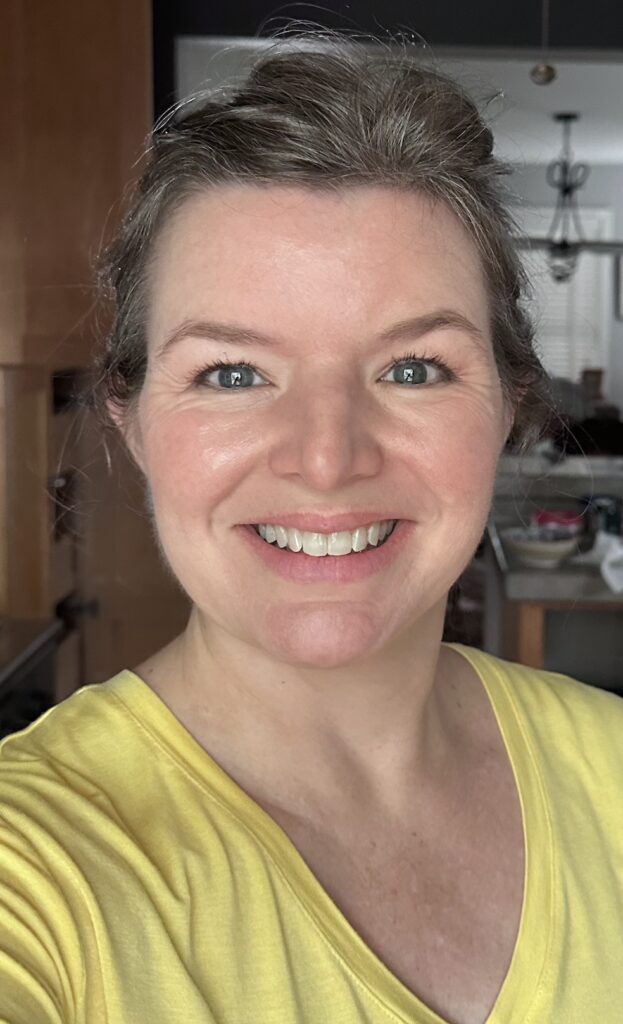 Joy V. has lived on four islands and swam with whale sharks, yet still dreams of worlds unknown. A web editor by day, her writing focuses on resiliency, loss and longing, and the natural world. Her essays have appeared in two anthologies, as well as The Sun, Dorothy Parker’s Ashes, Texas Monthly, Cosmopolitan, The Quarter(ly), 3Elements Review, West Trade Review, and other publications. Her newsletter The Shrieking Cactus is for adult children of parents with severe mental illness. She lives in Austin, Texas, with her husband, daughter, two cats, and an overgrown native garden.
So much good stuff in this piece. Thank you, Joy, for sharing your story. I can’t imagine it was easy to write, especially given the necessary work that went into it — all the thinking, soul-searching, and remembering things you might rather forget — and then, stringing those into a cohesive essay.
It’s important for you to write about this experience. If it was the hardest thing you ever had to write, it was worth your time and effort. Best wishes.
It’s important for you to write about this experience. If it’s the hardest thing you ever had to write, it was worth your time and effort to share it with others. Best wishes.
Thank you, Gary!
So beautifully written and so poignant. I’m on not-quite-as-extreme-yet journeys with two family members. Thanks so much for sharing, and for the ideas of ways to help ourselves as we try to support them. Being the lighthouse and not the rescue boat is my new mantra. Many thanks.
Such a compelling and beautiful story of your love for your brother. And your acceptance. He’s lucky to have you.
Thank you so much for reading!
Beautiful essay. Wishing you and your loved ones peace and healing.
Thank you! 💞