

Tattoos swathed Damien’s* face, neck, scalp, knuckles, and wrists. They swirled along his arms, circled his neck, crept up his forehead, drifted over his scalp. Seeping out of each eye, a single blue teardrop. I imagined them sliding down his cheeks, leaving slick sheens, iridescent as a beetle’s wing.
This was his first speech — the Icebreaker. His opportunity to talk about himself. Damien gripped the lectern with both hands and leaned forward. His eyes skittered back and forth across the chapel. He didn’t introduce himself, tell a joke, or banter about the weather.
***
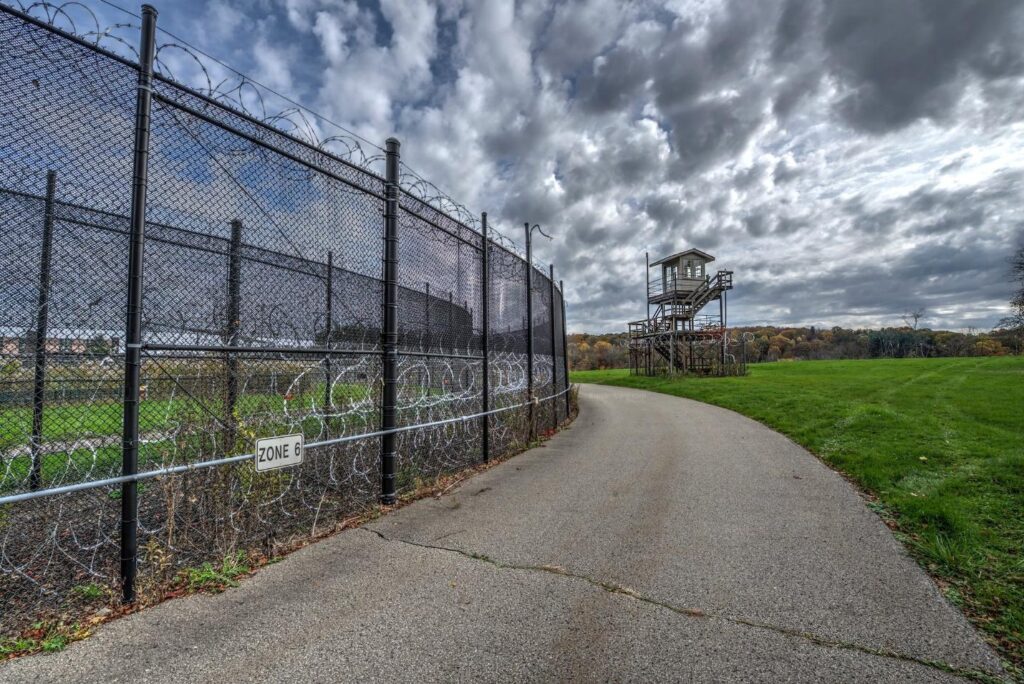
In prisons, Toastmasters Clubs are called gavel clubs. Inside or outside the razor wire, men and women join to learn speaking and leadership skills. They give speeches about their childhoods, families, hobbies, sports, personal relationships, work, and military experiences, where they were born and grew up.
***
When Damien was seven years old, he found his mother in the bathtub, covered with vomit. He cleaned and dressed her, put her to bed. A year later, she abandoned the family. His father, an ex-Marine, beat Damien. He knew just where to kick and punch without leaving visible bruises.
***
I volunteer for Out of the Blue Gavel Club at Jefferson Correctional Institution in Monticello, Florida. I am their link to Toastmasters International and the Free World. I bring in educational materials, felt-tip pens, batteries for the stopwatch, and check on the status of their speaking and leadership awards. When we have a party, I bring pizza, homemade brownies, or cookies.
***
When Clarence was twelve, a neighbor raped him. The judge didn’t believe Clarence and set the perp free.
Devon was born and raised in Jamaica. He got beaten up every day because his mother was a security guard for the prime minister.
Some mornings, Leroy’s father shouted up the stairs, “Stay in bed until I’m gone. I don’t want to see your face.”
***
Although their hearts were eaten, we still blame them. I yearn to sit with them, hear their stories. But that won’t happen. When meetings adjourn, correctional officers hustle them to the dorms. As a volunteer, I have no visitation privileges.
Where does their pain go?
***
After retiring, I wanted to do something more meaningful than delivering meals to shut-ins or helping at the Senior Center. My life had been rich, filled with many experiences; now it was time to give back. I would teach these men and women new skills. I would help ease their transition into the Free World.
On the first few minutes of the first day, I realized I had much to learn and not so much to give.
***
Toastmasters began as a series of speaking clubs organized in 1924 by Dr. Ralph C. Smedley, Director of Education at a YMCA in Bloomington, Illinois. He believed young men needed to communicate effectively, plan programs, conduct meetings, and work cooperatively. One hundred years later, over 14,000 clubs are in more than 140 countries. Total membership, which has included women since 1973, exceeds 270,000.
Meetings consist of prepared and impromptu speeches. Evaluators point out verbal hesitations, clichés, poor grammar, colorful language, and innovative word usage. Members learn from their peers.
***
While driving on I-10, I often pass a white prison bus, sometimes two. Heavy grates cover their windows so outsiders can’t see in. The Department of Corrections regularly transports men and women between prisons. Once, I passed two buses stopped on the shoulder; one had broken down. Several heavily armed Sheriff’s deputies guarded the shackled men as they walked from one bus to the other.
***
Prospective gavel club members must stand and explain why they want to join. Most say they wouldn’t be serving such long sentences, or be in prison at all, if they had communicated more effectively with law enforcement officers, judges, and their defense counsel.
***
Anthony was a slim, well-spoken young Black man in his thirties or early forties. He was comfortable talking to one person or a roomful. When we shook hands, he asked about my family, my plans for the afternoon. Several weeks ago, it was his turn to deliver the Thought of the Week, an inspirational message that rotates among members.
He spoke about the importance of good friendships and how difficult they can be to maintain. After speaking, he stayed at the lectern. When Anthony spoke again, his voice was low. I strained to catch his words.
“I’ve been at JCI for five years. During that time, I’ve never been visited by a friend or a family member.” The other men nodded. Anthony pointed to me and said, “You are my visitor.”
Older incarcerated men usually have no living relatives or friends in the Free World. But Anthony is young; he must have living parents, relatives, friends. When he leaves prison (if he does) who will he embrace? Who will welcome him into the community?
***
I have their DOC numbers; I could research their crimes. But I never do. All I know about them — all I want to know — is what I hear and see at these meetings.
Sometimes I ask where they were born and grew up. Anthony said, “I was born in Minnesota and have lived in Pennsylvania, Indiana, Georgia, and now Florida. I am a rolling stone…”
***
Chuck Rabaut started the first gavel club in 2012; now there are over 30 in North Central Florida. He begins by explaining the value of Toastmasters to the warden or chaplain. Usually, they respond enthusiastically. When approved, he’ll train new members, order educational materials, pay the dues, and recruit volunteers.
When I started with Chuck in 2019, he was 88.
“How do you have the energy to do all this?”
“It has to be done. When these people get out of prison, they must stay out.”
***
I hadn’t seen Damien, Clarence, Leroy, and Devon for months. Maybe they transferred, dropped out of the club, or are in the hole. Perhaps taking a mandatory class before End of Sentence.
Yesterday, I spotted Clarence washing cars in the administration parking lot. Someone must have thought gavel club meetings were not important. Clarence waved when he saw me and said he hoped to return in several months.
***
I have an app on my phone that identifies birds by their songs. The app’s hearing is better than mine; it easily picks up the faraway moan of a ground dove or the sad flute of a wood thrush. It alerts me to the bluebirds, cardinals, doves, house finches, and chickadees in my backyard.
In the prison yard, mockingbirds and chickadees flit from building to building. Sparrows congregate in long, swaying lines on the razor wire. Every so often, they drop to the ground and peck for seeds and insects. When disturbed, they burst into the air and sail over the fence. For them, escape is easy.
***
A man who wanted to volunteer accompanied me to JCI. His posture stiffened as we passed through the sallyport and into the frisk room. His eyes darted back and forth when we stepped into the compound. When a long line of men in blue strode toward us, he veered off the walkway and onto the grass.
Men were already in the chapel when we entered. Some clustered around the sign-in sheet; others sat and spoke in low tones. A gray-haired Black man wrote the Word of the Day on the whiteboard. It was “plethora,” an “excessive quantity.”
More men streamed in. Several approached and thanked us for coming. The president and vice president of education introduced themselves and explained the day’s agenda. We all shook hands.
Once seated, my visitor nudged me and whispered, “Is this it…are these your guys?”
***
I often visit other prison clubs.
Driven by Destiny Toastmasters Club and Inspired by Destiny Gavel Club meet in the library of the Gadsden Correctional Facility for Women in Quincy, Florida. The library holds 17,000 books—more volumes than space. Tables and makeshift wooden shelves manage the overflow. There are dozens of categories: family, biography, romance, poetry, creative writing, gardening, careers, travel, health, history, science fiction, religion, philosophy, and many more. A law library is in the next room.
The first speaker was Lisbeth, a white woman in her early fifties. She spoke about breaking her leg and permanently damaging her left hand. She needed a wheelchair. Later, she used a walker, then a cane. Now she walks unassisted, although with a limp. Lisbeth asked for two volunteers. She told the first to remove her shoe, put it back on, and tie the bow with one hand. She handed the other woman a bra and told her to put it on with one hand. The first woman couldn’t tie her shoe, and the second couldn’t put on the bra. Lisbeth tied her shoe with one hand. She snapped the bra clasp with one hand, stepped into it like a pair of pants, and pulled it up to her chest.
***
I heard about a volunteer who quit because he couldn’t stand the continual snap-snap of the locks.
***
After our tabby died, we adopted a Maine Coon cat from a pet shelter near Milbridge, Maine. He traveled with us from Florida to Maine every fall and spring. He’s more canine than feline. When I walk in the backyard, he chases after me and jumps to my waist. He follows me to the garden and helps check the milkweed for aphids, tie up the tomatoes, and adjust the irrigation system. He trails me to the mailbox.
When we got him, my wife had to promise that we would keep him indoors. Later, she said, “I don’t feel bad about that little lie. I doubled the donation we were supposed to give — from $50 to $100.”
He spends half his time outdoors. He comes and goes as he pleases.
***
“It was tough getting the Federal Correctional Institution for Women started,” Chuck said. “The Warden told me, ‘No clubs in this prison.’ I said that Toastmasters was educational, not for hobbies, crafts, or recreation. She still refused, even turned her successor against me.”
Chuck can be very persistent; on his third try, he received permission to start the club. Several months later, I met him at the front gate, and a correctional officer escorted us through the sallyport, four locked doors, across the compound, and into a windowless cinder-block room in the Educational Building. Exposed ductwork snaked across the ceiling. Several rows of table-chair combinations faced the lectern. The president of the Voices of Freedom Gavel Club called the meeting to order. Most of the women were in their 20s or 30s. More than half were white, with a few Blacks, Latinas, East Indians, and one Asian. All wore brown jumpsuits.
Felicia, a middle-aged Latina, oversaw Table Topics, the impromptu questions. She asked four women: “What do you want to accomplish when you are released?” Chu Hau wanted to visit all 50 states. Cindy planned to get a college degree. Serina intended to travel around the world. Marci would enroll her dog in a pet therapy program. Then Felicia asked, “If you could change this world, what would you do?” Alice wanted more resources for drug users. Monica wanted more Big Brother programs.
***
When I told the warden at JCI that Chuck was my mentor, he said, “That man could worry the horns off a billy goat.” Several months later, I stopped by and we exchanged Christmas greetings. Before I left, he said, “That Chuck Rabaut — he could worry the horns off a billy goat.”
***
Years ago, I studied bat populations in northern Kentucky. These mammals are crepuscular; they venture out at night to hunt for flying insects over streams, old fields, and lighted areas. They cut erratic patterns through the night air, flitting up and down, left and right, cavorting like a roller coaster off the rails.
We stretched a mist net across the Salt River. After the sun slipped behind the trees, bats started swooping back and forth, nabbing insects. When one hit the mesh, we lowered the net and untangled it. After we identified, sexed, and tagged each bat, we placed it in a cage. When the bats stopped foraging, we lowered the nets and opened the cage. They rose in a dark flutter, darted toward their roosting sites in caves, old buildings, or under the loose bark of trees.
***
During COVID, most prison gavel clubs shut down. After vaccines became available and deaths subsided, most reopened. Starting in 2023, I regularly called FCI and asked when they would restart. They always say, “We have a staff shortage and can’t spare a correctional officer to escort you to the meeting room.”
It’s a ten-minute walk between the meeting room and the front gate.
***
Gadsden Correctional Facility for Women has a service dog training program. Women bring their trainees to club meetings. Madison Correctional Institution also has a training program. Men work their dogs outside the Wellness Center.
These dogs must learn to be comfortable around people and accustomed to entering and leaving buildings. They go everywhere with their trainers. The sponsor will assign these dogs to people recovering from PTSD or other trauma.
***
One morning, our Australian Shepherd hobbled home with a foot-trap clinging to his left front paw. A chain trailed behind. He would have died in the woods if he hadn’t broken free. I removed the trap and cleaned the wound. He limped for a few days, but otherwise he was fine.
***
Unlike other prisons in North Central Florida, there are mature trees and hills at MCI.
“Once off the bus, I noticed the trees and gently rolling hills.”
“I can see that sapling through the bars over his window. I’m watching it grow.”
“Before coming here, I hadn’t walked by a live tree in years.”
***
After meeting Chuck, I joined a Toastmasters club in the Free World. The first speech was “Know Your Sense of Humor.” The speaker explained that not everyone thinks the same things are funny. He gave examples of different humor. The second speaker described how to remodel a kitchen. The following week, I learned how to organize a speech using the “Sandwich Method.” The next speaker listed the officer positions in a Toastmasters club. There are seven.
Next came Table Topics:
“Do you sleep better when it rains?”
“Yes, the rhythmic drumming blots out the television in the next room.”
“Describe a meal you could prepare in 20 minutes.”
“Spaghetti sauce by adding canned mushrooms and ground sausage to a store-bought sauce.”
The Table Topics Master asked three people to speak about recent accomplishments. The answers were: an award at work, an educational achievement at Toastmasters, and a medal for volunteering at the food pantry.
***
Chuck and I often take Bobby Blackmon, who lost sight when he was five, to gavel club meetings. He is a Distinguished Toastmaster, gives inspirational speeches, and leads officer training sessions. The men always give Bobby a standing ovation.
“Bobby, the men like you.”
“Being blind is like being in prison.”
***
A friend of ours has a domesticated rabbit. It lives in a small cage in her kitchen. She works full-time, so there is not much for the rabbit to see or do. He eats, eliminates waste, and sleeps. If I were that rabbit, I would wish to be free, even at the risk of being brought down by a fox, bobcat, or lynx.
***
During his Icebreaker, Toby talked about being made fun of at school for having a lisp. He joined Out of the Blue Gavel Club so he could learn to speak comfortably in front of others.
Gavel club elections take place in May. The secretary records the nominees’ positions and names on the whiteboard. When Toby told me he wanted to be club treasurer, I encouraged him. Since there were no other contenders, he believed the position would be his. Four men wanted to be president. One of them, Santo, had transferred from another institution and was eager to be accepted by the group. When the members elected another man, he nominated himself for vice president of education. When Santo lost that election, he ran for secretary again and lost. Next, he nominated himself for treasurer.
Toby watched Santo lose one election after another. He stood, pointed to the whiteboard, and asked to have his name removed. The chapel was silent. The other men — and Santo — understood. Toby had given up the position of treasurer so Santo could have it.
***
When I discovered half the men in the room were lifers, I asked Chuck, “How do they do it?”
“One day at a time,” he said, “one day at a time.”
***
In the United States, there are nearly two million people in jails and prisons. Our country has the highest incarceration rate in the world; approximately 1% of our adult population is behind bars. Although America comprises less than 5% of the world’s population, it holds over 20% of its prisoners. Our incarceration rate is approximately five times higher than that of other developed nations.
***
A neighbor in Maine bought a Havahart trap for his garden.
“How’s the trapping?” I asked.
“Going well,” he said, “except for that skunk.”
People expect the worst when they imagine a skunk in a Havahart trap. But I have never had one spray when captured and transported.
“What was the problem?”
“Took the damn thing two weeks to die. Thought I would have to shoot it, but then he’d stink up the yard.”
***
Each year in America 600,000 men and women leave jail or prison and reenter society. Once released, they take adult education classes, return to school, find work in the private sector or a government agency, or start their own business. They renew old relationships and start new ones. They may live in your neighborhood; their children may play with your children. You pass them on the street, in a grocery store, or at the fitness center.
***
Now I realize that what these men and women need is not difficult for an outsider to provide.
They want their voices to be heard.
Mainly, I just listen.
***
Every spring, most Florida prisons hold volunteer appreciation dinners. Chuck, Bobby, and I attend.
Eddie Jones, Warden at JCI, said, “I’m embarrassed to tell you, but every week, I discipline more staff than inmates.”
Warden Amelia Hill said, “Last year at MCI, we only had two fights.”
Both wardens attributed the low violence to the availability of religious and educational programs. Volunteers teach 80% of the classes.
I asked Bo Hammock, the regional chaplain for the Florida DOC, why it’s so difficult to recruit volunteers.
“They don’t think it’s possible; they’re afraid to, or they think we should lock up these people and forget them.”
***
When someone mentions prisons or incarceration, I think about Toby, who gave up his chance to be Treasurer so Santo could have it. I picture Lisbeth putting on a bra and tying a shoelace with one hand. I remember Damien, Clarence, Devon, Leroy — and others — who had the guts to talk about being physically, sexually, and emotionally abused as youngsters. And Anthony, who never has visitors from the Free World.
_______________
* I used pseudonyms for incarcerated men and women.
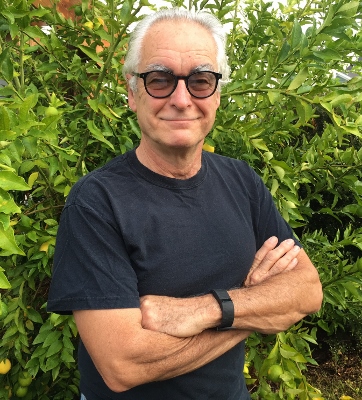 Andrew Miller retired in 2013 from a career that included research in aquatic systems and university teaching. His fiction and nonfiction have appeared in Blue Lake Review, The Meadow, Northern New England Review, Pithead Chapel, X-R-A-Y Literary Magazine, The Evergreen Review, and Toastmaster Magazine. He lives in north-central Florida, volunteers in prisons, restores antique stained-glass windows, and writes. His website is www.andrewcmiller.com.

I like the way you reveal, layer by layer, the personhood of the incarcerated individuals you work with. Beautifully assembled.
Hi Drew:
Strong piece of writing that brings an important story to the outside world. I hope it may encourage more volunteers.
Great piece–and many important questions, including: “Where does their pain go?”
“Although their hearts were eaten, we still blame them.” There are so many beautiful lines in this piece, but that one gutted me. Thank you for doing this important work.
Describing the caged animals made me feel what it might be like for the prisoners.
Thank you for the wonderful work you do.