Interview by Lara Lillibridge

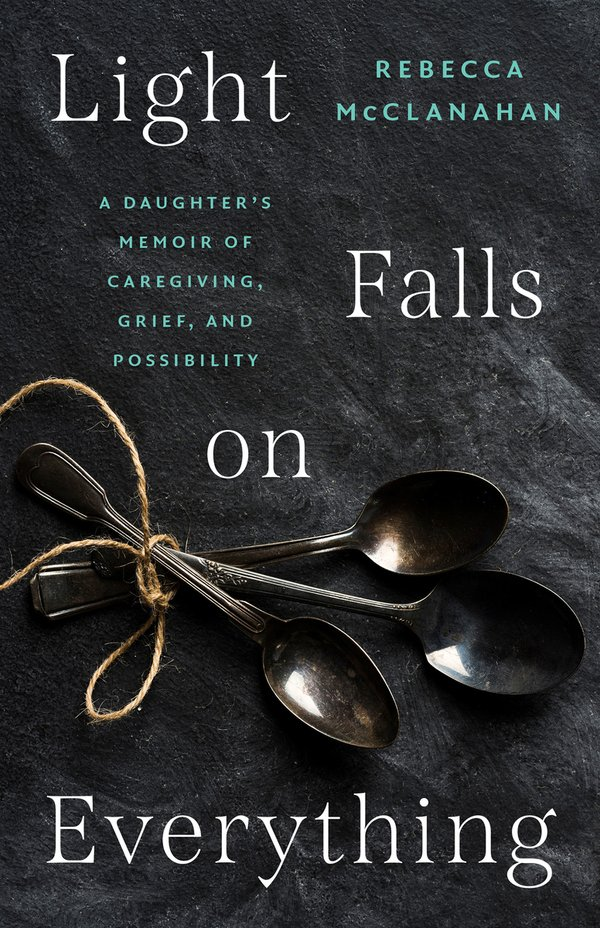 In Light Falls On Everything: A Daughter’s Memoir of Caregiving, Grief, and Possibility (University of North Carolina Press; March 2026), Rebecca McClanahan weaves a ribbon of light through her recounting of caring for her parents at the end of their lives.
I was hesitant to read this book, as my mother currently has dementia. In fact, I read slowly, but what I loved was how gently McClanahan wrote about her parents, and with such love. It was her parents’ deepest desire to stay together until the end, so Rebecca, together with her siblings and husband, moved them from Indiana to a townhouse just two doors down from Rebecca and her husband. In this way, they became “first responders” in taking care of her parents. McClanahan weaves stories from her childhood with the current time of caregiving, and the love the family has for each other is heartrendingly beautiful.
This is McClanahan’s twelfth book. Previous publications include In the Key of New York City: A Memoir in Essays and a revised edition of Word Painting: The Fine Art of Writing Descriptively, which has sold more than 50,000 copies and is used as a text in several writing programs. [I spoke with Rebecca about In the Key of New York City: A Memoir in Essays back in 2020, and that interview can be found here.]
This interview has been edited for clarity.
Lara Lillibridge: In Prelude, you wrote:
“Still,” as van Gogh wrote to his brother describing a wintry, gray, low-hanging sky, “a great deal of light falls on everything.” And that light is more visible when “a few little figures…move on the ground.” I imagine my parents as those figures, moving across the ground of this story, and as I look back on the years of caregiving, light flickers across even the darkest moments.”
When we spoke in 2020, you referred to this project as “care-grieving essays,” which I thought was a perfect description. When did you decide on “Light Falls on Everything” as your title?
Rebecca McClanahan: At that point in 2020, I was writing and publishing brief pieces, but once I noticed how they were talking to each other, I realized that this would not be a book of essays or even a memoir-in-essays (like In the Key of New York City) but instead would be a continuous narrative in three acts with numerous chapters. I had a working title, but after the book was accepted, I began searching for a title and subtitle that would convey the complex emotional landscape of the years of caring for my parents. My editor, marketing staff, and I volleyed numerous titles and subtitles back and forth, but none seemed right until I remembered the van Gogh letter with that beautiful, evocative phrase hidden inside it.
LL: I have attempted to write about my mother sinking into dementia, but I find myself unable to return to my drafts as it is still so raw and painful. How did you take care of yourself while working on this project? (We learned in chapter 14 that you dislike the word “self-care!”)
RM: True, I’m not a fan of the term; it feels like a new-age buzzword to me, suggesting surface-level changes to a person’s lifestyle. During the caregiving years, I didn’t need “self-care”. I needed a life preserver, a life raft, to keep me from going under. My husband, who helped immensely in my parents’ care, was that life raft, encouraging me to take breaks, to keep some of my teaching commitments, and to arrange for my siblings to cover whenever they could. As for the “raw and painful” writing/revising emotions that you mention, that was part of the process for me as well for a few years. But the more I worked with the material and the more I discovered the language and form for the inchoate feelings, the pain morphed into something bittersweet, closer to what the poet George Herbert described in his poem “Joseph’s Coat:” “My joys to weep, and now my griefs to sing.”
LL: In the chapter, “I Stand Here Ironing,” you wrote:
“It was the seventies. I was supposed to be roaring. Against male oppression, domestic servitude, my own internal censors. And, most important, I was supposed to be writing my Mother Poem. ‘Every woman must write the Mother Poem,’ our workshop leader announced…I could almost hear the uppercase emphasis in her voice.”
OK, I have got to hear more about this! Can you expand on this?
RM: During that time period, much of the work by women writers that I was assigned in classes and workshops seemed to be fueled primarily by rage, rebellion, and criticism not only of societal, racial, and gender-based ills but also, closer to home, by what felt like blame and anger aimed at the writers’ mothers for the choices they’d made, the domestic roles they’d accepted, and the alleged injuries they’d inflicted on their daughters. That was not my personal experience, not my truth. Though I had plenty to rage against in the larger world context, I felt—and feel still—that I won the lottery with my own mother, and all six of her children feel the same. So it felt dishonest to write the kind of poem the leader seemed to be pressing us to write.
LL: In Chapter 11, “Neighborhood Walk, Halloween Week,” you wrote about watching children play at recess with your mother, and your mother asked you,
“Am I old enough to have children?”
“Yes, you are,” I answer, touching her head in what I hope is a motherly gesture. “But there’s no need to rush into it.”
Reading “Light Falls on Everything,” you write so much about your mother viewing the world through a child’s eyes. I was reminded of a student of mine who once said that her mother’s dementia was a gift in a way, because it allowed her to learn about her mother’s childhood. I wondered if you agreed with that?
RM: I’ve heard many people say that caregiving allowed them—maybe forced them—to see their family members in a different light. I’m not sure if I’d call either of my parents’ dementia a gift—at least not for them, as the accompanying difficulties were often so hard for them to bear. But yes, I understand your student’s comment. By accepting the help I offered, my parents gave me a great gift. For most of us, it’s not easy to admit our need and dependency, and it takes a great deal of courage and grace to accept help. As for learning about their childhoods, my case is probably an outlier; years before, while I was writing and researching The Tribal Knot, I’d had numerous interviews and conversations with both parents about their early lives. However, I would agree that the physical and emotional intimacy of the caregiving experience served to draw us even closer than we’d been before.
LL: In the Author’s Note, you wrote, “Now, as I prepare to send this book out into the world, I understand my writing process as a form of desperate prayer, perhaps, or a way to hold myself still for a moment, just long enough to take a few steps out of the scene so I could see my parents—and myself—as characters in an ongoing, universal drama.”
I absolutely love that description of writing memoir and creative nonfiction. I feel like the act of writing changes my relationship with my past—like, I don’t have to hold onto painful things so tightly once they have a home between the covers of a book. Can you speak at all to how the publication of this book—from scraps on the back of receipts, to a finished tangible object that has existed on its own for three months now—has changed you?
RM: The act of shaping the present-tense raw emotions into a written text deepened my understanding of our situation, and I feel that is the case for most writers. Once we write the first word, we begin to translate the physical, wordless experience into a new language. As I wrote my way into the text, my parents became not only my flesh-and-blood parents, they also became those “figures” that van Gogh wrote about “. . . moving across the ground” of his paintings, except for me, they were moving across the ground of my story. Of our story, I mean, for it was a story we shared, each of us a character like so many others who move across the landscape of their own caregiving experience.
LL: Lastly, when we spoke during the pandemic, you mentioned that you have a practice of memorizing poems. Looking back, which poems stand out now as particularly resonant during the writing of this book? Like a playlist, but of poems instead of songs?
RM: Oh, so many poems rescued me during those years. In the book, I mention a few: Li-Young Lee’s “You Must Sing”; Stanley Plumly’s “After Grief”; Denise Levertov’s “Song”; Rainier Maria Rilke’s Duino Elegies; and Adrienne Rich’s “Song,” along with several other literary works.
LL: And what poem have you fallen in love with recently?
RM: I’m deep into the series of eulogies by Bob Hicok, each numbered poem titled “The Eulogy I Didn’t Give.” Together, the poems are opening new windows into my understanding of grief, breaking my heart in all the right places.
Lara Lillibridge
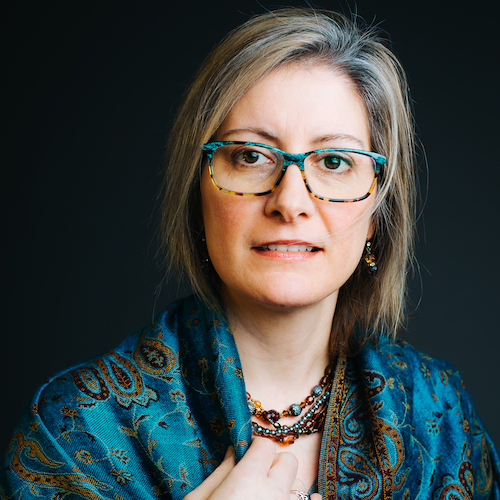
InterviewerLara Lillibridge (she/they) is the author of Mama, Mama, Only Mama: An Irreverent Guide for the Newly Single Parent; Girlish: Growing Up in a Lesbian Home, and co-editor of the anthology, Feminine Rising. Her essay collection: The Truth About Unringing Phones, released in March 2024 with Unsolicited Press.