Interviewed by Hillary Moses Mohaupt

Wherever you are right now, you’re not far from nature. Whether you can glance out a kitchen window to a backyard, or step into a local park, or dive into a gorgeous ocean a world away from your home, nature is near.
Generations of biologists and other scientists have written about the natural world around us as they’ve worked to understand plants, animals, and human being’s place among them. Modern biology is based on what we understand about Darwin’s arguments about competition, but building a sustainable future requires us to embrace collaboration; to see ourselves as part of nature, not apart from it.
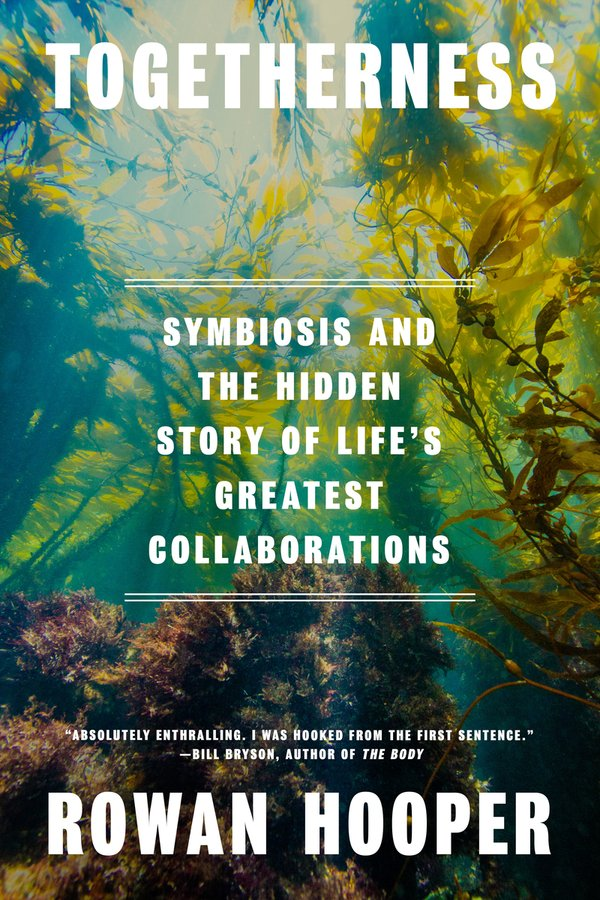
Rowan Hooper’s Togetherness: Symbiosis and the Hidden Story of Life’s Greatest Collaborations (Knopf; Aug. 2026) explores the crucial roles that collaboration and cooperation play in sustaining life on earth. Hooper takes readers on a journey from Japan to Scotland to Brazil, from the distant past to the current present, exploring symbiosis – the intimate interdependence that shapes the world. “It is through symbiosis,” Hooper writes, “that life takes hold, and through symbiosis that life blossoms.”
This interview, conducted over Zoom during a heatwave that underscored the urgent need for climate action and a major shift in human relationships with nature, has been lightly edited.
Hillary Moses Mohaupt: I’m always curious about how authors put together a book, because that process can look so different from one author to another. I loved reading this book, and as I was reading it I wondered about how you went from being in these spaces, these wild places, and then writing about it?
Rowan Hooper: With a bit of difficulty, to be honest. It was hard, because I had a lot of material that I’d gathered in person, in the field. I went to Brazil, Malaysia. So I had these first-person, adventure accounts, from the field, and then I had a lot of historical stuff from Herodotus to Darwin, and from modern-day scientists that I’d met. And I thought, “How do I get all of this to work together?” It took a while to figure out how to do that. In the end, I just said I’m going to write it how I’ve been feeling it, and I didn’t worry too much about it jumping from being a first-person account, to looking back into the past. It kind of all worked out in the end, but I was lucky that I did have a lot of time to think about this. My other two books were written the way you’d write a piece of journalism, just one tone throughout, whereas this one had the feel of creative nonfiction. It was a different process but I really enjoyed that, and having the time to do more things, to think harder about it, was really valuable.
HMM: How long were you working on this book?
RH: The proposal itself took a good six months to write, and it went back and forth between me and my agent, and then it got sent out. Then when I started writing it, I took nine months off just to work on the book and do research and writing and traveling and all of that. At the end of a year I had a first draft, and then I sent that to my editor, and it took basically another year to rework that draft into the state of the book now.
HMM: The end product was that you could seamlessly move from history, to present, to more recent past, people in the field today, and stories from all over the world. I’m familiar with some of the people you talk about, and others were less familiar to me, so I appreciated the way things built on each other. It was very interconnected, to build on the theme of the book, so that when I got to the chapter on Rachel Carson, with whom I’m very familiar, I could understand how each of the pieces fit together. Carson is one of the writers you mention in this book. Who are some of the climate and nature writers that you think everyone should be reading?
RH: The thing with Rachel Carson is that I think most people have only heard of her from Silent Spring and maybe people won’t even have read that, they just know of it. But I didn’t know that she was a marine biologist and had written three books before Silent Spring. Reading those was a real revelation to me. It suddenly clicked into place for me why she can think about the web of life, the interconnectedness. She thinks ecologically, and you see that in her earlier books. They’re old now, but they’re still lovely pieces of nature writing.
There’s a biologist called David George Haskell who wrote a book called The Forest Unseen. It’s a lovely piece of writing. He got a meter square quadrat, which biologists use to measure all the diversity in a meter square, and he tossed it down and went there every day or every week for a year, and just sat and watched what was happening there. And he writes about it really beautifully. There’s so much going on in this one meter, and I really love the sensibility of that, the attention to detail, the observation. I loved that work as a piece of nature writing.
Another book that springs to mind about the climate crisis is Tim Winton’s novel Juice. He’s an Australian author and Juice is absolutely sensational. It’s set in fifty, one hundred years’ time, and it’s unbelievably hot and a lot of things have broken down. There’s a lot of climate fiction around at the moment but this in particular I thought was really stunning.
HMM: I want to read these all right now. Obviously you wrote about Darwin a lot in this book; he was so foundational to everything you discuss, thanks to his arguments about competition and individuality. But one of the things you write in this book is that we should also think about how he wrote about the tree of life and connectedness. I’m curious why you think that it’s so critical right now for people to think about the world and nature in an interconnected, symbiotic way.
RH: Because we’ve been going about it the wrong way for at least two hundred years, and because of that we’ve completely overexploited nature. We talk about nature as something “over there” —that’s how we think of it—but it’s really not. A really important part of the book is to show that nature is not over there or something we watch on TV, it’s here.
HMM: We’re part of it.
RH: Yeah. It couldn’t be more important that we try to recalibrate how we think about ourselves in relation to nature, and not think of it as something that’s over there, something that’s a free ticket for us to go and exploit, which is what we’ve been doing for at least two hundred years. And in a way it didn’t matter for a lot of that time, because there was a lot of bounty for us to go and get, but it does matter now, because we’ve gone far too far with this exploitation and we’re in an extinction crisis. We’re seeing a climate crisis, a crisis of biodiversity, a crisis where ecosystems aren’t functioning like they should. It’s a really, really bad place that we’ve gotten to, and that’s why we need to reset how we think about the world. I hope that’s something it will make people think after reading this book.
HMM: I think you were very successful. As I was reading your book, I was thinking, oh, yes, what can we do to address these crises? How can we help make that connection for people, that nature is in your front yard and your kitchen sink and your body? You quoted Rachel Kushner to talk about the “wedge” between us and nature, how we need to remove that wedge, and I really appreciate how you talked about the different ways we can and should value nature. Can you say more about how we can develop the relational value, in particular, of nature?
RH: I had taken for granted the intrinsic value in nature. I have always felt that’s not the strongest argument to make if you’re trying to make a policy change or something. I’ve also thought the strongest argument, in policy terms, is its instrumental value, to try to put a dollar figure on an ecosystem, in terms of what it does for us. And the environmental movement has also used that and put dollar values on what nature does for us.
The relational value—what it means to us and how we feel about it—is something that I hadn’t thought I could talk about as a scientist and an advocate for environmental change. But I’ve understood now, through the people I’ve read researching this book, that relational value is really important, and we need to develop it in order to care more about the world we’re living in and to make the changes that we were just talking about, to think about nature as something we’re all part of.
There’s a quote from Robin Wall Kimmerer—and that’s another book that people should all read, Braiding Sweetgrass—and what I love about her is that she’s an Indigenous scientist, and she weaves together Indigenous wisdom with scientific thinking. She talks about becoming Indigenous to place. And what I think is that you don’t have to be an Indigenous person, living in your native land, to have relational values with nature. We can all have it, wherever we are. I think that’s something we should all let ourselves develop, allow this relationship with nature, what it brings us, the joy, the peace. It’s important to let that in and let that grow.
HMM: Do you think it was your background as a scientist and as a journalist that made you feel like you couldn’t have that more squishy, less objective connection with nature?
RH: Yeah, maybe. And I guess I thought I don’t have the right to have that relationship, because I’m not an Indigenous person living off the land. So I thought it wasn’t really something that was available to me—but it is, and it’s available to everyone, and I love that. I think that’s great.
HMM: It’s there for all of us, yes. I appreciated what you were saying earlier about making changes to environmental policy. What advice do you have for people who do not feel connected to the natural world, who feel like they can’t connect with nature, but who might want to take some kind of action to protect it?
RH: I think I say in the book that one thing that I do quite often is to take a little magnifying glass outside and just look at a tree or a bench or a gravestone and look at the lichen growing on it. I think that’s something that most people would walk straight past, you never notice it, but if you get down with a magnifying glass, it’s really incredible what the world opens up. It’s like a mini jungle, a mini rainforest in there, and I just think it’s quite a good way of resetting your perspective, by getting down and looking at things close up. It doesn’t have to be lichen, actually, it can be anything. Look at the soil or a leaf. I think that does a really good job of reminding us of the complexity of nature and that it’s everywhere.
People might be startled that we’re not individual humans. How we think of ourselves is kind of wrong, actually, because there’s so many trillions of other cells within us that aren’t human. And even some of our genes aren’t originally human. A lot of our moods and our health might be directly influenced by the microbes that live with us. Part of our personalities is not something that’s completely derived from human cells and human-only genes, but it’s something that emerges from this interaction with microbes that live on and in us. The self, what we think of as our self, the thing that I think of as “me,” is a product of millions of different organisms plus the human one we traditionally think of as me, all mixed up and merging. That’s something that I think is quite extraordinary. We’re all mobile ecosystems and they produce what we call our selves.
Mitochondria and chloroplasts in plant cells are all a result of a symbiosis that occurred two billion years ago, and that led to all complex life on earth. So we’ve got symbiosis to thank for not only all complex life on earth but also all ecosystems. And it produces our selves. It’s everywhere at all levels.
HMM: That’s the thing that makes it accessible for people to understand. If you want to look at the lichen or think about your microbiome, yes, you can understand symbiosis. Or you can think about elephants or whatever it is that connects you with the natural world, it’s there, too. It’s everywhere.
RH: Yeah!
HMM: You talked already about how writing this book shifted how you engage with the natural world, but I’m wondering if there’s anything else you’d like to say about that.
RH: I didn’t think it would shift the way I engage, because I’m already an ecologist, and I’ve spent a lot of time literally studying different forms of life and how they work and how they evolved. So I didn’t think it would change my way of thinking but it actually really did, and I think that’s partly because even I didn’t appreciate, really, the connectedness of the world, and the importance of the web of life throughout the world. So it did change the way I think about other life forms around me. I thought, “I need to tell more people about this!” As I was immersed in it and thinking about it more and more, I realized it was changing me as well.
HMM: I love what you said about how you need to tell more people about it – you’re writing a book about it! You’re doing it.
RH: Yeah!
HMM: What advice do you have for writers who want to write about science for a more general audience?
RH: I think it’s always good to find a way in to the subject that is going to hold the hand of the reader a little bit, bring them into it in some way, telling a personal story or a story of another person. Make it human in some way. A lot of science can otherwise feel cold or inaccessible. So if there’s a human story to tell, even if you’re just using it as a way of getting in, that’s always a good way to grab someone to bring them into it.
HMM: This is a question I ask everyone I interview for Hippocampus. When you’re ready to share a piece of writing, who is your first reader?
RH: My wife.
HMM: Why?
RH: Because she is super well-read and perceptive, but also she’s not a scientist by background yet she has a really deep understanding of science and can just say, “This doesn’t feel right,” or else, encourage me, or say, “I’d do it like this.”
HMM: Is there anything else you’d like to share?
RH: We covered a lot of the things I’m trying to get across in the book—the idea that symbiosis is not this niche field topic, but that it’s absolutely everywhere and it’s really been important to shaping the evolution of life on the planet and the operation of all ecosystems on the planet. And we need to understand it in order to get to a sustainable place. It’s not just intellectually interesting, it’s also really important practically that we get this right. And as we said at the beginning, we’ve been so focused on competition and people have used Darwinism as support for capitalism, but it isn’t. I want to correct that use of Darwinism, because as we’ve said, it’s not just about competition, it’s about symbiosis as well.
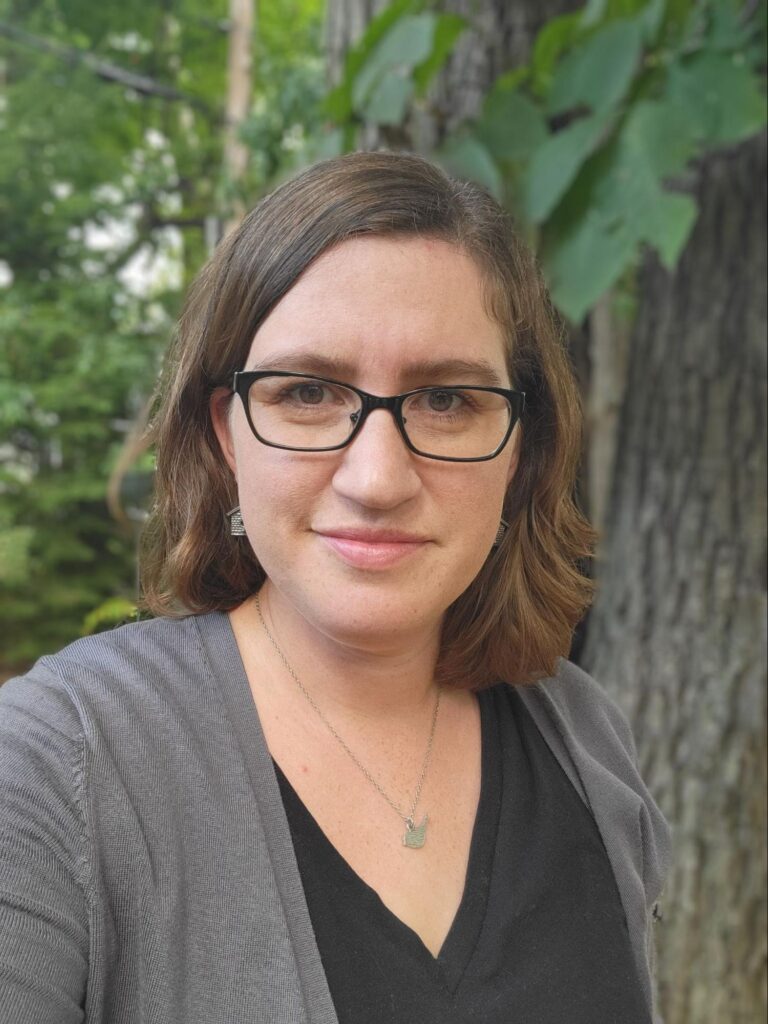 Hillary Moses Mohaupt’s work has been published in Barrelhouse, Brevity, Lady Science, Dogwood, The Rupture, Split Lip, the Journal of the History of Biology, and elsewhere. She lives in Delaware with her family.