

Sometime in the late 90s, my manuscript—“Chalk Outline”—the title a nod to the chalk outlines around corpses in film noir crime, went to a handful of high-level publishers who found the stories “vivid and exciting,” but they all passed. No one cared if the narrator lived or died.
I write memoir.
I was the unlovable narrator.
It took years to understand why people weren’t getting invested in the narrator’s journey. Looking back, I saw I was writing about a time in my life when I didn’t care about the narrator—myself—either. The “me” of “Chalk Outline” was an unsympathetic character—self-destructive, rageful and lost. I’d assumed time and sobriety were all I needed to gain some perspective. Wild stories of dangerous escapades are enough for pulp fiction or grindhouse perhaps, but not for memoir.
The memoir I connect with as a reader contains reflection, insight and asks questions. Those stories resonate with me the same way twelve-step program qualifications do. Even if a listener—or reader in this case—can’t see themselves in the facts of a story, if they can identify with the feelings, it’s magic. I’d written stories that were great over late-night drinks, as in: Buy me a drink and I’ll tell you about the night I was kidnapped. I was missing the loamy soil underneath the “vivid” situations, the emotional story.
Growing up, we search for a persona that suits us enough to wear it into the world. As a child in an angry and emotionally complicated home, I’d developed an invisible armor for safety, keeping a safe distance from anything resembling a feeling. I avoided asking myself why I did anything, why I was convinced I was both invisible and unlovable. I’d happily share my adventures and own up to an occasional amusing stupidity—that was my persona: wild and brave bordering on stupidity. But, I didn’t want to flip over a rock and see what lived in the dark and damp—evidence I could not, would never be lovable; the reasons I was so uncomfortable in my skin that I’d spent a life trying to escape it. Even now, I feel a tightness in my chest writing this.
I’d left anything that made me human unspoken and unwritten.
I didn’t even know what I was afraid of. What would happen to me if I looked at what I’d worked so long to ignore? Would I turn to stone or salt?
If I wasn’t willing to look at my pain, unearth fear I’d stuffed and forgotten, if I couldn’t find a way to tease it all apart, all I had was a chronology of colorful pictures with no rhyme or reason.
It took decades to muster the courage to examine stories I’d told the world—and myself—for what was missing in the retelling, what I was intentionally or subconsciously leaving out. Where had I exaggerated or downplayed to inflate my own self-worth?
I’ve always been a compulsive record keeper—a by-product of a life that was out of control. A memory disorder caused by trauma could make it difficult to differentiate between fact and fiction. So, I combed through old journals, calendars, photos and even address books looking for facts, assembling a life through evidence rather than memory. I shuffled through medical records, Freedom of Information Act paperwork from doctors, and went all the way back to my fourth grade autograph book.
Some things didn’t match what I’d remembered. Truth and fact were not always the same. I debated (with myself and anyone who would engage) which was valid—facts you don’t remember, or a truth you build your life on?
For more than 20 years, I’d told a story about the suicide of the love of my life when I was just 17. I’d written our love story from its unlikely beginning through its tragic end. I remembered us being together constantly, but my search turned up evidence of how little time we’d actually spent. A handful of hours over six weeks. We were far from each other’s “one and only.”
The suicide was a fact; I still have the little laminated card they give out at funerals. The depth of who we were to each other was something I seemed to have woven from disparate threads in my head. It didn’t feel like a lie. I’d taken some facts and massaged them into a persona and a truth I could live with—that we’d had an ill-fated romance worthy of Shakespeare. It was proof I was lovable.
Like a forensic scientist, I unearthed facts—recording and analyzing piles of notes, journals and photos. I collected family secrets. I became willing to look at my own secrets and started to feel the pieces tumbling into place, forming something brand new. Generational trauma had led each of us to build our own armor, protecting ourselves from shame that would kill us if we let it out into the light. That’s how it felt. Our family legacy. Over time, I waded into a field of compassion for the unlovable narrator of the original “Chalk Outlines” stories, for the writer I was back then, for my parents and for who I am now.
I can’t remember everything that made it necessary to invent a life that was only half-true, to hang on to that until it felt—at least to me—all true. I can’t even tell you where I got the courage to let the mask start to drop away. But, what I found when I did was more captivating than my Chandleresque stories, more interesting than the facts, more universal.
The space between the stories and the facts—where feelings and fears had hidden themselves—is made of compassion and identification. What had been bar stories with an unlovable narrator became dozens of personal essays that’ve found homes in literary journals, anthologies, and academic syllabi. I’ve written hundreds of new pages, rewrites and free writes, and continue doing the work of teasing out, to paraphrase Vivian Gornick, the stories behind our situations.
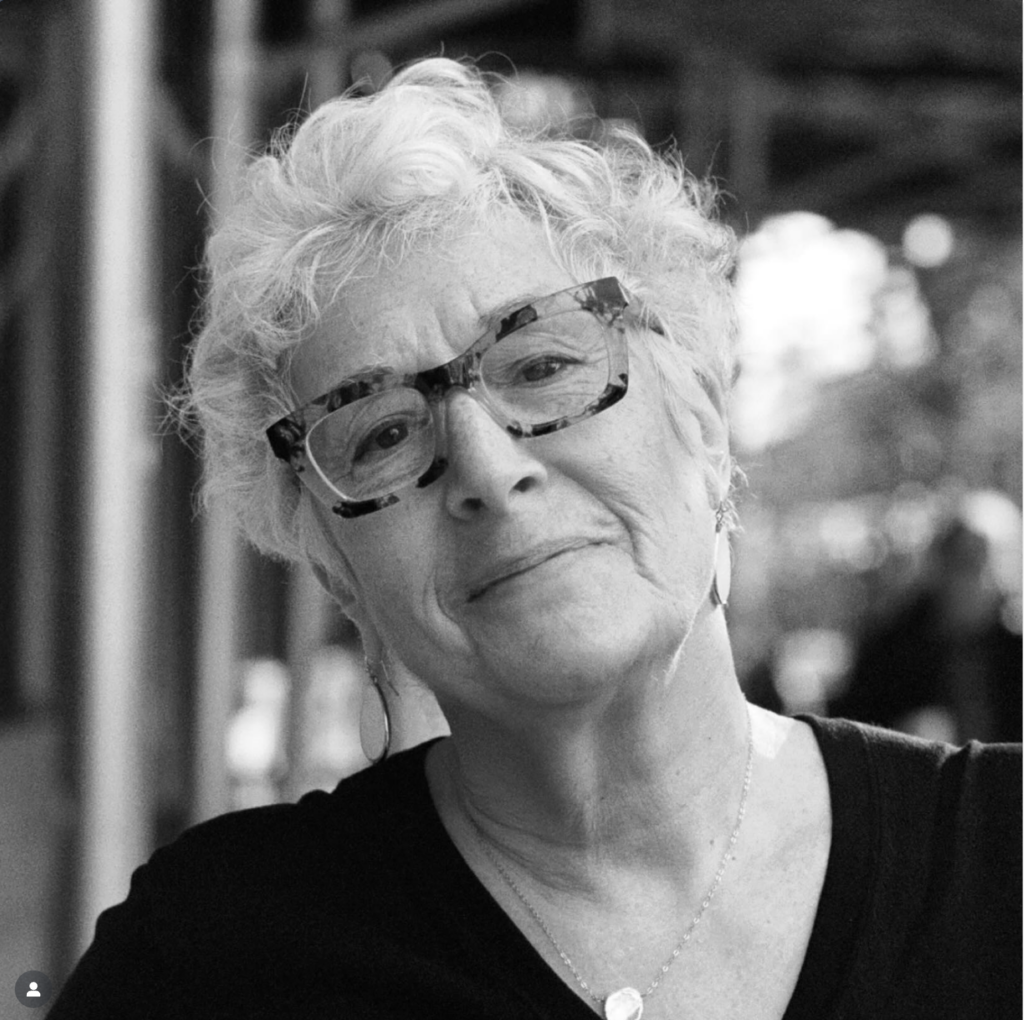 Jodi Sh. Doff is a NYC-based, sixty-something, single, sober writer. As the primary caregiver for an elderly mother with dementia, her recent work focuses on caregiving, aging and family relationships. Her writing can be found in multiple anthologies, literary journals and magazines, including Bust, O, The Oprah Magazine, Litro UK, Oldster, and Hippocampus Magazine. Learn more at Jodi’s Substack.
Thank you for this! Thank you for your honesty and brilliance.
I’m back it. I’ve just started requesting medical records and other documents to help me get to the truth of the story I started writing at Lesley.
Wow. I can relate to so much of what you said here, especially this:
“As a child in an angry and emotionally complicated home, I’d developed an invisible armor for safety, keeping a safe distance from anything resembling a feeling. I avoided asking myself why I did anything, why I was convinced I was both invisible and unlovable.”
I grew up in a similar environment. I’ve written many blog posts about my experience as a child. When I began caring for my father, who had Lewy Body dementia, I had to revisit old feelings. I was his caregiver and loved him dearly, but I still had some resentment towards him for not protecting me from my mother. Over time I forgave him, which was a beautiful experience.
About a year ago, I began to write my own memoir. It began as complications of blog posts I wrote about caring for my dad, intersected wtih memories of growing up as an ACA. I never finished, as it was too daunting and difficult for me. I would like to revisit it, as it’s probably my one lifelong goal: to write a book. Perhaps one day I will.
I never felt lovable either. Sometimes, I still don’t. Thank you for what you shared.
This is Evie Frances. I wrote the post above. I didn’t mean for it to be anonymous. I’m also on Substack.
This is extraordinary Jodi
Quite an inspiration
Defining sobriety through exploration
Thriving rather than surviving
Keep writing
Kindly
So nice to see your name there! Hope you and yours are well. And thanks for reading. Hippocampus is one of my favorite places to be read.
Wise. Exceptional. Lovable. These are words that describe the Jodi I know. Thanks for this, something every memoirist needs to remember.
I rarely think of myself as lovable. So, thanks for that. This truth vs fact is something I still struggle with and I know I’m not the only one. For me the big debate is which matters more, but I image that depends on context and situation. Love you long time.