


Late is not an alarm but a whisper, a tickle, a background drip.
Late is an itch between my shoulder blades, a joint that won’t crack, a post-nasal tic that won’t become a sneeze.
Late is a frantic whatthefuck muttered in the rush of changing clothes, packing the car, checking the bag, the purse, the other bag, shoving a stash of tampons into the toiletry holder because I definitely need them, right, right?
Late is the sick feeling I get halfway to the writing conference in Baltimore when I realize I’ve already stopped three times to pee.
I spend the first day of the conference with a plastic smile, cellophane-sheer over the worry lines on my face. The book fair is a flurry of sound and movement.
I watch mothers with infants they’ve swaddled and strapped to their chests, freeing their hands to peruse the books on offer. A woman walks past with a manuscript tucked under one arm, exhausted but content, joy radiating from her face into the depths of a stroller.
By the front doors, a steady throng of parents escort wailing children out of earshot. Under the murmur of the crowd, the chatter of friends reconnecting and authors pitching their books, I can still hear a conglomerate caterwaul of crying and shushing and frustration.
I fold my hands over my belly as I glance back and forth between a mother’s smile and a mother’s rage.
Late is not motherhood; late is only potential.
Late means nothing until I let it.
On the second day, I swing by the CVS on my way from the hotel back to the conference, but I don’t buy a pregnancy test because a light-pink spot of morning blood has convinced me you are a fiction.
I walk the aisles with a slight limp, toes blistered from a day of standing, walking, pacing, tapping. I find the bandages, check out at the register.
I address only the wounds I know are there.
Somewhere in the turmoil of wanting, it becomes you–and I can’t keep calling you late, so I try out names.
First, you are Avery. I’ve never known an Avery, and it feels right, naming you after nothing so long as you are nothing, so long as I’m not sure you’re there at all.
Then you are Ella, a part of my name for a part of me, but with that thought my guts churn and my fingers twitch and you don’t stay Ella for long.
Finally, you are Abra, for the girl in East of Eden; days at a literary conference have made me pretentious.
In the book, Abra watches the people around her invent more palatable versions of her. Her father’s Abra, her mother’s Abra, Aron’s Abra—these are the Abras who are loved; these are the Abras that will never exist.
The bleeding stops and starts and stops again, but this wanting is fierce and endless.
Wanting to know.
Wanting to become.
I am still not the woman who wants you, not really, but I want to be her, or I think I do. Which Abra am I? I never played with dolls as a child, never longed for this—but I keep hearing you’ll change your mind when you get older echoing in my head, less a promise than a command. The voice changes; it’s my mother, my doctor, some beautiful actress in a heartwarming sitcom. The message stays the same. You will want this, one day.
They don’t say, when you’re normal, or when you’re a woman, or when you’re better. Not really. But I hear it.
In the convention center bathroom, all trace of blood is gone, and I drown in all the versions of myself I can imagine, wondering if any of them could be a mother.
I replay imagined conversations with clinic nurses where I tell them, again and again, how much I wanted to want you. Where I beg them to tell me, it’s okay if you want something else.
On my last night at the conference, I drink you away. It wasn’t on purpose, not really, but the morning’s cramps come with a new swirl of blood in the toilet and a haze of shame I can’t shake, all the same.
I can’t be sure, of course, that you were ever really there, that there was ever anything to poison—or anything, now, to mourn. Still, I whisper small eulogies in the string of rest-stop bathroom stalls on my drive home, praying to lost possibilities as I leave you behind, drop by drop, piece by piece.
I keep missing turns, but the GPS reroutes with a calm, even tone. No matter where I point the car, or how lost I become, the directions persist; all roads lead to whatever comes next.
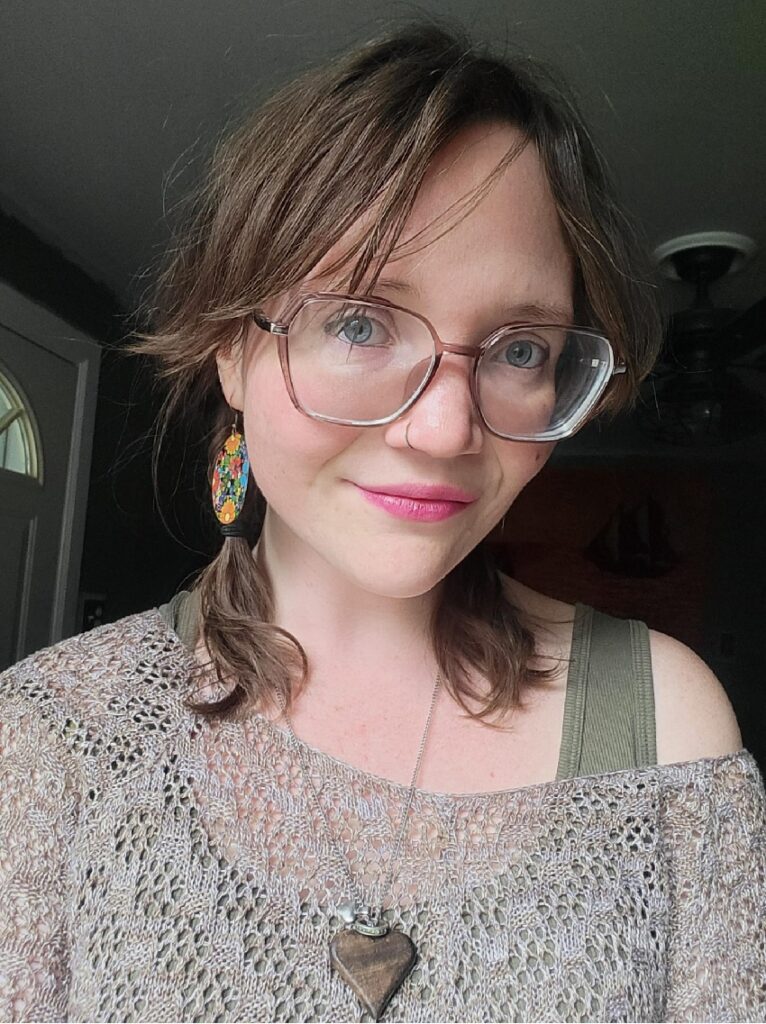 Liz Abeling is the CNF editor for After Happy Hour Review and a co-founder of the Pittsburgh writing collective, Scribble House. When she isn’t writing, she can be found working at the local cemetery or being ordered around by her two wildly unhinged cats. Her work can be found in Barrelhouse, The Journal, Bat City Review, The Fiddlehead, and others.
Image Credit: Flickr Creative Commons/Istvan
Love, love, loved. From my twenties I could relate.
“I can’t be sure, of course, that you were ever really there.” Gorgeous writing.
Absolutely gorgeous. You brought me back to a moment in time and held it safely, made sense of it in a way I was never able to. The universal in the specific. Thank you!
“but I keep hearing you’ll change your mind when you get older echoing in my head” – wow. Thank you for sharing your writing, Liz.
Thank you .
I am constantly amazed that such specific moments in time are captured so eloquently and sometimes so painfully close to thoughts that have touched my world. I want more words please.