


On the day he died, my father’s body was donated to a university medical school and for the next year, God knows what was done to him. The school had said he would likely be rotated through multiple campuses across the state, but how many times he was incised with a scalpel, bored into with a drill, stretched open with a clamp, or even split apart with a saw, like a fallen tree, will forever be a mystery. All my mother and I know is that whatever was left at the end of a year was cremated into sandy remains, poured into a thick plastic bag, and shipped inside a cardboard box to the front step of our house. For an hour, the box rested in stillness with the other dropped-off packages—Amazon, Lane Bryant—while the maple tree shadow leaned, the front yard grass rippled long and unmowed, the Irish setter across the street barked away at nothing. Then it was carried inside and stacked on the edge of the piano bench with the others and a day went by before anyone took a moment to see who sent it and what it might be.
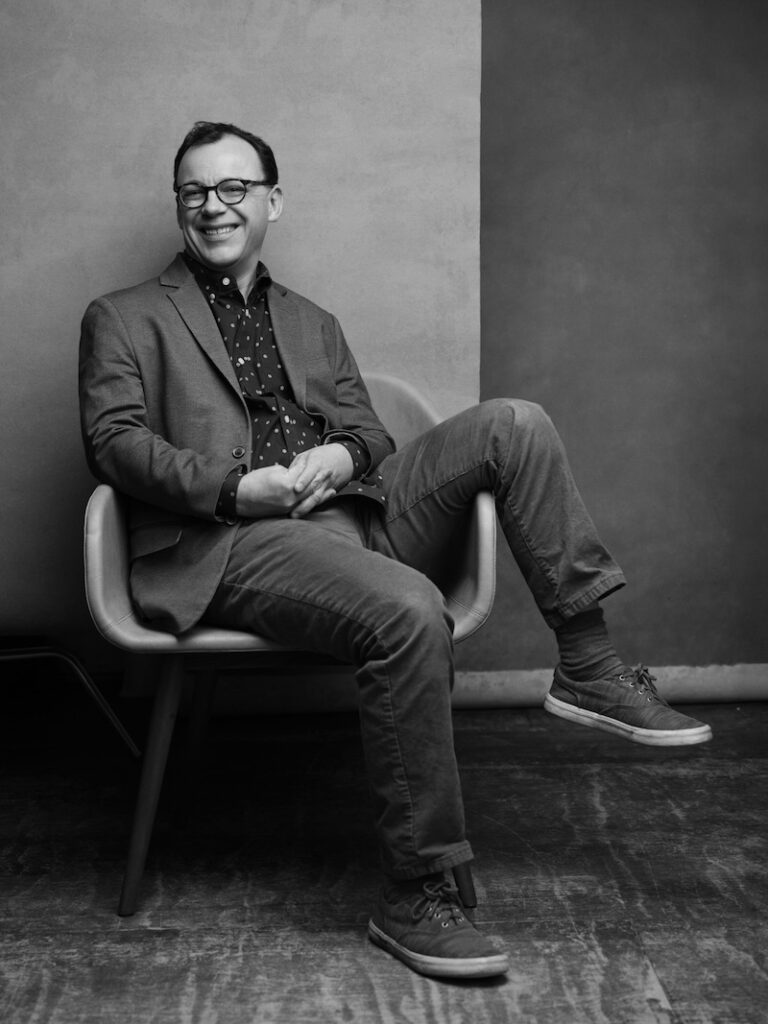 Matthew Trumbull is a writer and actor who lives in New Jersey with his wife and two children. His flash nonfiction writing has previously appeared in Hippocampus Magazine in July 2025. He has also been published in Short Reads (December 2025) and the inaugural issue of Slips Slips (May 2025). Matthew’s solo play, The Zebra Shirt of Lonely Children, was a recipient of fringe festival awards in New York and Minnesota. He has been a mainstage storyteller at The Moth. Website: matthewtrumbull.com. Instagram: @matthewtrumbull
Image Credit: Flickr Creative Commons/Edna Winti

Your little story reminds me of the phrase, “That’s Life in the big city.” Although there is so much packed into this piece. While reading this it reminded me of a similar donation my late wife had arranged while she finally sucummed to 12 years of cancer treatment. Being a MSW, she always seem concerned about and for others. Her choosen organization sent a very professionally assembled package of how they medically used her corpse and lots of other information that I soon forgot about and stowed away, …probably to be rediscovered after my body goes through the same process, as we had planned for. (I hope they will still be in business.) Here is part of reason I am all for this type of end of life, body usage. All walks of medical students stand the opportunity to further their education through actual hands on learning of some much needed proceedure. And there are no funeral expenses charged to those that still have to live here, alone, without their soul mate. She had also prearranged and paid for a very lovely Memorial service for all those friends and family to join together, in celebration of all that we had shared over the years. Plus she had those others, specially selected to do all the speaking and story telling so all I had to do was sit there and listen. She made this way so I would be spared of anything and everything having to do with the service. I can never thank her enough for choosing me to be her forever man. Death is something most of us never wish to orchestrat. Peace & Love to all y’all.
An eloquent and meaningful response, reader. I too have thought about the way I will handle arrangements when my times comes, if I am blessed with the time and wherewithal to make them. I would love to follow in my father’s footsteps and donate my own body for study, so that it may be of use for a little while longer after I no longer have need of it. And I will search for any and all means to make the immediate aftermath of my death a lighter burden for my loved ones; funeral arrangements, financial arrangements, the whereabouts of documents, etc. It makes a big difference in the grief process. May your wife’s memory continue to be a blessing.–Matthew
Very powerful work, Matthew. I’m impressed with how you don’t shy away from the gruesome truth of it, yet manage to build in an undercurrent of your own shock and sadness of how your father was handled in death.
Well
Done!