
Interviewed by Renée Reese

I took my first poetry class this summer and have been immersing myself in the poetry world ever since. The Instagram algorithm apparently noticed and started serving me up more and more poetry content.
When I came across one of Kelly Grace Thomas’s poems, I immediately followed her. A day later, I saw the opportunity to review her upcoming book and leapt at the chance.
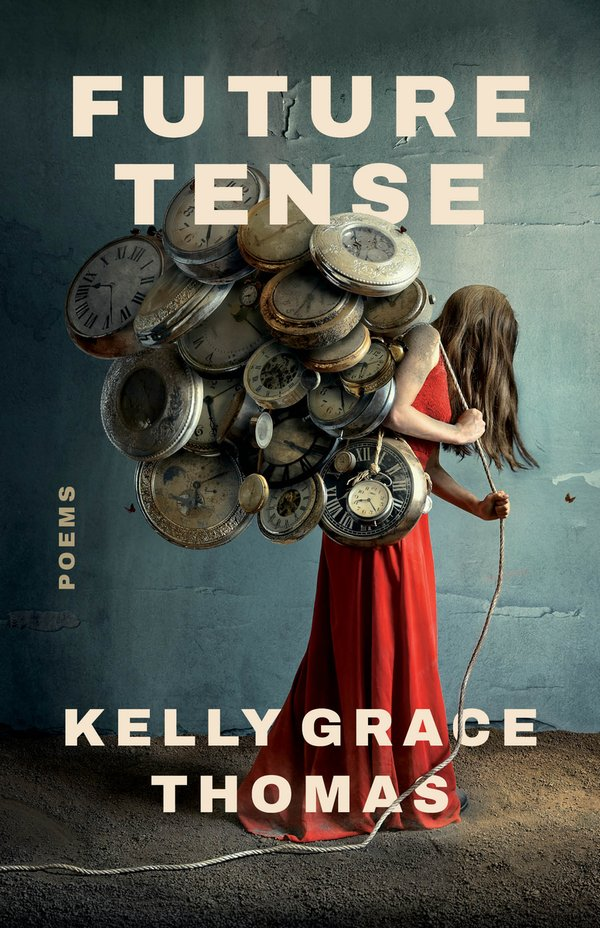
Future Tense (Alice James Press; Oct. 2026) is a memoir-in-verse about infertility and loss. I was so excited to read it and even more excited to talk with Thomas about it. Our conversation is below.
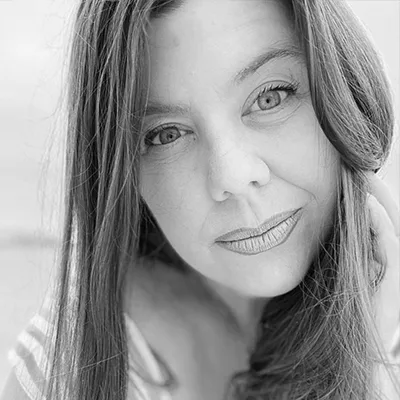
Renée Reese: Why did you choose memoir-in-verse to tell this story? What about poetry in particular lends itself to the story you’re telling here?
Kelly Grace Thomas: I wrote these poems in the middle of the storm, as a life raft — something to cling to so I could survive. I never expected anyone to read them. I definitely didn’t expect them to become a collection. So much of my mom’s cancer and my infertility was shrouded in silence. She didn’t want people to feel sorry for her, so she kept her illness secret. Every time I shared my fertility struggles, well-meaning people would tell me all the things they thought I was doing wrong, or how easy it had been for them. I was trying so hard to survive that I don’t think I processed what was happening while it was happening. I could only process moments, feelings. I couldn’t see the beginning or the end of the story because I was so lost inside it. I couldn’t make sense of it, so I made poetry. I was trying to find something beautiful inside the ache.
Once my mom died, I was finally able to talk about it, to mourn her, and to share the miracle of my daughter. Whenever I told people about my mother’s diagnosis and the speed of our adoption, I always began the same way: “It’s a wild story.” After saying that enough times, I realized I wasn’t just carrying a book of poems. I was carrying a memoir. Poetry became the only form that could go deep fast enough — to go as fast and deep as I needed to show the worst ending and most beautiful beginning.
RR: Yes! I love how our stories choose the form for us. You definitely take us deep. Even before reading the poems themselves, the table of contents begins telling a story and establishing the themes of time and waiting. Can you talk about using time to build tension and show the significant emotional stakes throughout the book?
KT: There isn’t a more honest clock than the body. When the stakes are life and death, time stops feeling abstract. For years, all I thought about was how much time we had left — how much longer my mom would live, how much longer my eggs would be viable. Everything in my life became a countdown.
At some point I realized that if I was measuring my life in months, appointments, and shrinking odds, the book should measure time the same way. I wanted the structure itself to create tension, so readers weren’t just watching the clock — they were trapped inside it with me.
The collection covers three of the hardest years of my life, but compressing them into a countdown made the inevitability impossible to outrun. Time isn’t just a theme in this book. She’s a character. She’s the antagonist and, in some ways, the narrator.
RR: Cycles also run through this collection. Menstrual cycles, treatments, years of waiting, recurring hope and disappointment. How did you think about repetition while structuring the book?
KT: It’s always hard to measure an emotional mess, and yet for years that was my life. I wanted the reader to feel like they were stuck inside the same story that kept repeating, because that’s exactly what infertility feels like. Every cycle is twenty-eight days of hope and hurt.
The challenge was making repetition feel true without making the book feel stalled. As I write in the poem “Future Tense,” the cost of anything is how long you’ll wait. My wait wasn’t staying the same. The stakes kept rising. My mother’s health was declining. My body was getting older. My marriage was beginning to fracture. The pattern repeated, but every return carried higher stakes
Structurally, I treated each section — One Year In, Two Years In, and so on — as an act in a novel. Every time the reader returned to the cycle, I wanted them to feel that something had changed. The same hope. The same heartbreak. But a different version of the people living through it. That’s how the book keeps moving forward, even while it keeps returning to the same question: How long can love survive waiting?
RR: As the collection moves into its second year, the emotional landscape seems to shift. The poems become increasingly intimate as we learn more about the speaker’s mother, her marriage, and the toll this journey is taking on her. How did you decide what and when to reveal, to allow the emotional intensity of the collection to build?
KT: One of the hardest things about writing is deciding what to tell the reader and when. I knew the first section needed to establish not only the context but the inciting incidents — both my diagnosis and my mother’s. Once the reader knew what happened, I could move into the how and why: how grief rearranged an ordinary life, why it hurt so deeply.
One of my favorite aspects of writing is interiority — the chance to live inside another person’s heart and mind. I wanted to be generous with that access, to let readers into the waiting rooms and bedrooms, the dinner table conversations, and the silences where the hardest things couldn’t be said.
I also wanted to show that infertility is so much more than I really want a baby. My husband and I argued over how to build a family out of heartbreak, and it nearly ended us. It cost us our life savings, our faith in the medical system, our trust in the universe, and forced us to confront impossible questions about when and how we try to shape fate. Adoption brought our daughter into our lives, and with her, a different kind of healing—but healing doesn’t erase scars, it just means you learn to live with them as part of you.
By the end of the book, I wanted readers to feel the accumulation of it all — not just what each person lost, but what they carried forward. Grief and love became a tally. Every gain leaves its mark. Every loss does too.
RR: You mentioned earlier that time was a character. The body feels like its own character too. How did you approach writing the body, especially when it held so much grief and uncertainty?
KT: For better or worse, my body has always felt separate from me. Like time, she’s often felt like an antagonist. At some point I realized that the more divided I was from my body, the harder it became to imagine building a life inside it. As the story got harder, one thing became clear: we needed a truce.
Baby or no baby, I didn’t want to spend the rest of my life at war with myself. I’d already lived through nearly three decades of eating disorders, over-exercising, drinking too much, and smoking. By the time I was writing these poems, I wasn’t interested in winning against my body anymore. I wanted to heal the space between us.
I approached my body the same way I approached every relationship in the book. I wanted readers to see what we were fighting over, what it would cost if we never reconciled, why a truce was necessary, and how love begins with deciding to stop treating yourself like the enemy.
RR: Form shifts throughout the collection. There are erasures, crossed-out lines, unusual spacing, poems justified to the right, and others. How do you know when a poem is asking for a particular form? Were there instances where the form helped you discover something you couldn’t have arrived at through language alone?
KT: This is such a great question. Form is usually the last thing I think about. I begin with language, and once I feel like the emotional truth is intact, I ask: Have I said everything this poem needs to say? That’s when I start thinking about form.
I often want the poem to mirror its own emotional argument visually. It was important to me that the book reflect the ways infertility, cancer, and adoption are so often spoken around instead of spoken about. There was always a tension between what I was feeling and wondering, Is this okay to say? Is this mine to say? Sometimes the page needed to carry that hesitation as much as the words did.
Because form comes late in my process, it becomes another layer of meaning rather than a starting point. When I wanted repetition without stasis, I reached for forms like the ghazal and sestina, where returning can become transformation. When I used erasures, crossed-out lines, unusual spacing, or blank space, I wasn’t decorating the page. I was giving shape to fracture. Sometimes what disappears says as much as what remains.
RR: On a craft level, what surprised you most about yourself and your writing process while working on this?
KT: Story is what sticks. The more I write, the more narrative feels like a necessity. As a poetry coach and editor, I read hundreds of collections — from newly published books to my clients’ manuscripts — and I’ve realized I need a clear thread or an aboutness to lock into a book. I wanted Future Tense to pull readers through the way a memoir does, and then keep pulling them the way a page-turning novel does. One of my favorite compliments is when someone tells me they read it in one sitting, because that’s exactly what I was trying to build.
I also wanted to expand what people think poetry can do. I wanted every poem to earn the next page. I kept asking myself: What if a poetry collection could be both deeply literary and completely unputdownable?
The biggest surprise was how architectural the process became. I put every storyline into a spreadsheet. I tracked each character’s arc, when information was revealed, where the emotional peaks landed, and how the tension accumulated. It taught me that poems don’t have to surrender narrative to stay poetic. Sometimes the strongest collection is built with a poet’s ear and a novelist’s structure.
RR: On a practical level, what did you do to take care of yourself while writing through such incredibly raw and difficult topics?
KT: I always told myself that I came first. If I needed to rest, I rested. If a poem felt too personal, I wrote it anyway and gave myself permission to leave it out of the book. There are so many sensitivities wrapped up in infertility, adoption, and grief, and I wanted to protect my relationships as much as I protected the work.
I cried a lot. I’d write in long, intense stretches, then disappear from the page for a while. I didn’t write many of the poems about my mom until after she died, and once I finally could, nearly a third of the book came in six weeks. On one writing retreat, I wrote ten or fifteen poems in six days. I’d go in, go deep, sob, feel all of it, and then come back up for air.
The surprising thing is that writing this book was much easier than living this experience. The poems gave shape to feelings I’d been carrying in silence for years. It wasn’t the writing that hurt most. It was the silence. Breaking that silence became the primary way I took care of myself.
RR: I cried a lot while reading this too. I can’t thank you enough for your bravery and your commitment to tell this story. Thank you for talking with me today!
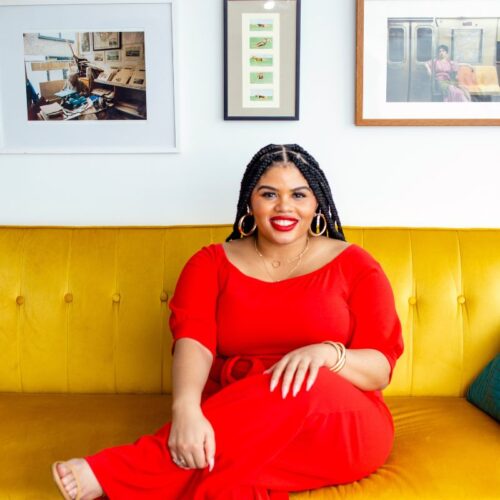 Renée Reese is a lawyer, creative nonfiction writer, and New York native. She is an alum of the Kenyon Review Residential Writers Workshop, and her work has appeared in Huffpost. She runs The Creative Year publication on Substack, which chronicles her journey as an artist. When she’s not reading or writing, you can find her dancing, painting, or in a New York City coffee shop, daydreaming about her next project.