Reviewed by Audrey Shipp

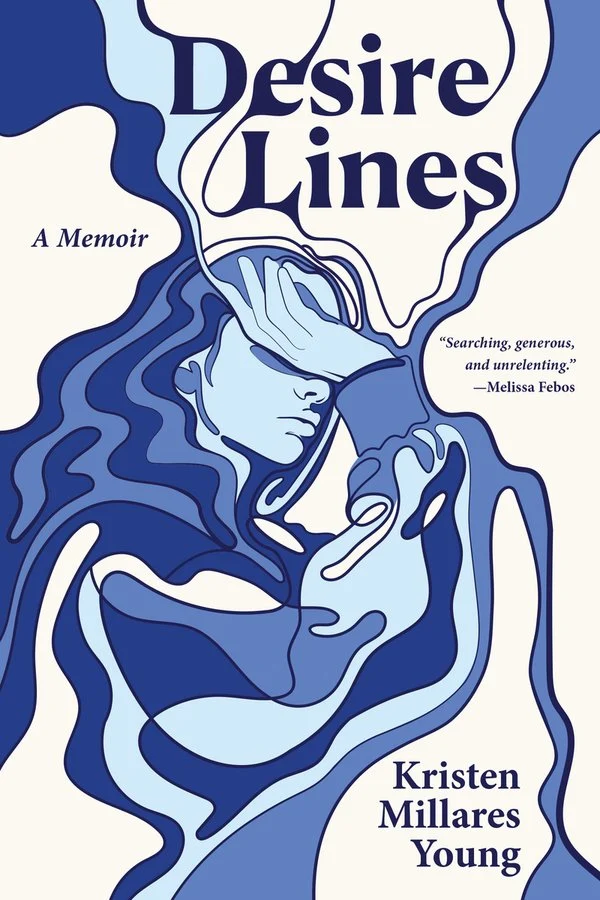 In Desire Lines (Red Hen Press; Oct 2026), a memoir-in-essays, Cuban American novelist, journalist, and essayist Kristen Millares Young delivers a series of confessions, one being how her life story began in a fractured household. She makes this revelation in “Add a Little Salt,” the tenth essay in the collection. And perhaps it is the fractured household that compels her to tell her story in fifteen interlocking narratives. From the brokenness of family and the ruptured female body, she forges literary structure.
And just maybe her book’s structure is inspired as well by the trade winds that travel between Key West, Florida — where her American Grandma and Grandpa lived—and Cuba. The author confides in essay eleven (“This is not a metaphor”) that her grandparents’ small town, “where the current flattens the turtle grass,” was, in her youth, a paradise. To discover the secrets floating in the air, I found myself having to surrender to the winds guiding Millares Young’s thoughts.
The abuse the author suffered and which her family silenced lurks off the shores of the narrative like a hurricane. Hovering over her experience of violation are two sets of grandmothers who are the bookends to her lived experience — American Grandma from Key West and Abuela who was born in Spain, immigrated to Cuba, and then to the U.S. Both sets of grandparents (Grandma and Grandpa and Abuela and Abuelo) were married more than sixty years. When the author is two years old, her mother divorces her father. Thus, the fracturing begins. Without dad at home, her professional mom, busy as an administrator for Social Security, asks Abuelo to be caretaker for her young daughter.
Abuelo is not only a caretaker at home; he also drives young Kristen to school. Along the winds of this narrative, we are shocked to learn Abuelo punched the author in the face when she was in middle school. But Abuelo also did “something more” of which we never become privy because Millares Young refuses to offer details. And why disclose the stories she’s already told her therapist(s)? As the essay “Searching the Past to Find the Future” demonstrates, as a child, she dutifully reported the abuse to her public school in Tampa despite her mom blaming her and denying it never happened. And Abuela and the narrator’s dad will support Abuelo until his death. The result is the author feeling like a foreigner in her own family as she gradually comprehends that their denial has more lasting effects on her psyche than the abuse itself.
Not only must the author triumph over lingering memories, she also must overcome the constraints of her own body. Cancer runs in the family and targets both her mom and dad. When the author learns she has a large cyst on her right ovary, she battles not only the onslaught of familial betrayal, but also her own physical limitations. Her brief bout with cancer leaves her forever thankful to have conceived two children with her husband. Yet at the same time, she is compelled to “write hard…to build a body of work before it’s too late.”
In the essay “She of Many Names,” Millares Young writes a manifesto of sorts. She informs us that her narrative is a search for wholeness and integration. That her book is “about becoming myself and a mother at the same time.” That against the odds of familial betrayal, she seeks community in defiance of patriarchy. And she finally exhales as she confesses that her search for the divine feminine in history allowed her to find it within herself.
In Desire Lines, Millares Young invites us to stay grounded in the experience of the female body as we glide upon the winds that circulate memory upon memory. Memories that twist and turn, fall back upon themselves, graze our cheeks, make suggestions in one ear, and then take flight into the atmosphere of her thoughtfully constructed words and phrases.
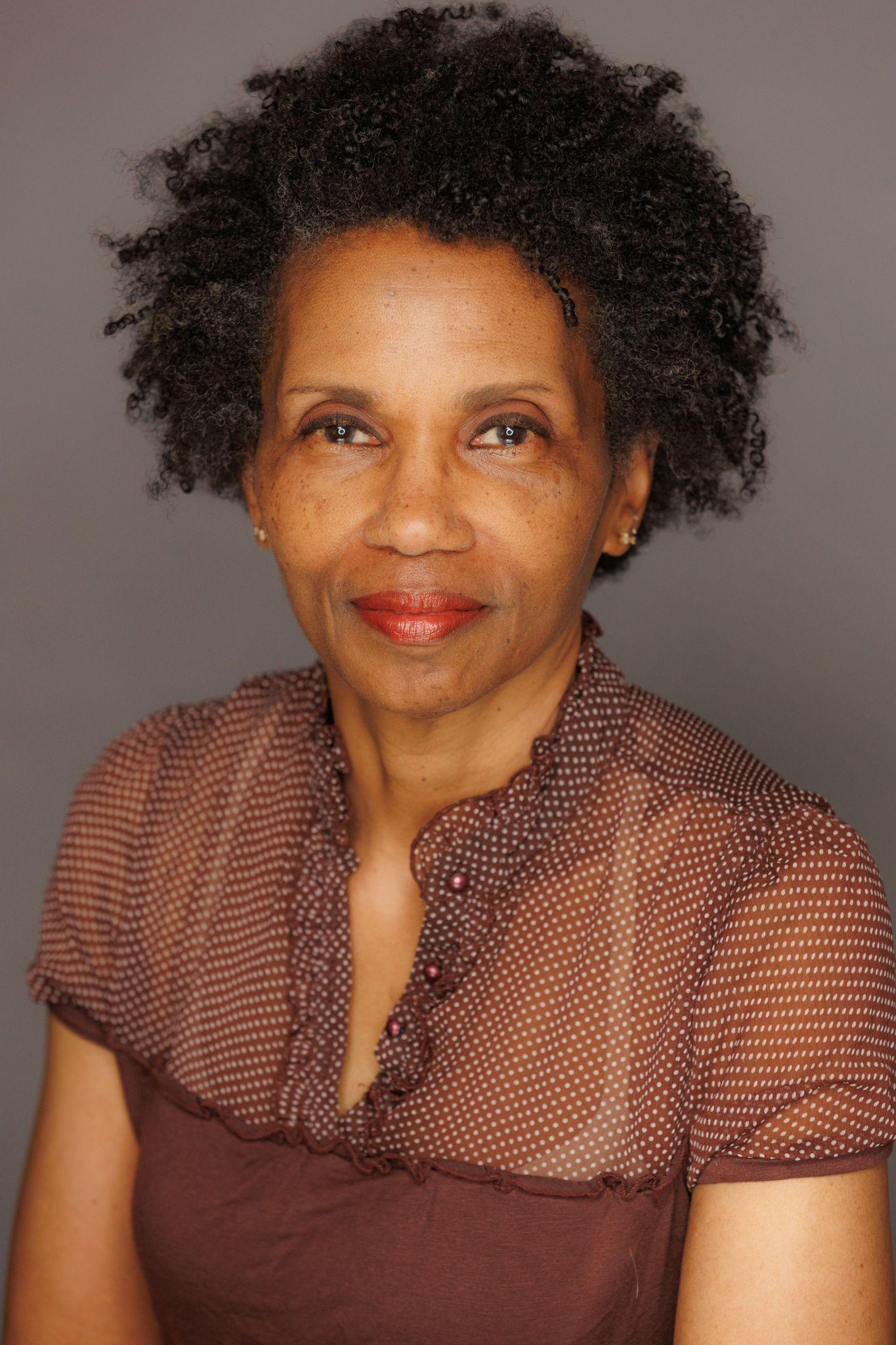 Audrey Shipp is an AWP Writer to Writer mentee and a PEN America Emerging Voices Workshop LA honoree whose hybrid memoir When I Was a Bilingual Writer Birthed by Black L.A. will be published by Unsolicited Press in 2027. She is the author of the poetry collection Poetry, Poesía, Poésie in AfroDiaspora. Her writing has been published in various literary journals including Good River Review, Brittle Paper, Litro USA, A Gathering Together, and Américas Review. She has English degrees from both UCLA and Cal State LA. Her professional life has been dedicated to teaching English and ESL in public high schools in Los Angeles. Find her at audreyshipp.net.