

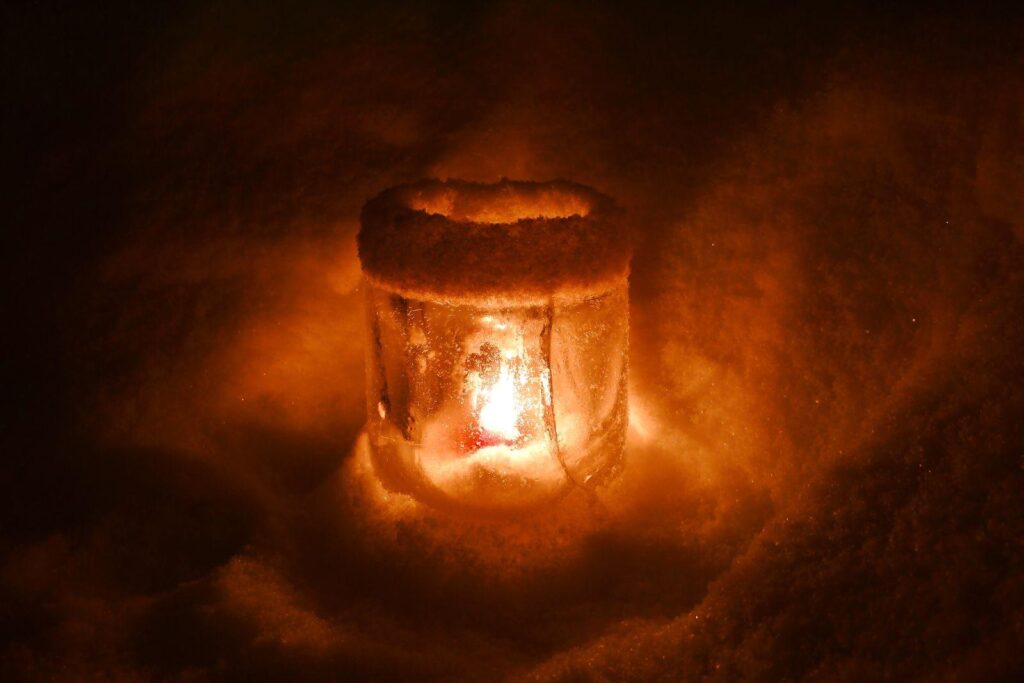
I could ask my neighbor a mile away to tell me again about the jars of water she sets out in moonlight or the oranges she inserts in meals. Or I could ask her to wax on about summer, now that we are in the thick of February in Maine.
I used to love snow. I still don’t mind snow. It’s the wet, weight, heft of it, how it causes the sag, scrape, and toil of the house, the road, my body. Weather can be a welcome distraction. I shovel twelve-foot swaths around the house for satisfaction like checking off lists. I once read how snow is an insulator for sound, and there is noise everywhere these days — the current administration, the billionaires, billionaires rocketing to space, the snowblowers, snowplows, gas-leaking generators, the ex-partner’s confusing texts — so why do I shove such softness away from the foundation, the roof, all that surrounds?
I don’t know why I do most things these days. I want to set out jars of water. I used to do this during northern Wisconsin winters starting when I was five. I’d set out containers for architecture: cottage cheese bins my mom had emptied, Jif jars vacant from multiple sandwiches, and those solid white pints, creamy and stout like rectangled polar bears (I can’t remember what those once held). We’d put food dye in the water like Ranger Rick instructed, and once frozen, build rainbowed ice castles with candles inside on the picnic table cleared of snow. The same table where my sisters and I would set out five-gallon buckets midsummer and fill them with panfish: bluegill, crappie, perch, their palm-sized bodies flapping inside. Then we’d wait past midnight to watch as raccoons, our anticipated guests, climbed up the porch to tear and crunch the flapping, scaled bodies. It was a show and a mess. We’d get yelled at but softly. We loved feeding the raccoons, watching them devour their dinners. And our mother was OK with it, or at least she surrendered to her daughters’ actions, as long as we washed the table come morning.
And we would. We’d scrub with Dawn at dawn. We didn’t think about rabies or how wrong it was to feed wildlife (It was. It is.). We fed them only what they would eat on their own anyway — I remember that being partly the logic or the excuse or part of some greater plan — but maybe that too was a problem. We were kids more akin to the creatures of the wild than the humans who moved to it. The goal was to feed. What did it matter how the food was obtained?
The panfish routine was part of the season until it wasn’t. Like ice castles. Or the tin cans we’d punch holes into using a nail and hammer, then at night in a February much like tonight’s, we’d place candles inside those designs of holed stars, smiley faces, half-moons. And the light would shine through. Maybe the raccoons watched from a distance, wondering about fish while inside their burrows under feet of lake-effect snow. But that was years ago and states away.
Those raccoons are gone now. Those forests sheltering their burrows scarcely remain. I’m older and secluded here in Maine in a house too much like the one I grew up in. It’s easy to avoid the news, at least. I’ve been avoiding it more than usual. Maybe I thought we could do something about the world or at least our swath of it. Maybe this lull is part of the process. Inaction as action or all of it just a different kind of distraction. Maybe this is the excuse for doing simply nothing. Abstinence as resistance. What if the goal is simply to avoid reaction?
More snow is in the forecast, an ice storm slated for next week. So yes: remain calm, carry on, just wait for the melting (or the meltdown). Wait for the seasonal interim. Maybe we should gather whatever containers we have from the recycling bin, punch holes into the tin, or fill the plastic with dyed water and set it outside to freeze. Slip out the frozen foundation blocks at night, and build. Build something bright, multicolored.
The stars can be vibrant. This sky here is a registered Dark Sky. Dark. Noise. Words. Maybe I just get distracted by connotations. Words, actions. Too many of the one, the lack of the other. Maybe it comes down to balance. Or tradeoff: the exertion of shoveling snow to keep the foundation dry. Remove what insulates to allow more breathing room. What if Ranger Rick’s architectural plan for colorful ice castles was meant for building beacons? Maybe. Maybe I should follow that plan. Stack ice blocks or holed tin cans. Light all the candles on fire.
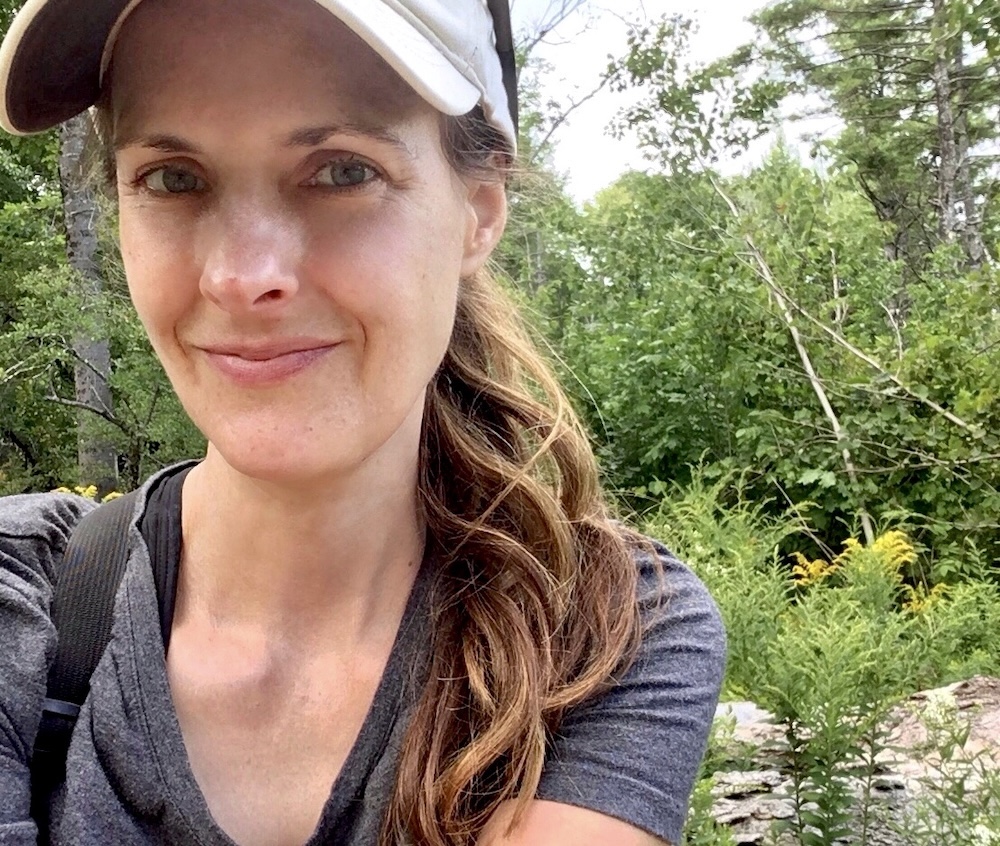 Michelle Menting grew up the youngest of 12 siblings in a small and poorly insulated cottage in the Wisconsin “Northwoods” near Upper Michigan. She now lives in Maine in a house with similar insulation. Her poems, flash nonfictions, and flash fictions have appeared in Cincinnati Review, Passages North, One Art, Diagram, Cimarron Review, and other places, including one full-length and two chapbook collections of poetry. She teaches at the University of Southern Maine and directs a small-town library in rural Maine.
Image Credit: Flickr Creative Commons/Timo Newton-Syms