
Interviewed by Dorothy Rowena Rice

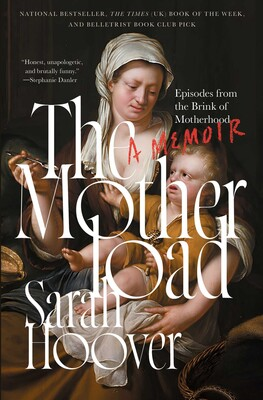 I had the pleasure of speaking with Sarah Hoover via Zoom just prior to the publication of the paperback version of her debut memoir, The Motherload: Episodes from the Brink of Motherhood (Simon Element; April 2026). She was in Los Angeles taking meetings related to the memoir’s TV adaptation. While there, she was staying at the storied Chateau Marmont, which is the setting for the book’s opening scene and a familiar retreat for the author.
The Motherload, a national bestseller in hard cover, is the story of Hoover’s struggles following the birth of her first son. It’s inadequate to describe the memoir in terms of the story—severe postpartum depression (PPD), coming to terms with motherhood, marriage, not being in control of anything, and the hard-fought journey back to sanity and peace of mind. Inadequate because it’s Sarah Hoover’s voice that leaps off the page.
She’s smart, funny, self-aware, articulate, and, for much of the memoir, as she herself says, “batshit crazy.” For a tiny taste, and in case you don’t expect a motherhood memoir to be raw and unfiltered, here’s the first sentence: “The last line of my baby shower invitation said, no gifts unless it’s drugs.”
Dorothy Rice: It’s so great to finally connect with you.
Sarah Hoover: Same! Thanks so much for doing this. How are you?
DR: Good! Having a weird hair day.
SH: Always! It’s never the same.
DR: The memoir has done so well. Hardback, paperback, and now film. I loved it of course.
SH: Thank you. I really appreciate that. But, you know, I have imposter syndrome and I feel like a failure and a loser . . . all day every day.
DR: Don’t all writers?
SH: Yes . . . I imagine so. That’s how you know I’m a writer.
(We laugh. Throughout our hour-long conversation, there was lots of laughter, wry smiles and commiseration about hair, motherhood, writing, and relationships. Sarah, much like her authorial voice, is spontaneous, funny, and frank.)
DR: Before starting this call, I reread the first scene in your book, the baby shower at the Chateau Marmont. Your voice is so distinct, and the shower itself so outrageous, so not the typical or expected baby shower. Part of me wanted to be offended. Mostly I just wanted to keep reading.
SH: I know, right? There is a risk of everyone hating you. The books I enjoy the most and that are memorable are the most voicey ones. That’s something I really look for in what I read. With Motherload, I wanted to create a propulsive read. Postpartum depression (PPD) is so stark — I thought my story would be more compelling if there were some entertainment value to it as well.
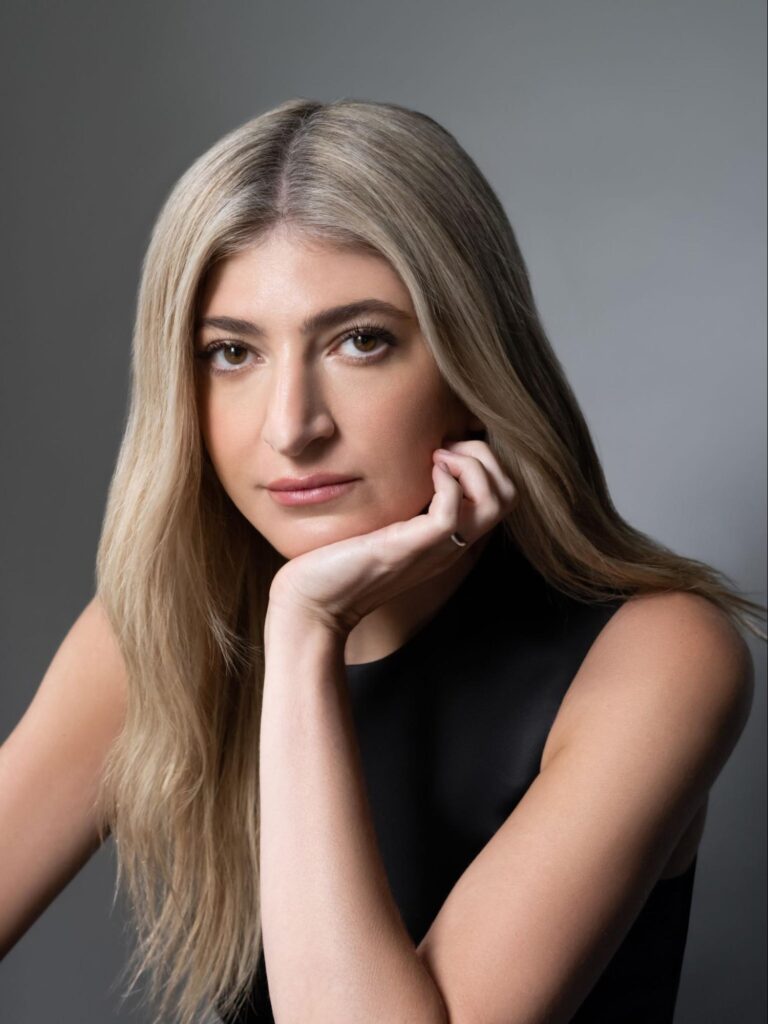
DR: The Motherload definitely has that. Which is a combination I really appreciate—finding the humor and craziness in the midst of trauma. Switching gears, I’m really interested in learning about your journey to publication. Many Hippocampus readers (me included) may have published without an agent and/or with smaller, independent presses. From all appearances, you have found tremendous success via the more traditional route.
SH: For starters, none of it came easily. I was rejected by about sixty places before Motherload reached the right hands. I had a whole other career for twenty years and one fantastic job for over a decade. Having that email address at a very big gallery opened certain doors in the art world. So I was used to things being easier. When I pivoted to publishing, it wasn’t the same. Which was so demoralizing because this book is my baby. I put my heart into it. I wrote the book I wish I’d had when I was going through PPD, and I firmly believed there had to be other women who needed this story. I felt like I was truly banging my head against a wall for a really long time. I faced so much rejection, and I still do, every day.
I think as an artist, and someone who worked with artists for my career, I should have known this would happen and been better prepared. I’ve learned. The capacity for resilience and to keep going and believing in your art is a hallmark for every artist who actually makes it. You can’t falter in the face of rejection. You just have to keep going and realize that it’s likely not personal, even if it feels that way.
On a more granular level, when COVID happened, my life got quieter. In the art world, in-person exhibitions and shows curated at museums didn’t happen for a year. My work kind of ground to a halt. I had a two-year-old at home. So, in the down time, when my kid would nap and stuff, I revisited all the journals I had written when I had PPD. At first, I was afraid I would be totally triggered revisiting that dark time. I didn’t remember how batshit crazy I was. But it was actually very entertaining and even kind of funny. My journals were so filled with rage. They were like ransom notes, rage scratched across the page.
I have a lot of energy and I love working. So I started writing an essay, you know, to keep my brain alive. And I was taking an online writing class because I wanted to sharpen that skill set. I hadn’t really written anything since I was an academic. Then I had 100,000 words, so I said to myself, I guess I’m writing a book now.
DR: And then the hard part started.
SH: That litany of rejections and setbacks. I shopped around for an agent and started working with someone. Then they were let go during a round of layoffs during COVID. A few months later, somebody from that agency reached out to me. She was going through the emails of the woman who was laid off. She really liked my pages and wanted to work with me. She wasn’t a full agent yet, but honestly, I don’t care how important someone is, if they’re the boss or whatever. I just wanted someone who would believe in me and be a thought partner. We put a proposal together, sent it out and got rejected absolutely everywhere.
Then I took a meeting with a great editor at Simon & Schuster. Which was amazing. But then she left for another job. I thought the project was dead. Then I finally got another editor who I really liked. And we were back on. It was such a roller coaster.
DR: What was the process from there? Did you have a complete draft of the memoir?
SH: I had submitted something like three chapters and an outline. I used my advance to work with the amazing Emily Stone. I call her my doula. We worked on structure and craft. I had written chronologically but she thought it might work better if I jumped back and forth in time. I really needed her fresh eyes. It took me like eight months to a year to finish a first draft. Then there were notes from my editor at Simon & Schuster that took me another few months to implement.
DR: You mentioned working on structure. Was the baby shower always your first scene?
SH: It was. It’s the first chapter I wrote, in 2020, and it’s largely unchanged. I started writing it and it just poured out. I didn’t want to change it much because I really wanted it to stay authentic and have that sense of urgency to it.
DR: Well, you succeeded.
SH: I love that. I used to be so afraid of my rage and anger. I was afraid to speak up and didn’t have the skills to defend myself. Anger can be unproductive and toxic, but it helped me break through my fear and learn how to advocate for myself. My hope is that the memoir helps women who need to break through their fears and advocate for themselves.
DR: Before I forget, I want to follow up on something you said earlier. You talked about rereading your journals from when you had PPD. You mentioned being worried that they might trigger depressing thoughts, but you found that wasn’t the case. This fascinates me. Your experience differs from my own, when I revisited adolescent sexual abuse decades after the fact. Can you say more?
SH: By the time I began writing the book it didn’t feel particularly cathartic. I’d done so much therapy and work on myself, plus journalling and processing, that I felt pretty in control of my feelings. But when I read for the audio book — I did my own narration because, well, like I’m the only one who knows what my mom sounds like — that’s when I cried a lot. I wasn’t expecting that. I didn’t cry when I was writing because I was very clear about what I wanted to say. I had a crystal clear vision of what I wanted people to take away and where I wanted the book to go narratively. So the writing process itself wasn’t cathartic for me. It felt like I was in my flow — in the right place to be and that took precedent over any emotions. But it’s interesting, isn’t it? How when I was focused on crafting the book, it didn’t hit me that way, yet when I went back and read the whole thing in one go for the audio book, that’s when I really felt it.
DR: I sometimes say that writing memoir isn’t therapy but that it can be therapeutic.
SH: My belief is that the best memoirs are written after you’ve done the therapy. Otherwise it’s very hard to treat all the characters with empathy. If I’d still been mad and resentful with my mother when I was writing, I couldn’t have seen through that to create a three-dimensional character. If you’re still writing and sobbing while you’re writing you may not be ready to write that book — you’re still in the journaling phase, the processing phase.
DR: Perhaps ideally, but not everyone has access to therapy. And not everyone finds the right therapist. I wonder if there’s a difference in terms of revisiting childhood trauma versus writing about the more recent past. I agree 100% that you have to be able to step to the side of the trauma and the players and be as objective as possible and that we should attempt to write about others with dispassionate empathy so that readers can decide for themselves how they feel about people and events.
You mentioned your mother. She is, of course, an important character in the memoir. How did she react to The Motherload? And how had your relationship with her changed as a result of motherhood?
SH: My mom was really awesome when I told her I was writing this book. I didn’t go into this intending to write about my mom, or my husband. I really just wanted to write about PPD. But it turns out it’s really hard to do that without writing about how your outlook on motherhood was formed and what that modeling looked like for you and what your relationship with your partner, if you have one, looked like. It’s all woven together.
I told both my mother and my husband that I was writing this and that they were in it. I was clear that what I was writing was based on memories, my memories. I don’t have a database. I didn’t have a video recorder following me around. I told them they might disagree with how I remember things, and I promised them I would write with as much empathy as I could and that I would try to understand their choices.
They were both very cool about it. They said that it was my life and my story and that I could write whatever I wanted. My mom said, “I’m a big girl. I’m a grownup. You can say what you need to say.”
I sent them drafts but if I’m honest I don’t think my mom read any of them. Now she jokes that I should have put more of her into the book. Oh, and my mom came up with the title, The Motherload.
DR: That is so cool. How’s your relationship now?
SH: We are really close. We talk every single day like a million times a day and she’s always very supportive. Something interesting that came out of sharing my journey with her is that my mom realized that she likely had PPD when she had kids. But back then (early 80s and 90s), it wasn’t really a conversation moms were having. She was undiagnosed. She can now look back on many of the decisions she made in early motherhood and reflect that she was depressed at the time and going through something akin to what I went through. I think that she now feels, not exactly guilt, but a little remiss that she hadn’t known to give me a heads up. That’s been a real breakthrough in our relationship. It’s helped me understand why she was the person, the mother, she was. So it brought us closer together.
DR: What about your husband? Did he read drafts of the memoir?
SH: Oh yes! Listen, my husband is an artist, and we’re both privy to each other’s artistic process. My previous career was in helping artists so it’s something that comes naturally to both of us. I really love workshopping creative stuff with him — he’s a wonderful thought partner and we talk through ideas a lot.
I write from home so he couldn’t avoid me. I was talking about what I was writing all the time! And I was excited about it. When I write, I feel like I’m my best version of myself, doing what I’m supposed to be doing in the world. I feel so lucky to be able to do it.
I would share something I was working on and he would say, “Make me sound worse. Don’t let the truth of what happened get in the way of telling a good story.” To which I said, “Great news — I don’t need to make you sound worse, you did it all by yourself.”
DR: You struggled for some time to accept that what you were experiencing were symptoms of PPD. Why do you think that resistance was there, when so many women have talked and written about it?
SH: It is incredibly common. Something like 20% of women suffer. I was so reductive at first and unable to see the seeds and antecedents in my life. It took a lot of therapy to get there. It took me a year to even admit that the label PPD could apply to me and that, while it could not excuse my behavior, it helped make sense of my symptoms. Looking back, it was hard for me to admit I was failing. I just wanted to keep up the act that I had everything under control. I felt a lot of pressure to be polite and not complain. I knew I was lucky in so many ways, and I was ashamed to complain or ask for help.
I put a lot of pressure on myself, perhaps partly due to my Midwest upbringing. I believed that as a woman I should be able to fix my own problems, pull myself up by my bootstraps, and just work harder. I believed the reason things weren’t going well for me was I was bad at being a girl, that I lacked the maternal instinct, and that I was failing as a woman. I think many women are too hard on themselves. We’re expected to do it all.
DR: I have to bring up the privilege question. You acknowledge that many aspects of your experience are different from that of most mothers.
SH: Thank you for pointing that out. I had help and resources. This is something I thought about a lot. I wondered whether I even deserved to tell my own story and whether my story deserved to take up space in the bookstore. Yes, there are aspects of my story that are not relatable. I am really fortunate in a lot of ways, and I don’t inherently deserve those things more than anyone else. But at the end of the day, when I was suffering, I could not find a book that spoke to me. And I believed I could write something that would help others. I’m scared of the internet and of people being mean to me, but I thought maybe this is my chance to make the world a tiny bit better for some.
DR: From my perspective, you handle the issue well within the memoir. You acknowledge your circumstances. For me, there’s the lifestyle, which goes to the ways in which your experience is perhaps on the margins. But on the emotional and psychological levels, the experiences you describe are more generally relatable. I found lots of commonality. Aside from that, this is your story.
SH: Yes, so much of this is universal. An agent early on said, You need to make this fiction because no one will be able to relate. But I didn’t want to do that. I didn’t want anyone to read it and think this is just fiction, that she’s lying about how hard it was or exaggerating about how men treated her. This is how I remembered it. I knew some people would be turned off by some aspects of my story, but I tried really hard to connect with people in other ways, in the universality of how difficult it can be to be a girl, a woman in our society.
DR: You succeeded. I’ve found a lot of readers just don’t like memoir. I was having lunch with a friend and she said, “I don’t read memoir because it’s all lies. It’s just someone’s opinion.” What do people think fiction is? Besides, so much fiction is thinly veiled memoir anyway.
SH: Agreed. I figured if I’m going to write memoir, why not tell it all. I dislike those carefully curated celebrity memoirs where they are trying to protect any deep truth. I kind of did the opposite. If I’m going to do it, I might as well tell everything.
I wrote The Motherload from the point of view of someone who is mentally ill, and this is the important thing about memoir. It’s just the way something worked in someone’s brain at that time. That’s the lens for their memories of that time. I wanted people to feel they were on that ride with me. I wanted people to feel all my crazy emotions.
DR: I love that. You took your journals, written in an unhinged state and turned them into a memoir that reflects a journey out of that place.
So, a typical last question. What now?
SH: Well, working on the show, including co-writing the pilot. Plus other writing projects. I’m working on a novel. It’s early days and I’ve never written fiction before, but of course the skill set is the same. It’s fun. Based in the ballet world, another of my great loves.
DR: Anything you want to add?
SH: I guess just a few words of advice, not that I’m some genius that cracked the publishing code. In terms of memoir and personal essay, the more work you can do on yourself and the more you understand yourself, the more perspective you can have on your experience, and the more control you can have over the narrative. After your writing classes, invest some of that money in therapy. Also, read as much as you can. When you read books you admire, be aware of the author’s choices with structure and craft. When I’m stuck I read a book I love. The voicier the better.
Dorothy Rowena Rice is a writer, freelance editor, managing editor of the nonfiction and arts journal Under the Gum Tree and a board member with the Sacramento area youth literacy nonprofit, 916 Ink. Her published books are The Reluctant Artist (Shanti Arts, 2015) and Gray Is the New Black (Otis Books, 2019). She is the editor of the anthology TWENTY TWENTY: 43 stories from a year like no other (2021, A Stories on Stage Sacramento Anthology). At age sixty, after retiring from a thirty-five-year career in environmental protection and raising five children, Dorothy earned an MFA in Creative Writing, from UC Riverside, Palm Desert. Learn more and find links to many of her published stories, essays, reviews and interviews at www.dorothyriceauthor.com.
This writer used her sisters stillbirth story without permission and against her wishes. I would never support her book or tv project. Trash morals and nothing funny about her.